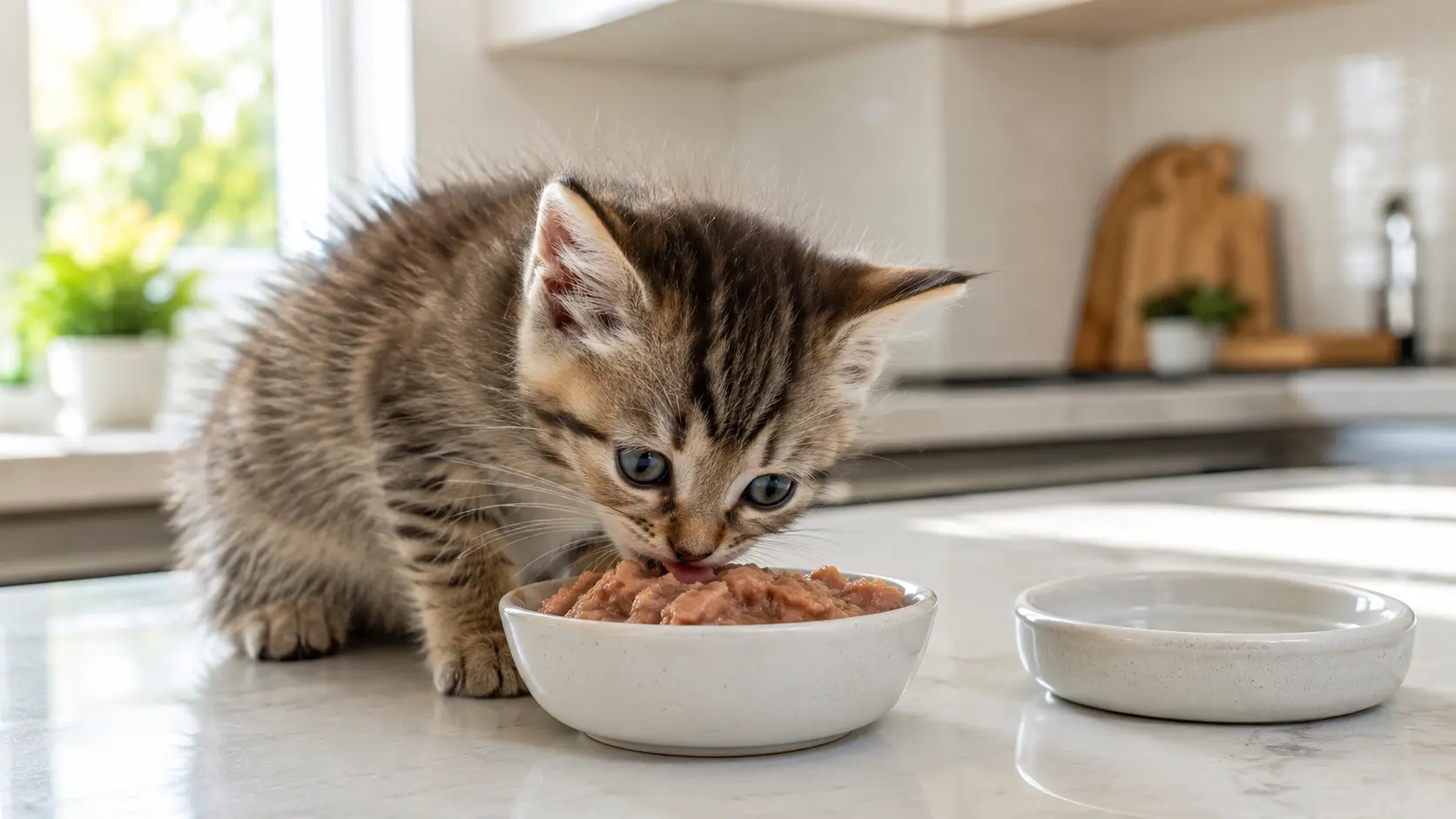
Bringing home a kitten is exciting, but it also comes with important responsibilities. One of the biggest questions new cat owners ask is, “How often should I feed my kitten?” The answer depends on your kitten’s age, weight, and developmental stage.
Unlike adult cats, kittens grow rapidly during their first year. Their bodies need frequent meals packed with high-quality protein, healthy fats, vitamins, and minerals to support healthy bones, muscles, brain development, and a strong immune system. Feeding too little, too much, or at the wrong intervals can affect their growth and overall health.
This guide explains a practical kitten feeding schedule by age, including how often kittens should eat, when to introduce solid food, and how to build a routine that supports healthy development. While every kitten is unique, these recommendations align with commonly accepted veterinary nutrition practices. If your kitten has health concerns, was born prematurely, or has special dietary needs, consult your veterinarian for personalized advice.
Why a Kitten Feeding Schedule by Age Is Important
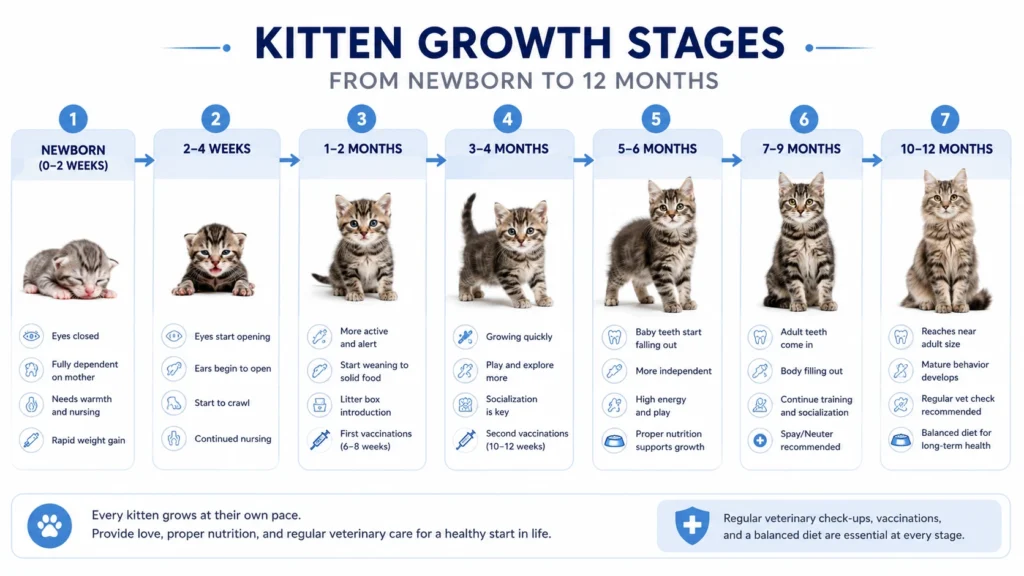
A kitten’s nutritional needs change quickly during the first year of life. Feeding on a consistent schedule helps ensure they receive enough energy without overeating.
A structured feeding routine can help:
- Support steady growth
- Maintain healthy energy levels
- Encourage proper digestion
- Reduce begging and food-related stress
- Make it easier to monitor appetite and health changes
Kittens also thrive on routine. Feeding them at similar times each day helps establish healthy habits that continue into adulthood.
Nutrition During Rapid Growth
During the first several months, kittens can grow remarkably fast. Their bodies require more calories per pound of body weight than adult cats because they’re building:
- Muscle tissue
- Strong bones
- Healthy organs
- Teeth
- Nervous system
A complete and balanced kitten food is specifically formulated to meet these needs. Adult cat food generally doesn’t provide the same nutrient profile for growing kittens.
Brain Development
Healthy fats, particularly omega fatty acids found in quality kitten foods, support normal brain and vision development. Early nutrition plays an important role in learning, coordination, and overall neurological health.
Bone and Muscle Growth
Protein is the foundation of healthy growth. Animal-based protein helps kittens develop lean muscle while minerals such as calcium and phosphorus support strong bones and teeth.
Avoid homemade diets unless a qualified veterinary nutritionist has formulated them, as nutritional imbalances may affect development.
Immune System Support
A balanced diet also helps support the immune system while kittens receive vaccinations and adapt to new environments. Clean water, proper nutrition, and regular veterinary care all work together to keep young cats healthy.
Kitten Feeding Schedule by Age
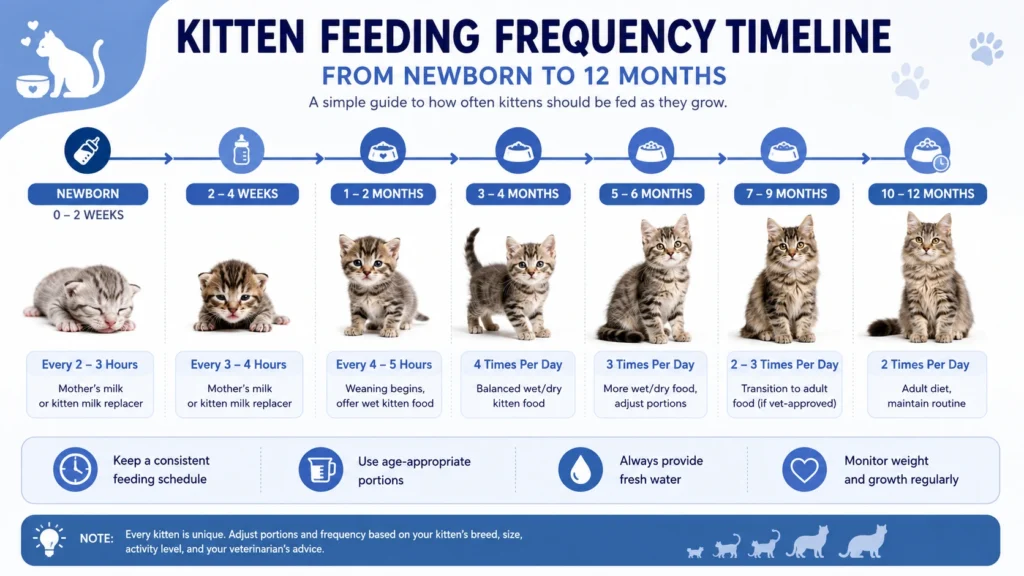
A kitten’s feeding routine changes significantly during the first year. Here’s what most healthy kittens need at each stage.
Newborn Kittens (0–4 Weeks)
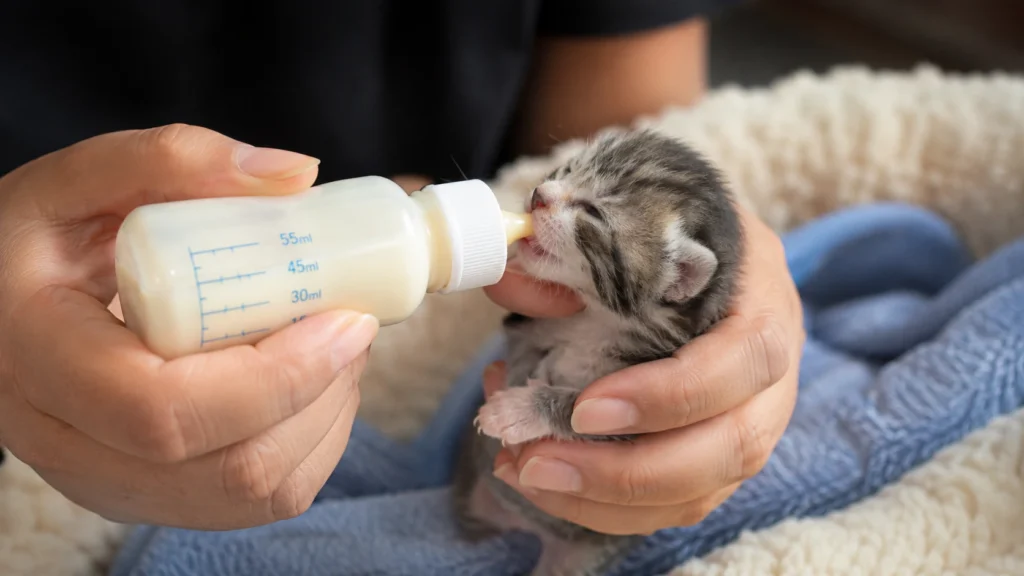
Newborn kittens rely entirely on their mother’s milk for nutrition. If the mother is unavailable, a veterinarian-approved kitten milk replacer should be used instead.
Never feed cow’s milk, as it can cause digestive upset and does not provide the nutrients kittens require.
Feeding Frequency
Newborn kittens typically need to eat every 2 to 4 hours, including overnight.
The exact schedule depends on:
- Age
- Weight
- Overall health
- Whether they are nursing successfully
Bottle-fed kittens usually require more careful monitoring than nursing kittens.
Weight Monitoring
Healthy kittens should gain weight consistently during the first weeks of life.
It’s a good idea to:
- Weigh kittens daily using a digital kitchen scale.
- Record their weight.
- Contact a veterinarian if weight gain slows or stops.
Note: Expected daily or weekly weight gain varies and should be verified with current veterinary guidance before publication.
4–6 Weeks: Beginning the Weaning Process
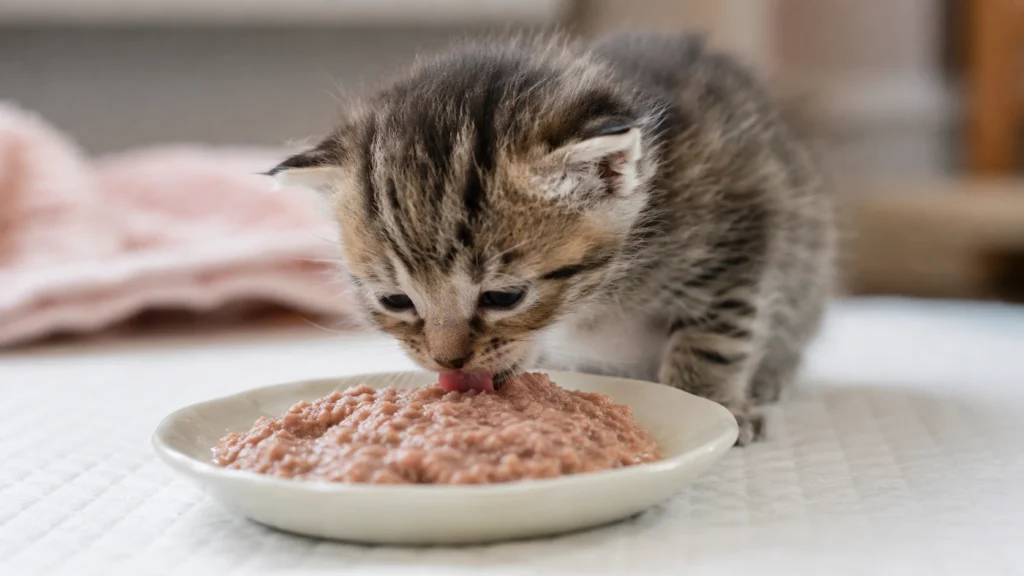
Around four weeks of age, most kittens begin transitioning from milk to solid food.
This stage is called weaning.
The process should happen gradually over several weeks.
Introducing Wet Food
Start by offering:
- Soft kitten food
- Moistened dry kitten kibble
- Wet kitten food mixed with kitten formula
The mixture should have a smooth consistency that’s easy to lick.
Allow kittens to explore the food without forcing them.
Feeding Frequency
At this stage, kittens generally eat 4 to 6 small meals each day while continuing to nurse or receive formula as needed.
Small, frequent meals are easier to digest than one or two large portions.
Sample Daily Schedule
| Time | Meal |
| 7:00 AM | Soft kitten food |
| 10:00 AM | Formula or nursing |
| 1:00 PM | Wet kitten food |
| 4:00 PM | Soft food |
| 7:00 PM | Wet food |
| Before bed | Formula if needed |
This is only an example. Individual kittens may need a different routine based on veterinary advice.
6–8 Weeks: Building a Feeding Routine
By six weeks, many kittens rely more on solid food and less on milk.
Most kittens are fully weaned by approximately eight weeks, although timing can vary.
Feeding Frequency
Feed 4 meals per day.
Spacing meals throughout the day helps maintain steady energy levels.
Example schedule:
- Breakfast
- Late morning
- Afternoon
- Evening
Portion Guide
Instead of focusing on a fixed amount, follow the feeding guide printed on your kitten food and adjust according to:
- Age
- Body weight
- Activity level
- Body condition
If you’re unsure whether your kitten is eating enough, your veterinarian can recommend an appropriate daily calorie intake.
Water Intake
Fresh, clean water should always be available.
Many kittens naturally drink small amounts throughout the day, especially if they eat wet food.
8–12 Weeks: Rapid Growth
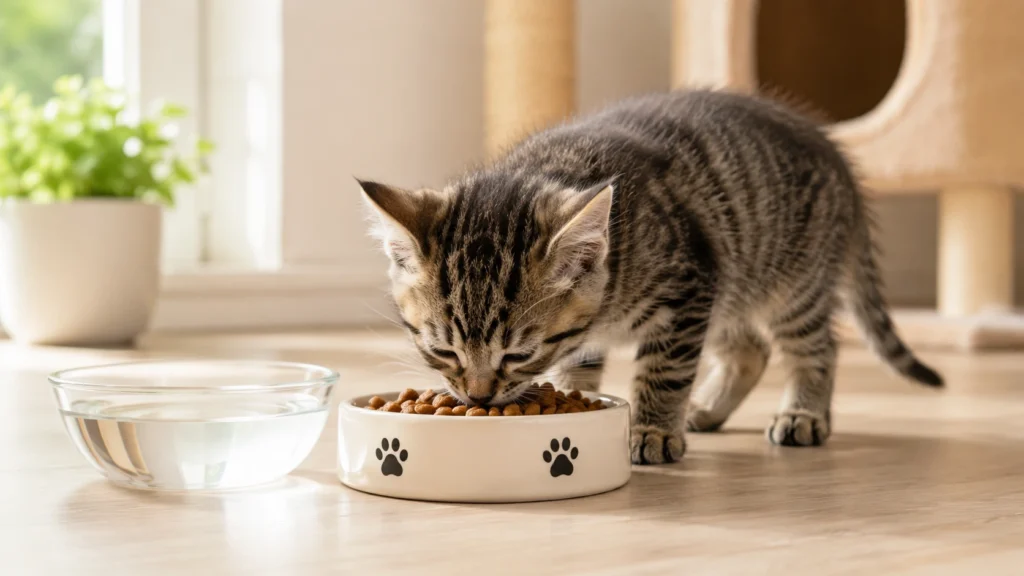
This is one of the fastest periods of growth in a kitten’s life.
Their appetite often increases, and they may seem hungry frequently.
Recommended Meals Per Day
Most healthy kittens benefit from 3 to 4 meals daily.
Keeping meal times consistent helps establish lifelong eating habits.
Wet Food vs. Dry Food
Many owners choose one of three approaches:
- Wet food only
- Dry food only
- Combination feeding
Each option has advantages.
| Wet Food | Dry Food |
| Higher moisture content | Convenient to serve |
| Often more palatable | Easy to measure |
| Supports hydration | Can stay fresh longer |
Many veterinarians recommend choosing a complete and balanced kitten food rather than focusing only on the food type.
Sample Daily Feeding Schedule
| Time | Meal |
| 7:30 AM | Breakfast |
| 12:30 PM | Lunch |
| 5:30 PM | Dinner |
| 9:00 PM | Small evening meal |
Consistency matters more than the exact clock time.
3–6 Months: Growing Fast
Although growth begins to slow slightly, kittens remain highly active and continue building muscle and bone.
They usually have plenty of energy for climbing, running, and playing.
Feeding Frequency
Most kittens this age do well with 3 meals each day.
Some owners continue offering four smaller meals if their schedule allows.
Increasing Portion Sizes
Instead of adding extra meals, gradually increase portions as recommended by your food manufacturer or veterinarian.
Avoid guessing portion sizes.
Overfeeding can contribute to unhealthy weight gain, while underfeeding may limit proper growth.
Maintaining a Healthy Routine
A simple daily routine might look like this:
- Morning meal before work or school
- Afternoon meal
- Evening meal after playtime
Feeding after active play often encourages kittens to settle down and rest, reflecting their natural hunting-and-eating behavior.
Easy Kitten Feeding Chart
The chart below provides a quick reference for healthy kittens. Individual needs vary, so use it as a general guide rather than a strict rule.
| Kitten Age | Meals Per Day | Main Diet |
| 0–4 weeks | Every 2–4 hours | Mother’s milk or kitten milk replacer |
| 4–6 weeks | 4–6 meals | Formula plus soft kitten food |
| 6–8 weeks | 4 meals | Kitten food with fresh water |
| 8–12 weeks | 3–4 meals | Complete kitten food |
| 3–6 months | 3 meals | Kitten food |
| 6–12 months | 2–3 meals | Kitten food until transition to adult diet |
Consider printing this chart and placing it near your kitten’s feeding area for easy reference.
How Much Should a Kitten Eat?
There isn’t a single portion size that fits every kitten. Age is only one factor. Breed, body weight, activity level, and the calorie content of the food all influence how much your kitten needs.
A better approach than measuring by guesswork is to:
- Follow the feeding guide on the kitten food packaging.
- Divide the recommended daily amount into the appropriate number of meals.
- Monitor your kitten’s body condition and weight as they grow.
- Adjust portions only if advised by your veterinarian or if the feeding guide recommends changes based on age or weight.
If your kitten consistently leaves food behind or always seems excessively hungry, it’s worth reviewing the feeding plan with your veterinarian. Appetite changes can sometimes reflect growth spurts, but they can also indicate an underlying health issue.
Another useful habit is to use a measuring cup or a kitchen scale for dry food. Accurate portions help prevent accidental overfeeding and make it easier to track your kitten’s nutritional intake.
Wet Food vs. Dry Food: Which Is Better?
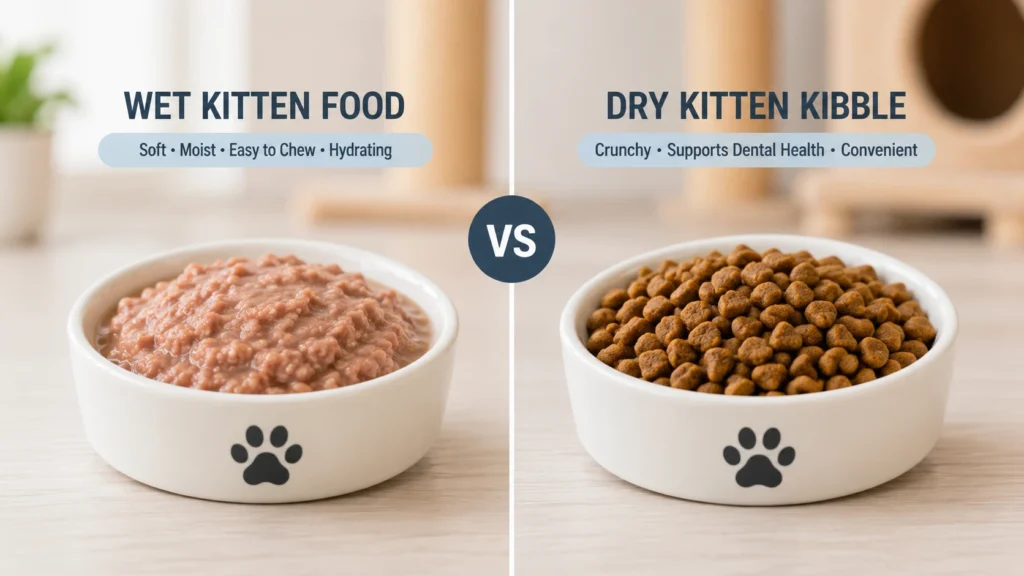
Many new cat owners wonder whether they should feed wet food, dry food, or a combination of both. The good news is that healthy kittens can thrive on any of these approaches as long as the food is labeled as complete and balanced for kitten growth.
The right choice often depends on your kitten’s preferences, your budget, and your veterinarian’s recommendations.
Benefits of Wet Food
Wet kitten food contains significantly more moisture than dry kibble, which can help support hydration.
Other advantages include:
- Soft texture that’s easy for young kittens to chew
- Often highly palatable for picky eaters
- Helps increase daily water intake
- Available in convenient single-serving portions
Once opened, wet food should not be left out for long periods. Follow the manufacturer’s storage instructions and refrigerate unused portions.
Benefits of Dry Food
Dry kitten food offers its own advantages.
Many owners appreciate that it:
- Is easy to measure
- Stores well after opening
- Can be used in puzzle feeders
- Is generally more economical per serving
Because dry food contains less moisture, always provide fresh drinking water.
Combination Feeding
Many pet owners choose combination feeding, offering both wet and dry food throughout the day.
For example:
- Wet food in the morning
- Dry food in the afternoon
- Wet food again in the evening
This approach provides variety while making meal planning more flexible.
Free Feeding vs. Scheduled Feeding
Another common question is whether kittens should have food available all day or eat at set meal times.
Both methods have advantages and disadvantages.
| Free Feeding | Scheduled Feeding |
| Food available throughout the day | Meals served at specific times |
| Convenient for some owners | Easier to monitor appetite |
| May work for some young kittens | Helps prevent overeating |
| Can make weight monitoring difficult | Creates a predictable routine |
For most households, scheduled feeding becomes the better long-term habit, especially as kittens grow older. It allows you to notice changes in appetite, which can sometimes be an early sign of illness.
Sample Daily Feeding Schedule
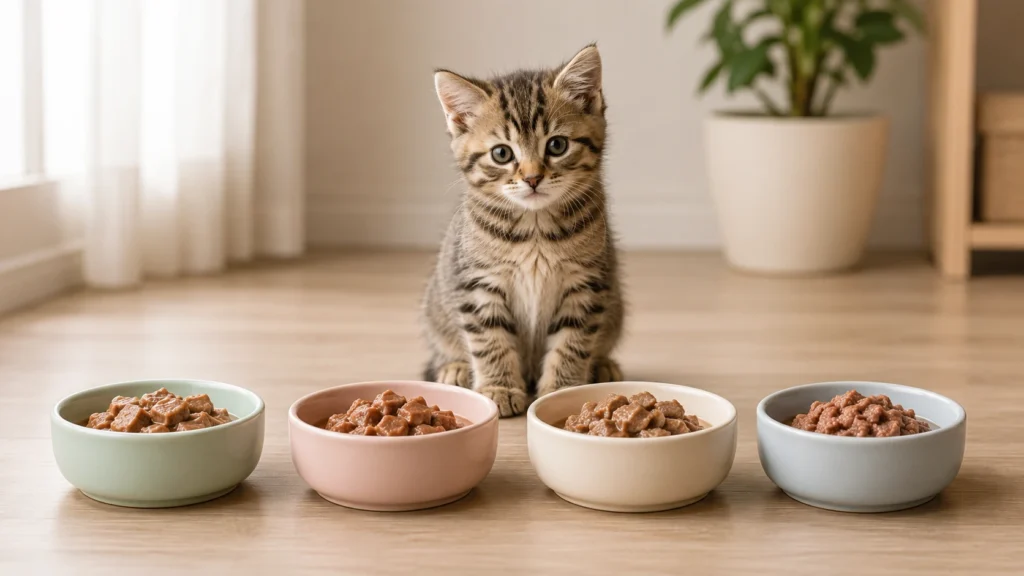
Every household has a different routine, but consistency is more important than exact feeding times.
Example Schedule for an 8–12 Week Old Kitten
| Time | Activity |
| 7:00 AM | Breakfast |
| 10:30 AM | Play session and water check |
| 12:30 PM | Lunch |
| 4:00 PM | Interactive play |
| 6:00 PM | Dinner |
| 9:00 PM | Small evening meal if appropriate |
Regular play before meals encourages natural hunting behavior and provides healthy physical activity.
Best Foods for Growing Kittens
Choosing a quality kitten food is one of the most important decisions you’ll make during your kitten’s first year.
Look for products specifically formulated for kittens rather than adult cats.
Nutrients to Look For
A balanced kitten diet should provide:
- High-quality animal protein
- Healthy fats
- Essential vitamins and minerals
- Taurine
- Appropriate calcium and phosphorus levels
- Omega fatty acids
These nutrients support healthy growth, vision, heart function, and brain development.
Ingredients to Avoid
Avoid feeding kittens foods that are not intended for their nutritional needs.
Examples include:
- Cow’s milk
- Chocolate
- Onions
- Garlic
- Grapes and raisins
- Alcohol
- Caffeine
- Xylitol-containing products
If you suspect your kitten has eaten a toxic food, contact your veterinarian immediately.
Choosing a Quality Kitten Food
When comparing products:
- Read the feeding instructions carefully.
- Check that the food is intended for kitten growth.
- Introduce any new food gradually over several days to reduce the chance of digestive upset.
- Ask your veterinarian if your kitten has allergies or medical conditions.
Common Kitten Feeding Mistakes
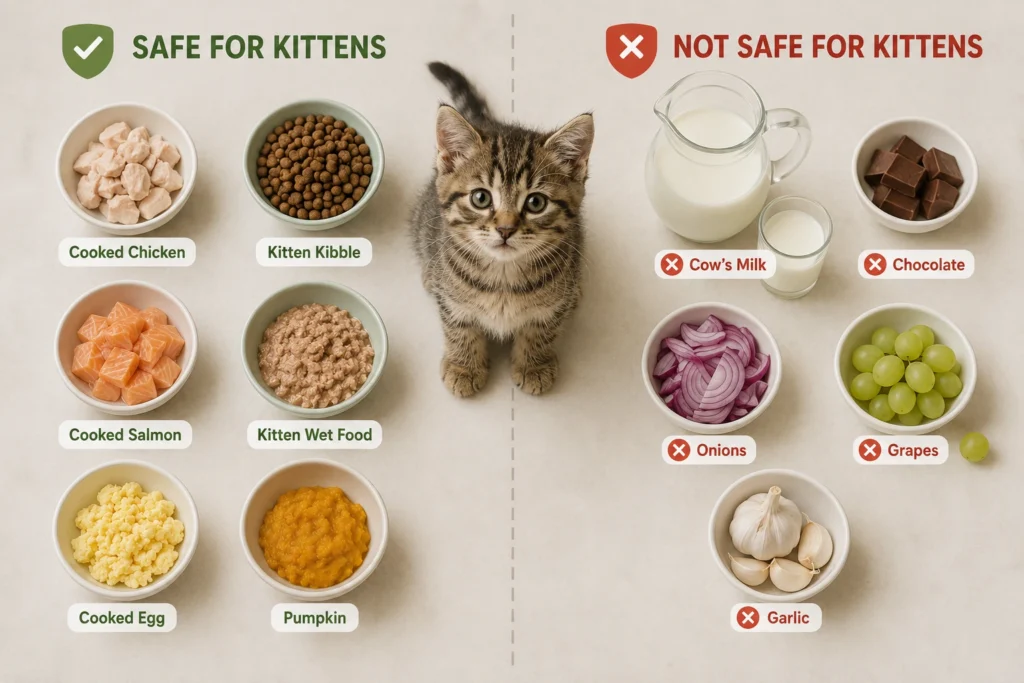
Even caring owners sometimes make feeding mistakes. Fortunately, most are easy to avoid.
1. Overfeeding
Extra treats and oversized portions can lead to unhealthy weight gain.
Measure meals instead of estimating.
2. Underfeeding
Growing kittens need enough calories to support rapid development.
If your kitten appears unusually thin or isn’t gaining weight, seek veterinary advice.
3. Switching Foods Too Quickly
Changing foods suddenly may upset your kitten’s stomach.
Instead, mix increasing amounts of the new food with the old food over several days.
4. Giving Cow’s Milk
This is one of the most common myths about kittens.
Most kittens do not need cow’s milk after weaning, and it can cause digestive problems.
5. Forgetting Fresh Water
Even kittens eating wet food need constant access to clean drinking water.
Wash food and water bowls daily to help reduce bacteria.
Signs Your Kitten Is Eating Enough

Healthy kittens usually show clear signs that they’re receiving adequate nutrition.
Look for:
- Steady weight gain
- Bright, alert eyes
- Smooth, shiny coat
- High energy during play
- Normal stool consistency
- Healthy curiosity and activity
If your kitten suddenly loses interest in food, vomits repeatedly, develops diarrhea, or becomes unusually tired, contact your veterinarian promptly.
When to Switch to Adult Cat Food
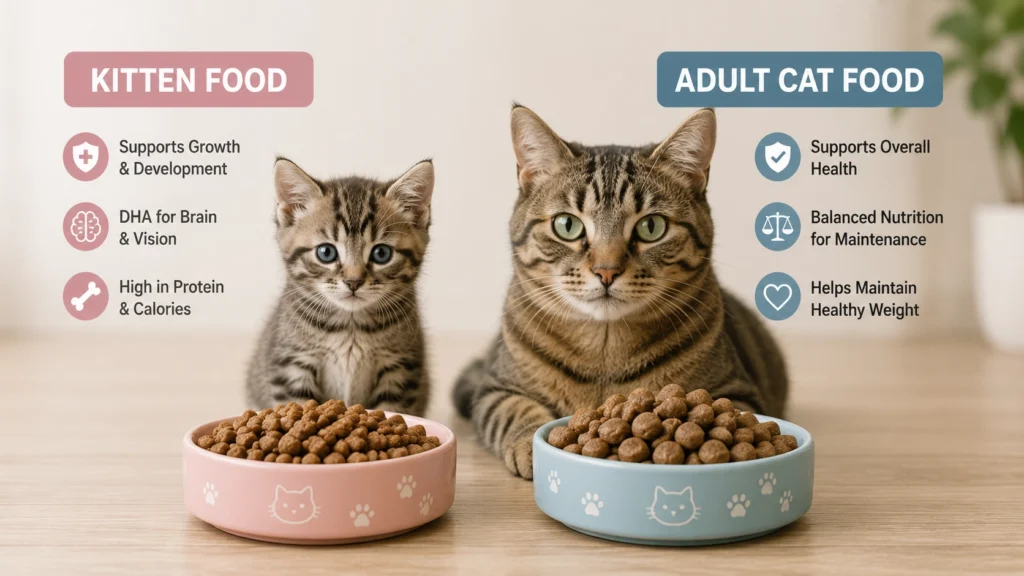
Most kittens continue eating kitten food throughout their first year because their nutritional needs remain higher than those of adult cats.
The appropriate time to transition to adult food can vary depending on breed, body size, and veterinary guidance.
Some larger breeds may mature more slowly than others. For this reason, it’s best to discuss the transition with your veterinarian rather than relying on age alone.
How to Transition
A gradual transition helps reduce digestive upset.
A common approach is:
- Days 1–2: Mostly kitten food with a small amount of adult food
- Days 3–4: Half kitten food and half adult food
- Days 5–6: Mostly adult food
- Day 7: Adult food only, if your kitten is tolerating the change well
If digestive upset occurs, slow the transition and consult your veterinarian if symptoms persist.
Conclusion

Creating a consistent kitten feeding schedule is one of the best ways to support healthy growth during your kitten’s first year. As your kitten develops, their nutritional needs will change. Still, the basics remain the same: provide complete and balanced kitten food, divide meals according to their age, ensure fresh water is always available, and monitor their weight and overall condition.
Remember that feeding guidelines on pet food packaging are general recommendations. Every kitten grows at a slightly different pace, and factors such as breed, activity level, and health status can affect nutritional needs. If you’re ever unsure about portion sizes, feeding frequency, or the right time to transition to adult food, your veterinarian is the best source of personalized advice.
By establishing healthy feeding habits early, you’ll give your kitten a strong foundation for a happy, active, and healthy adult life.
Read This Article: Best Food for Indoor Cats: A Complete Vet-Informed Guide to Healthy Nutrition
Frequently Asked Questions
1. How often should a kitten eat?
Young kittens generally need frequent meals. Feeding frequency gradually decreases as they grow, with many older kittens eating two to three meals per day by the end of their first year.
2. Can kittens eat adult cat food?
Adult cat food is not designed to meet the nutritional needs of growing kittens. Choose food specifically formulated for kittens until your veterinarian recommends transitioning.
3. Is wet food better than dry food?
Neither is automatically better. A complete and balanced kitten diet can include wet food, dry food, or both.
4. Should I leave food out all day?
Very young kittens may sometimes require more frequent access to food, but scheduled meals generally make it easier to monitor appetite and maintain a healthy routine as they grow.
5. Can kittens drink cow’s milk?
No. Cow’s milk is not recommended because many kittens cannot digest it properly.
6. How do I know if my kitten is getting enough food?
Healthy growth, consistent weight gain, good energy levels, and a shiny coat are all positive signs. Regular veterinary checkups can confirm that your kitten is developing appropriately.
7. What should I do if my kitten refuses to eat?
Check whether the food is fresh and offered in a quiet environment. If your kitten refuses multiple meals or shows signs of illness, contact your veterinarian.
8. When should fresh water be available?
Fresh, clean water should be available at all times, regardless of whether your kitten eats wet or dry food.
9. Can I change my kitten’s food brand?
Yes, but introduce the new food gradually over several days to reduce the risk of digestive upset.
10. Should I give my kitten supplements?
Most healthy kittens eating a complete and balanced commercial kitten food do not need additional supplements unless recommended by a veterinarian.
2 thoughts on “Kitten Feeding Schedule by Age: A Complete Guide for Healthy Growth”