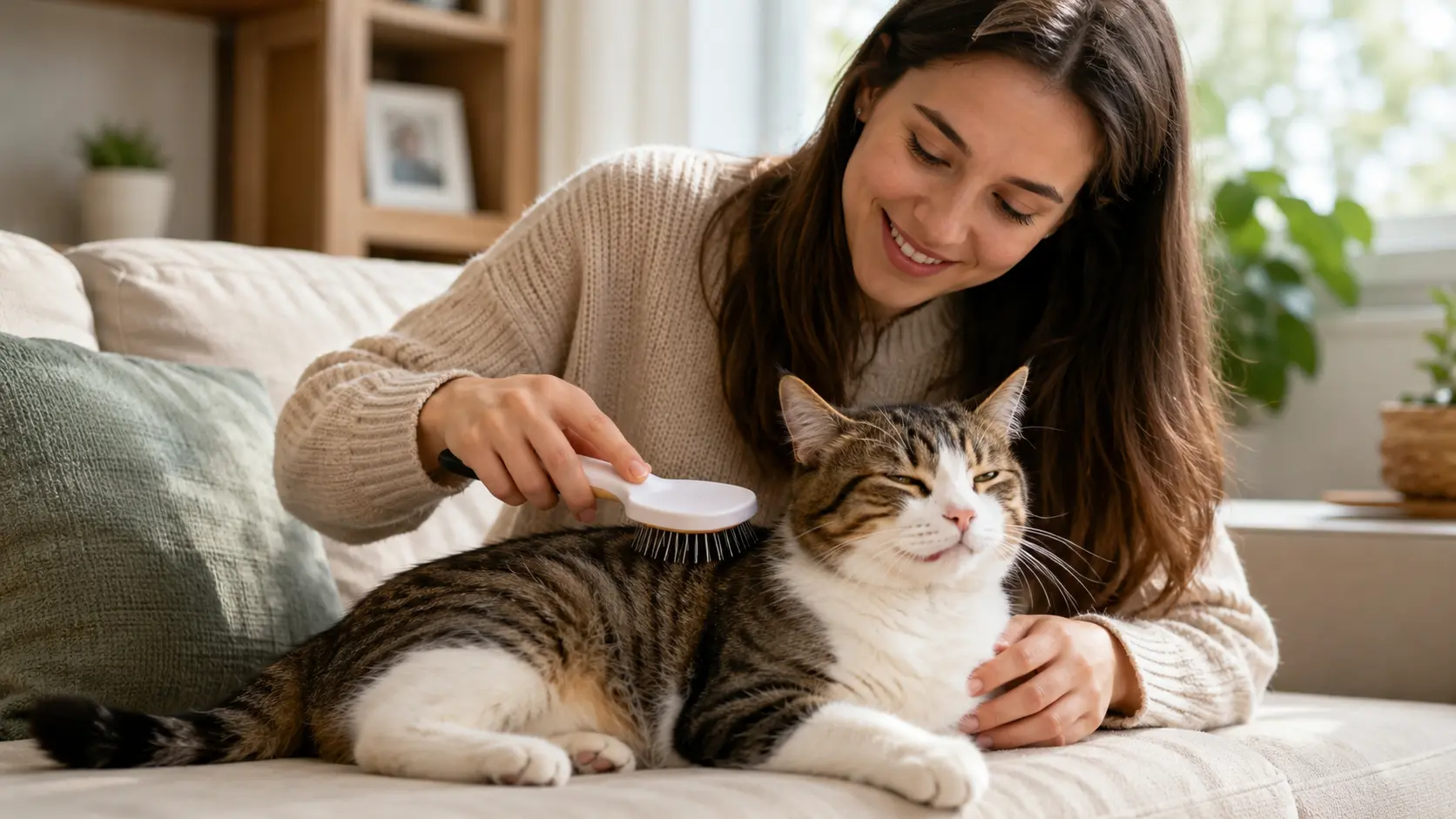
Most cats don’t want your help with grooming. They’ve been taking care of themselves since they were kittens, and they’re pretty confident about it. So the idea of stepping in with a brush, nail clippers, or even a bath can feel like a battle you won’t win.
The truth is, cat grooming at home is an important part of keeping your cat healthy. Cats can’t do everything on their own. Long coats can become matted, nails can grow too long, ears can collect wax, and teeth can develop plaque. Some cats—especially seniors, overweight cats, and those with health or mobility issues—may also struggle to keep up with their normal grooming routine.
This step-by-step guide to cat grooming at home will show you how to brush, bathe, trim nails, clean ears, and care for your cat safely without causing unnecessary stress. No scruffing, no forcing, and no guessing—just a calm, practical approach that helps keep your cat clean, comfortable, and healthy.
Why Cat Grooming at Home Matters
Health Benefits
Grooming isn’t just about a shiny coat. Running your hands and a brush over your cat regularly means you’ll notice things early a lump that wasn’t there last month, a scab, a flea, a sore spot your cat flinches at. Those are easier to treat when caught early.
Regular brushing also helps distribute natural oils through the coat and removes loose, dead hair before your cat swallows it while self-grooming, which is one of the main ways hairballs form.
Bonding and Trust-Building
Done right, grooming sessions become something your cat starts to expect, and eventually enjoy. It’s physical closeness on their terms, which builds trust. Done wrong rushed, forced, ignoring their signals it does the opposite.
Cost Savings
Professional grooming, especially for long-haired breeds, adds up over a year. Learning the basics at home doesn’t replace a professional groomer entirely (more on that later), but it does mean you’re not paying for routine brushing, nail trims, or the occasional bath.
Understanding Your Cat’s Coat and Grooming Needs
Not every cat needs the same routine. Coat type is the biggest factor.
Short-Haired vs. Long-Haired vs. Hairless Coats
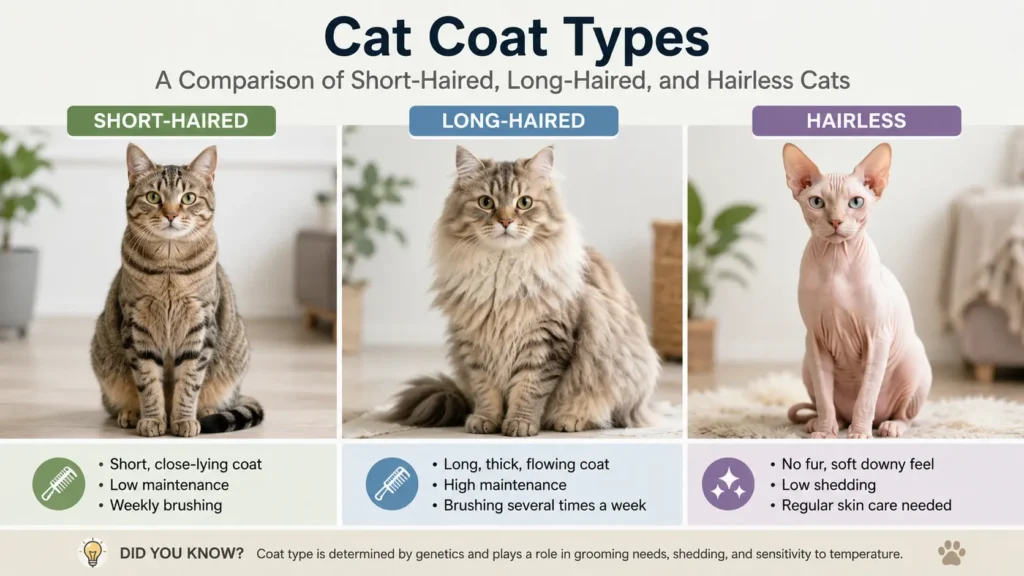
- Short-haired cats (domestic shorthair, Siamese, British Shorthair) are the lowest maintenance and rarely mat.
- Long-haired cats (Persian, Maine Coon, Ragdoll) have dense undercoats that tangle easily, especially behind the ears, under the arms, and around the tail base.
- Hairless cats (Sphynx) don’t need brushing at all, but their skin produces oils a coated cat’s fur would normally absorb, so they need more frequent bathing instead.
How Often to Groom, By Coat Type
As a general starting point, many veterinary and feline behavior sources suggest brushing short-haired cats about once a week and long-haired cats every day or every other day. Exact frequency varies by cat, season, and health status, so check with your vet if you’re unsure what’s right for yours.
Shedding also tends to pick up seasonally, particularly in spring as cats lose their winter undercoat, usually a cue for more frequent brushing.
Signs Your Cat Needs Grooming Now
- Visible mats or tangles, especially behind the ears or under the legs
- Nails clicking on hard floors or starting to curl
- A dull, greasy, or flaky-looking coat
- Noticeable odor, or dark buildup in the ears
Essential Tools for Cat Grooming at Home
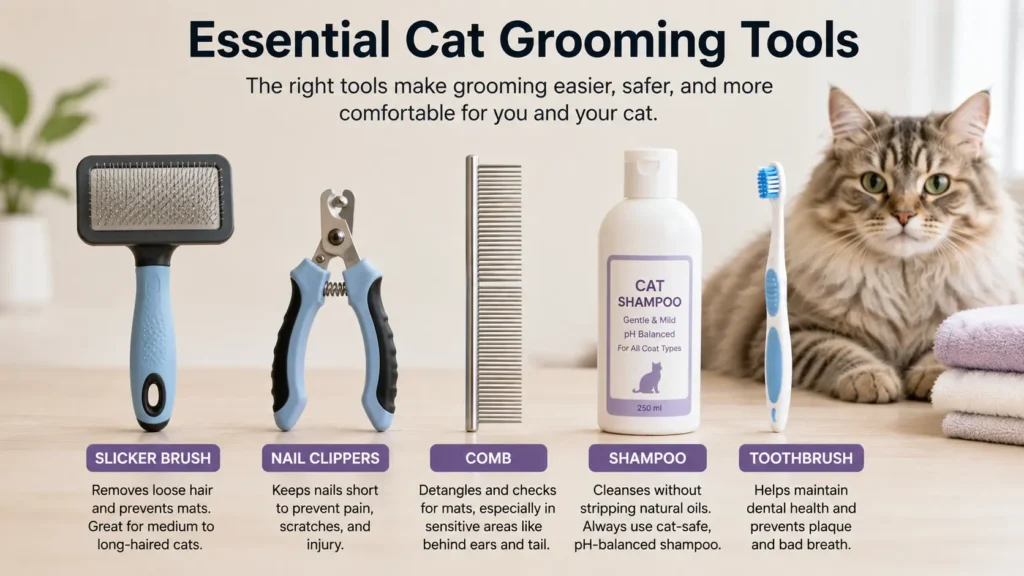
You don’t need a full kit to get started- a few well-chosen tools go a long way.
| Tool | Best For | Notes |
| Slicker brush | Long-haired cats, mats and tangles | Fine, short wires; use gently near skin |
| Grooming mitt | Short-haired cats, anxious cats | Feels like petting, easy to introduce |
| Undercoat rake | Long-haired or double-coated cats | Removes loose undercoat during shedding season |
| Cat nail clippers | All cats | Scissor or guillotine-style made for small claws |
| Styptic powder | Nail trimming | Stops bleeding if you nick the quick |
| Cat-specific shampoo | Occasional baths | Never use dog shampoo or human shampoo (see safety note below) |
| Soft cloth or cotton balls | Ear cleaning, eye wiping | Avoid cotton swabs inside the ear canal |
| Pet-safe toothpaste and finger brush | Dental care | Never use human toothpaste — it isn’t safe for cats to swallow |
A grooming table isn’t necessary for most home setups, but a non-slip mat on a counter can make nail trims easier. A pheromone spray around the grooming area may also help anxious cats, though results vary.
How to Prepare for Cat Grooming at Home
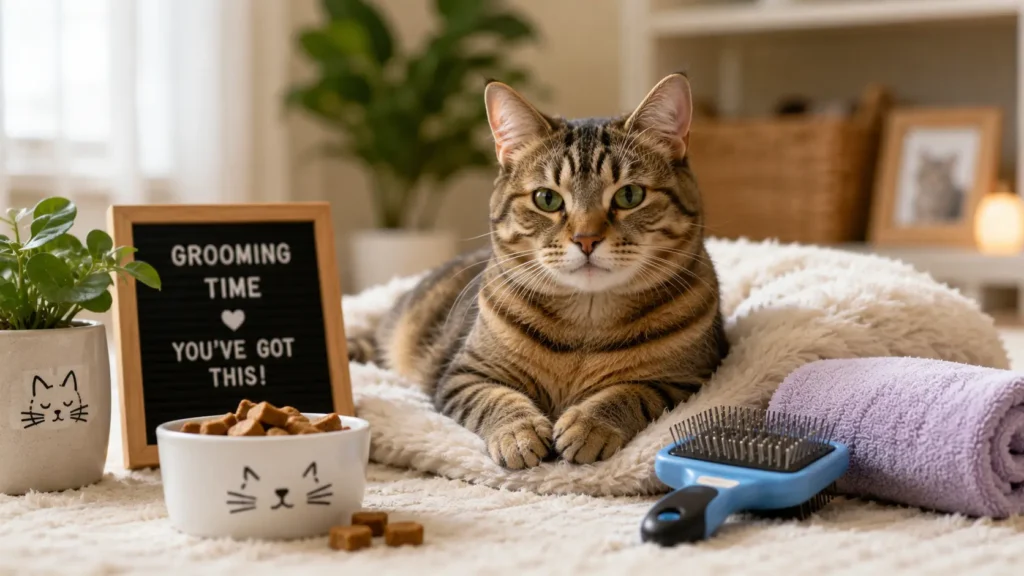
This is the part most guides skip, and it’s the part that actually determines whether grooming goes well.
Read Your Cat’s Body Language First
Before you pick up a brush, check in. Signs your cat is relaxed enough to start: loose body posture, purring or slow blinking, staying nearby without being restrained.
Signs to stop or pause: tail flicking or thumping, ears flattened back, skin twitching, low growling or hissing, or trying to walk away.
If you see the second list, stop. Pushing through it teaches your cat that grooming means being trapped, which makes every future session harder.
Choose the Right Time, and Desensitize Gradually
Groom when your cat is naturally calm- after a meal or during their usual nap lull, not right after they’ve been chasing a toy or when guests are over. A quiet room without other pets helps too.
If your cat has never been groomed, don’t start with a full session. Touch the brush to their side for a few seconds, then stop and reward with a treat. Build up over days or weeks. This matters even more for adult cats adopted without a grooming history — they’re not being difficult, they simply haven’t learned it’s safe yet.
Skip the Scruff
Cats are not small dogs. Unlike dogs, who tend to be more tolerant of restraint, cats often react to being pinned down or scruffed with fear or aggression, not compliance. If you need to keep a cat still, a gentle towel wrap, sometimes called the “kitty burrito,” that leaves one paw exposed at a time is a far better option than forcing them down.
How to Brush a Cat Step by Step
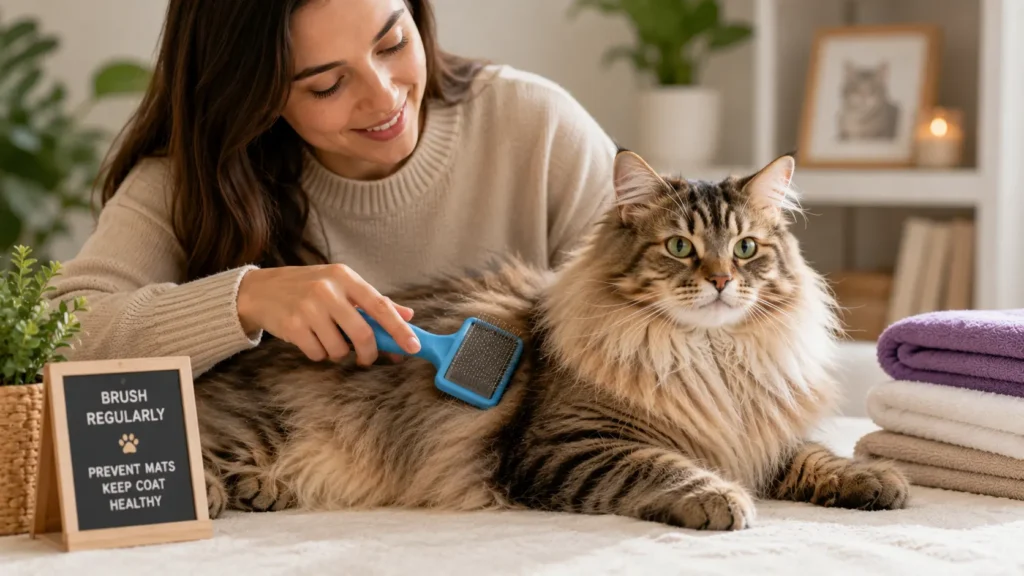
- Start at the head and move toward the tail, brushing in the direction the fur grows.
- Use short, gentle strokes rather than long, dragging ones, especially with a slicker brush.
- Work through one small section at a time instead of covering the whole body in one pass.
- Go slowly around mat-prone spots — behind the ears, under the front legs, the belly, and the tail base — since these areas are more sensitive.
- Watch for the stop signals above throughout, not just at the start.
- End on a good note: a treat, playtime, or letting your cat walk away when they’re done.
Removing Mats and Tangles Safely
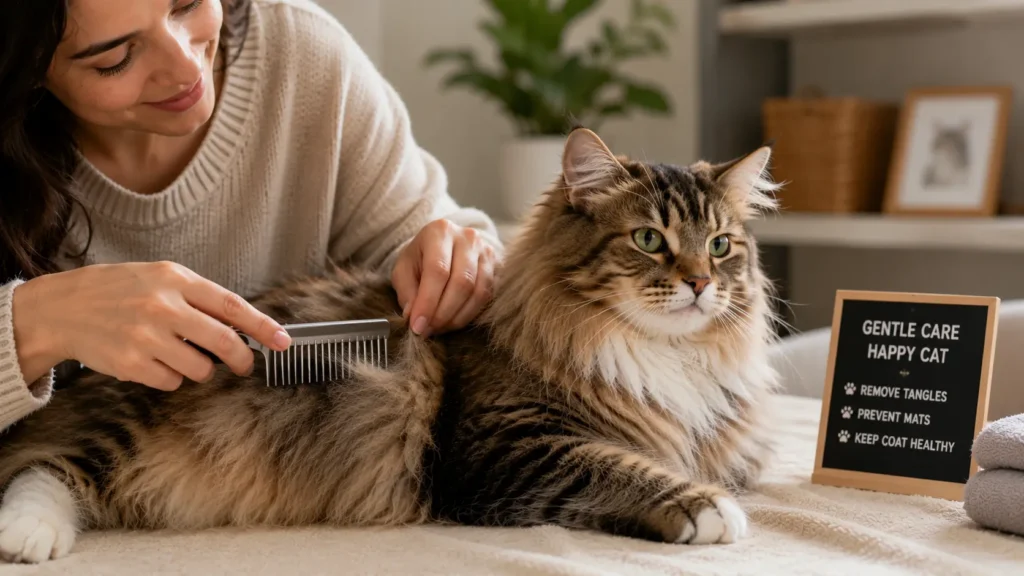
For small tangles, hold the base of the mat firmly against the skin (this stops pulling from hurting) and gently work it apart with a wide-tooth comb or your fingers before brushing through.
For mats tight to the skin or larger than a coin, don’t try to cut them out yourself. Scissors near a cat’s thin skin are genuinely risky — cats shift unexpectedly, and skin can get caught in the mat along with the fur. This is a job for a groomer or vet, who can shave the area safely.
How to Bathe a Cat at Home
Do Cats Actually Need Baths?
Most cats, most of the time, don’t. Self-grooming keeps a healthy cat reasonably clean. Baths become necessary when your cat gets into something sticky or toxic, has a skin condition your vet recommends bathing for, is a hairless breed, or can’t groom themselves due to age, weight, or mobility.
Step-by-Step Process
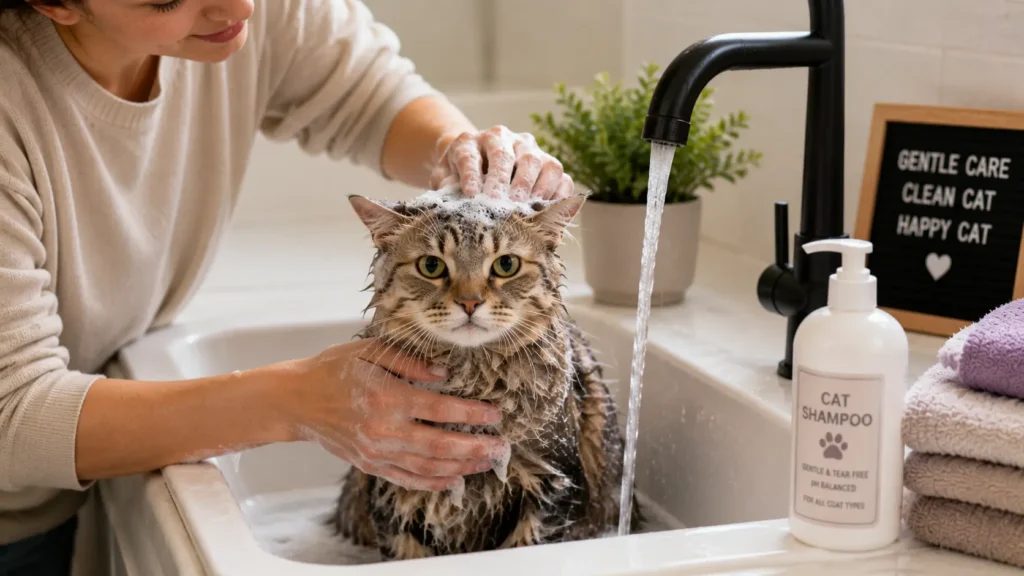
- Brush out mats and loose fur before the bath — wet mats are much harder to deal with.
- Place a non-slip mat in the sink or tub, so your cat has something to grip.
- Use lukewarm water and wet the coat gently, avoiding the face and inside the ears.
- Apply a small amount of cat-specific shampoo, work it in, then rinse thoroughly; leftover residue can irritate skin.
- Keep sessions short and calm, talking quietly throughout.
Wrap your cat immediately in a large, absorbent towel and blot rather than rub. Most cats tolerate a towel dry far better than a blow dryer; if you do use one, keep it on the lowest heat and noise setting, held well away from your cat, and stop if they show distress.
Safety note: Never use dog shampoo on a cat. Some dog flea and tick products contain permethrin, an ingredient that can be toxic to cats. Check that any product is explicitly labeled safe for cats, and ask your vet if you’re unsure.
How to Trim Your Cat’s Nails
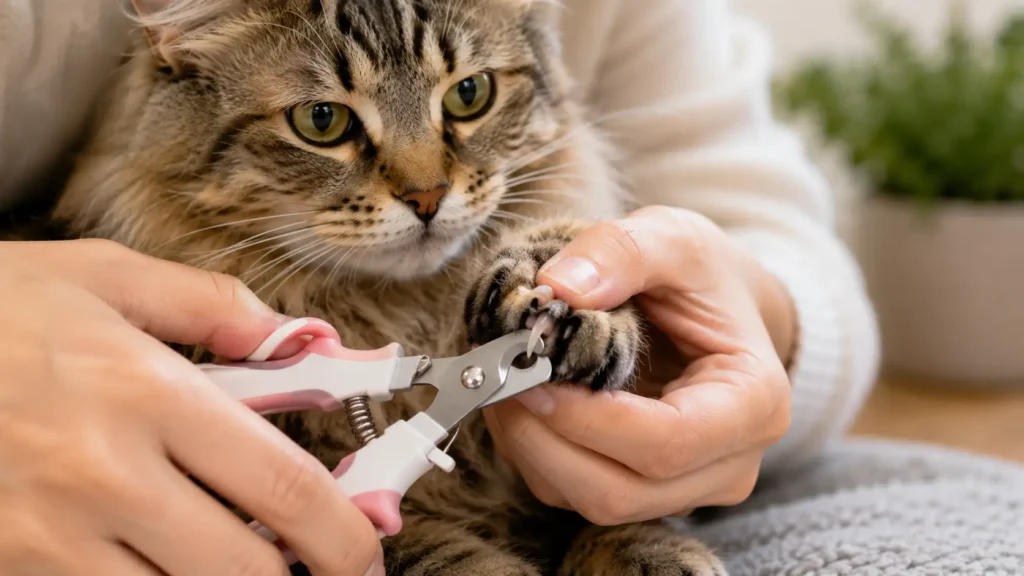
Look at the nail in good light. You’ll see a pink section near the base; that’s the quick, which contains blood vessels and nerves. Trim only the clear, sharp tip beyond it. On cats with dark nails where the quick isn’t visible, trim conservatively, taking off just the very tip.
- Choose a calm moment, ideally when your cat is drowsy.
- Gently press on the paw pad to extend the claw.
- Using cat-specific clippers, snip just the tip, avoiding the quick.
- Do one or two nails at a time if that’s all your cat will tolerate.
- Reward after each paw, not just at the end.
Trimming frequency varies by cat and lifestyle; ask your vet what interval makes sense for yours, since indoor cats that don’t naturally wear down their nails may need more frequent trims than active outdoor cats.
If You Nick the Quick
It happens, even to experienced owners. Press styptic powder (or, in a pinch, plain cornstarch) onto the nail tip and apply gentle pressure for a minute or two. It looks worse than it is, but if bleeding doesn’t stop within several minutes, call your vet.
Ear, Eye, and Dental Care at Home
Ear cleaning: Check for excess wax, redness, or odor. If cleaning is needed, dampen a soft cloth or cotton ball with a vet-approved ear cleaner and gently wipe the visible parts of the ear; never insert anything into the ear canal. Discharge, a strong odor, or frequent head shaking means it’s time to see a vet, since these can signal mites or infection.
Eye care: Some breeds, particularly flat-faced ones, get tear staining. A damp cloth wiped gently from the inner corner outward, as needed, is usually enough. Sudden discharge, squinting, or redness warrants a vet visit.
Dental care: Daily brushing is ideal, but a few times a week with pet-safe toothpaste and a finger brush still helps. Introduce it slowly; let your cat taste the toothpaste first, then work up to actually brushing over several sessions.
Grooming Cats With Special Needs
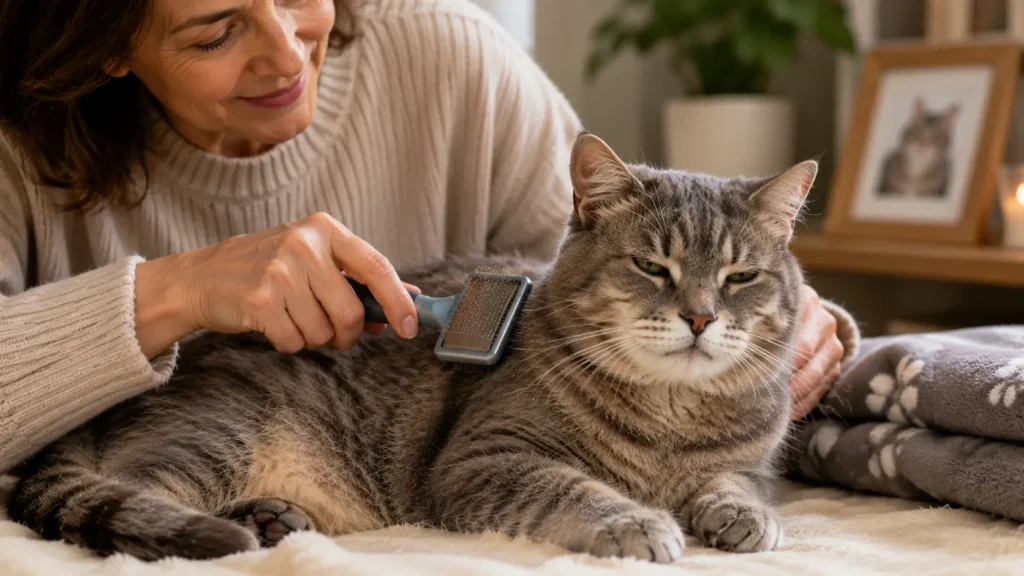
- Senior cats often have thinner coats and less flexibility, so they can’t reach certain spots anymore. Keep sessions shorter and gentler, and watch for lumps or signs of pain during handling.
- Overweight cats often can’t physically reach their lower back, hindquarters, or belly to self-groom. This is one of the most overlooked reasons a cat suddenly seems matted despite otherwise normal behavior; it’s a physical limitation, not neglect on their part.
- Anxious or reactive cats need you to go slower than you think. Multiple short sessions beat one long one, and it’s fine to stop for the day after just one small area.
- Kittens benefit from starting early. Short, positive sessions now build a cat that tolerates, or even enjoys, grooming as an adult.
Common Grooming Mistakes to Avoid
- Brushing too hard or too fast, especially with a slicker brush
- Trying to cut out a mat with scissors
- Grooming on your schedule instead of checking in on your cat’s mood first
- Using dog or human grooming products
- Restraining or scruffing a struggling cat instead of pausing and trying later
- Trying to do everything: brush, bathe, nails, ears, teeth in one marathon session
When to Call a Professional Groomer or Vet Instead
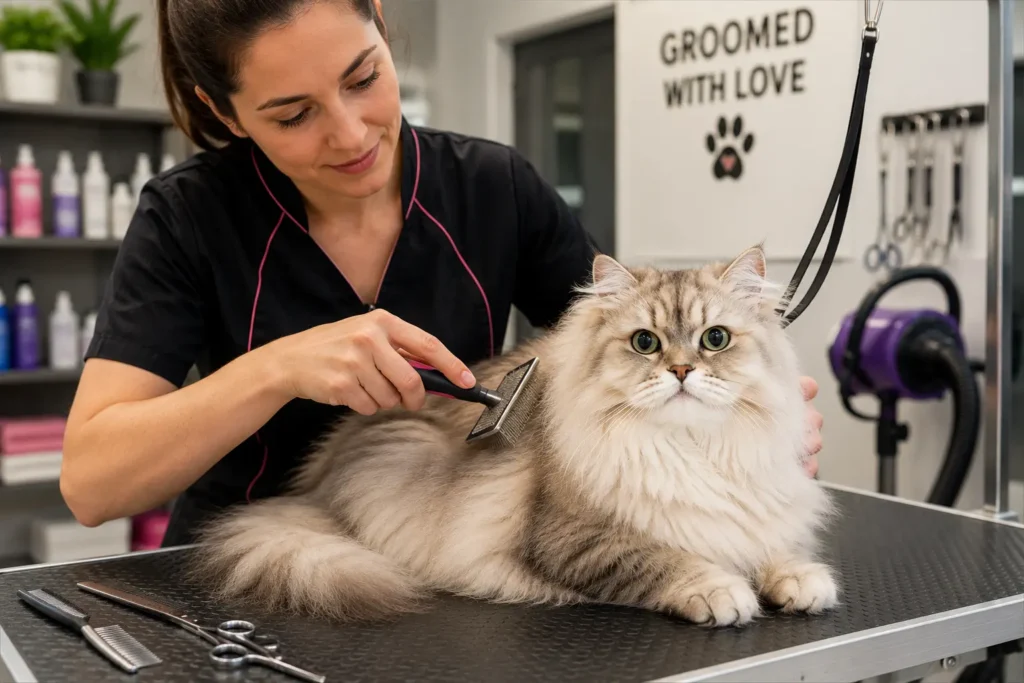
Home grooming has limits, and knowing them is part of doing it well.
- Severe matting close to the skin, especially covering large areas, usually needs to be shaved by a professional, not cut at home.
- Skin issues redness, scabs, patchy hair loss, unusual lumps, or persistent odor should be checked by a vet rather than groomed over.
- Behavioral overgrooming, where a cat licks or chews one area until it’s bald or raw, is often a sign of stress or a medical issue, and deserves a vet visit rather than a grooming fix.
- A cat that stays aggressive or extremely distressed despite gradual, gentle attempts may do better with a groomer experienced in handling frightened cats, sometimes with sedation options discussed with a vet.
Conclusion
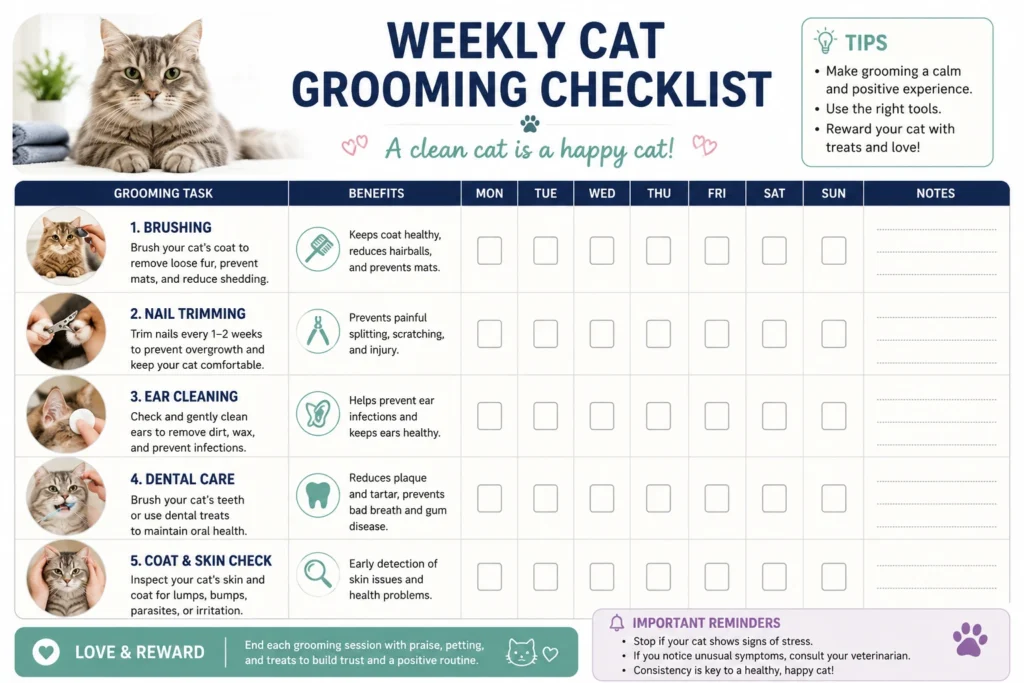
Cat grooming at home isn’t about following a perfect routine; it’s about paying attention to your cat’s needs. Watch your cat’s body language, groom at their pace, use the right tools for their coat, and recognize when a mat, skin problem, or stressful situation requires professional help instead of forcing the process.
With patience and consistency, cat grooming at home becomes more than just a grooming routine. It turns into a simple habit that keeps your cat clean, healthy, comfortable, and strengthens the bond you share for years to come.
Read This Article: Kitten Feeding Schedule by Age: A Complete Guide for Healthy Growth
Cat Grooming FAQs
How often should I groom my cat? It depends on coat type. Short-haired cats typically do well with weekly brushing, while long-haired cats often need daily or near-daily brushing to prevent mats. Ask your vet for guidance tailored to your cat.
Do indoor cats need grooming? Yes. Being indoors doesn’t stop shedding, matting, or nail growth — indoor cats’ nails may actually need trimming more often since they don’t wear down naturally outdoors.
Why does my cat hate being brushed? Often it’s about technique or timing rather than brushing itself — too fast, too long, or at a moment when your cat isn’t relaxed. Slowing down and reading their body language usually helps.
Can I use human shampoo on my cat? No. Human and dog shampoo can irritate a cat’s skin or contain ingredients that are unsafe for them. Use a shampoo made specifically for cats.
How do I calm my cat down for nail trims? Trim when they’re naturally drowsy, do one or two nails at a time, and reward generously. A gentle towel wrap, exposing one paw at a time, can help them feel more secure.
What should I do if my cat’s fur is severely matted? Don’t attempt to cut it out yourself. See a professional groomer or vet, who can safely shave the matted area without risking the skin.
Is it normal for cats to groom themselves excessively? Cats spend a notable portion of their day self-grooming, but bald patches, raw skin, or obsessive licking in one spot isn’t normal – it’s worth mentioning to your vet.
How do I know if my cat’s nails need trimming? If you hear nails clicking on hard flooring, see them starting to curl, or notice snagging on carpet or furniture, it’s time.
Should I groom my cat before or after a vet visit? Either can work, but if your vet needs to examine the coat or skin for a specific issue, ask beforehand whether they’d prefer you hold off on bathing or trimming first.
1 thought on “Cat Grooming at Home: The Complete Guide for a Healthy and Happy Cat”