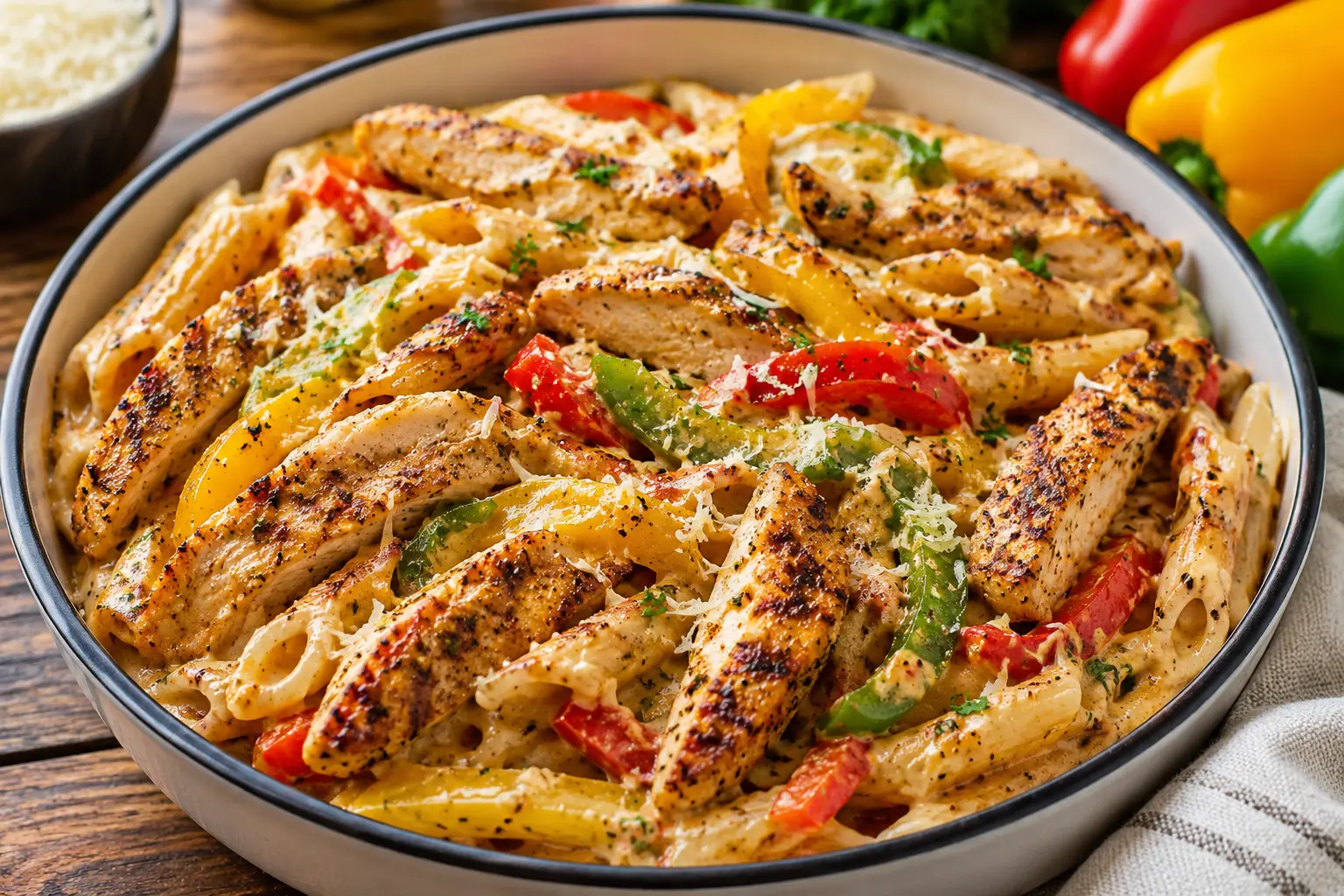
If you’ve ever had a rasta pasta recipe at a Caribbean restaurant and wondered how they made it so creamy, smoky, and perfectly spicy, you’re in the right place. This dish looks impressive but comes together with minimal effort – one pan, about 30 minutes, and a payoff that tastes as if far more work went into it than actually did.
Below, you’ll find exactly how to make it: the ingredients that matter most, the technique that keeps the sauce silky instead of broken, and enough variations – chicken, shrimp, salmon, vegan – that you can make this dish your own.
What Is Rasta Pasta?
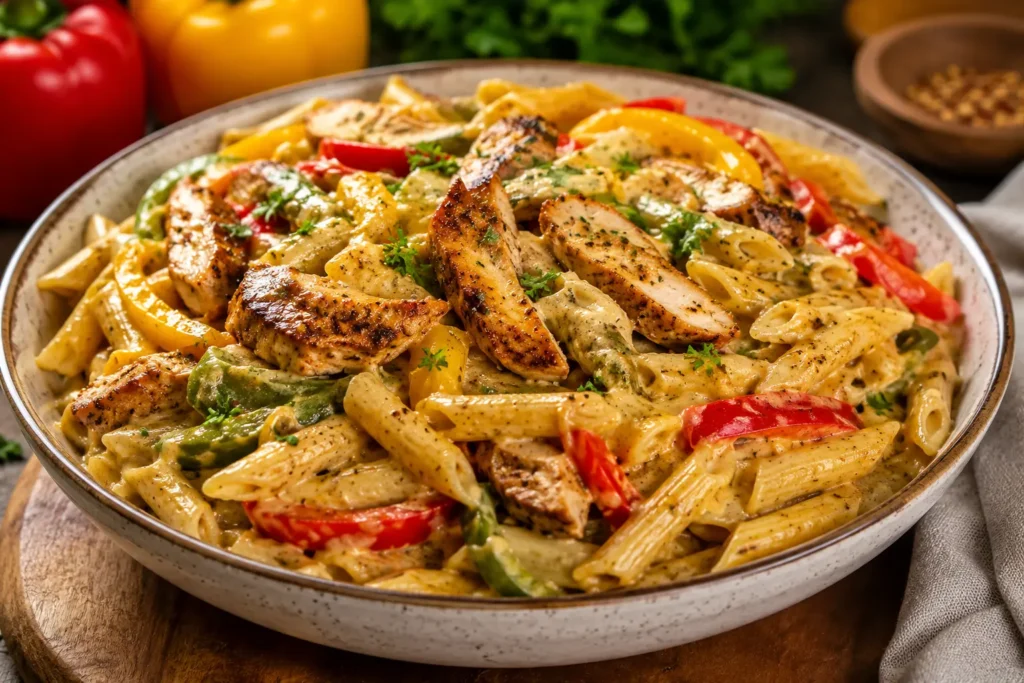
Rasta pasta is a creamy pasta dish built around three core elements: jerk seasoning, a rich cream-based sauce, and a colorful mix of red, yellow, and green bell peppers. It’s typically tossed with a short pasta shape like penne or fusilli and finished with Parmesan cheese.
At its heart, it’s a fusion dish – Italian pasta technique meeting bold Jamaican jerk flavor. The name comes from the visual: red, yellow, and green peppers echoing the colors most associated with Rastafarian and Jamaican imagery.
Where Did Rasta Pasta Come From?
I want to be upfront here instead of repeating what most food blogs claim. Sources disagree on exactly where and when rasta pasta was invented, and whether it has any direct connection to Rastafari religious or cultural practice. Some writers describe it as tied to that tradition; others – including people who grew up in Jamaican households – describe it as more of a diaspora creation, where the connection is really about the look of the peppers rather than any formal cultural or religious link.
There doesn’t appear to be one settled origin story. What seems consistent is that rasta pasta emerged as a Caribbean-American fusion dish, inspired by jerk seasoning and named for its color palette. If you’re publishing this professionally, treat any more specific claim – a particular restaurant, chef, city, or decade – as unverified until you can confirm it against a credible culinary history source, not just other blogs repeating the same unsourced story.
Why It’s Called “Rasta” Pasta
The name comes down to color symbolism. Red, yellow (or gold), and green bell peppers mirror the colors commonly associated with the Jamaican flag and Rastafarian iconography. That visual is essentially the whole reason for the name – the cooking method itself doesn’t otherwise differ from any other creamy jerk-seasoned pasta.
Why This Recipe Works
- It’s fast. Start to finish, you’re looking at about 30 minutes, most of it active rather than waiting around.
- One pan, minimal cleanup. Protein, peppers, and sauce all cook in the same skillet.
- It’s endlessly customizable. Swap the protein, adjust the heat, use cream or coconut milk – this recipe adapts to what’s already in your fridge.
- It reheats well when handled correctly (details below), making it a solid meal-prep option.
- It’s a genuine crowd-pleaser. The color draws people in, and the flavor closes the deal.
Ingredients You’ll Need
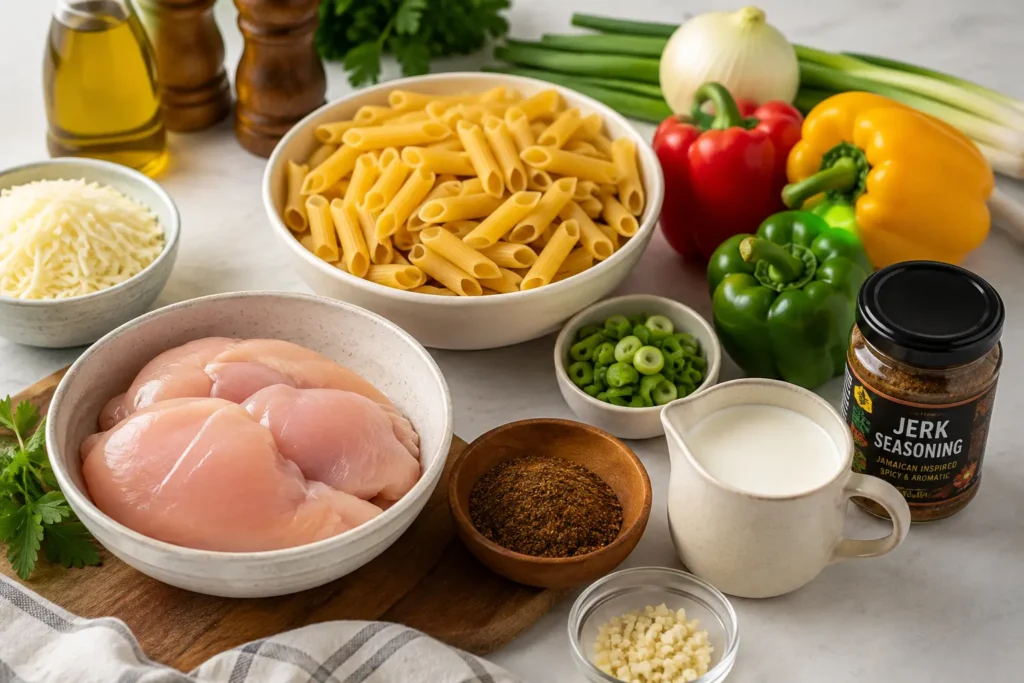
Exact quantities are in the recipe card near the end of this article. This section covers why each ingredient earns its place.
- Pasta: A short, sturdy shape. Penne, rigatoni, or fusilli hold the sauce in their ridges and are easier to eat alongside sliced peppers and chicken than long noodles like spaghetti.
- Protein: Chicken breast or thigh is most common, but shrimp, salmon, or a plant-based swap all work.
- Bell peppers: Red, yellow, and green, sliced into strips rather than diced – the strips are part of the dish’s visual identity.
- Onion and garlic: The aromatic base of the sauce.
- Jerk seasoning: The flavor backbone of the entire dish. This isn’t interchangeable with generic Cajun or Italian seasoning – it’s what makes rasta pasta rasta pasta.
- Cream or coconut milk: Builds the sauce. See the comparison table below to choose the right one.
- Parmesan cheese: Adds body and a salty, savory finish.
- Chicken or vegetable stock: Loosens the sauce to the right consistency and adds depth.
- Fresh herbs (thyme, green onion, or cilantro): Stirred in at the end for brightness.
Choosing the Right Pasta Shape
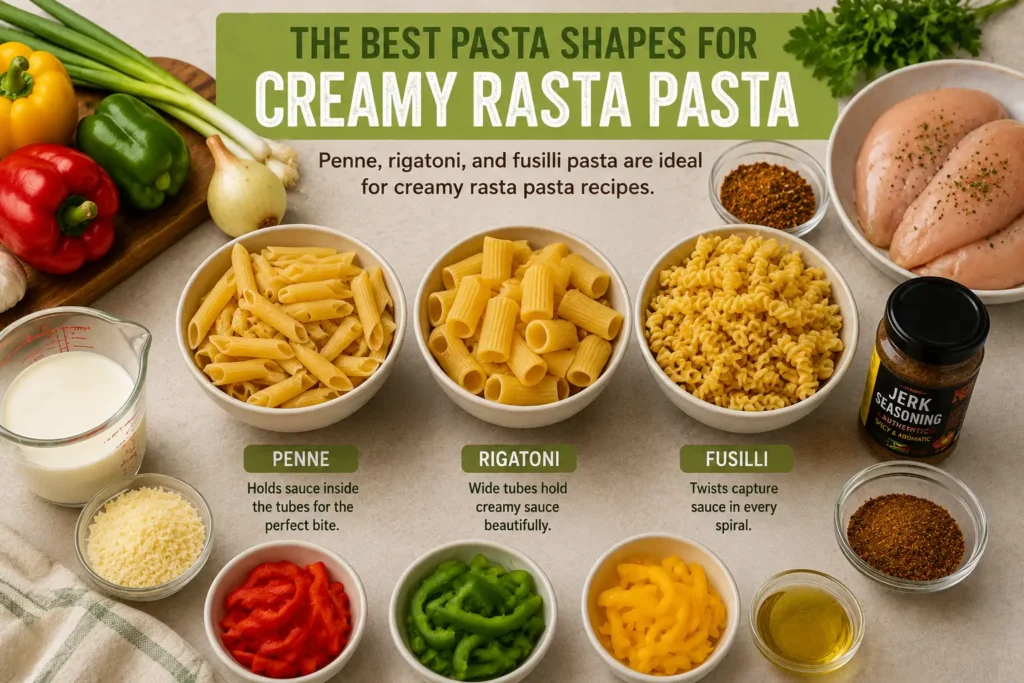
Stick with short pasta. Long noodles like spaghetti or linguine make it awkward to eat alongside strips of pepper and chunks of chicken – you end up with a fork full of noodles and little else. Penne, rigatoni, fusilli, and bowtie pasta all hold the creamy sauce well in their ridges and pockets.
Jerk Seasoning: Store-Bought vs. Homemade
You have two solid paths:
- Store-bought jerk seasoning is the faster route and works well if you choose a quality brand. A low-quality, filler-heavy blend is the single most common reason a homemade rasta pasta tastes flat compared to the restaurant version.
- Homemade jerk seasoning – typically a mix of allspice, thyme, garlic powder, onion powder, cayenne, brown sugar, cinnamon, and nutmeg – gives you more control over heat and salt, and is worth the extra step if you cook Caribbean food often.
Either way, taste your seasoning blend before committing it to the whole dish. Some blends run salty; others lean heavier on heat. Adjust the amount you add to the protein and sauce accordingly, rather than following a fixed measurement blindly.
Cream vs. Coconut Milk vs. Half-and-Half
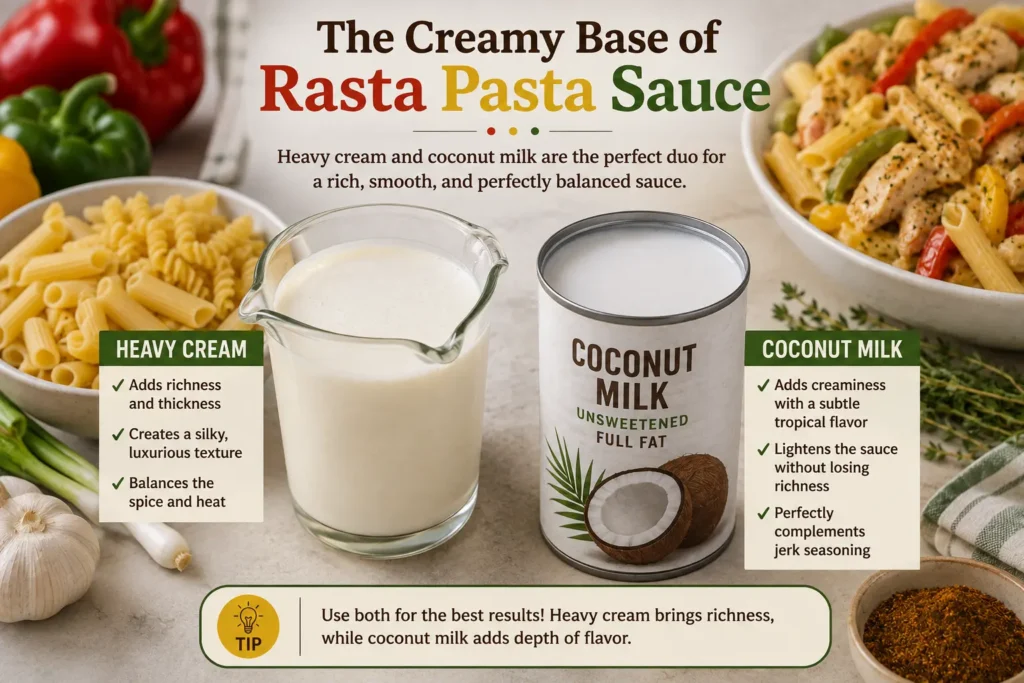
This decision genuinely changes the character of the dish.
| Option | Flavor Profile | Richness | Best For |
| Heavy cream | Neutral, lets jerk flavor lead | Very rich | The classic, restaurant-style version |
| Coconut milk | Slightly sweet, tropical undertone | Rich, slightly lighter than cream | A more distinctly Caribbean-leaning flavor |
| Half-and-half | Neutral, milder | Lighter | A less heavy dish, with a small tradeoff in sauce thickness |
If this is your first time making rasta pasta, start with heavy cream; it’s the most forgiving and closest to what most restaurants serve. Once you’re comfortable with the base recipe, coconut milk is worth trying as a variation.
How to Make Rasta Pasta (Step-by-Step)
Step 1: Cook the Pasta
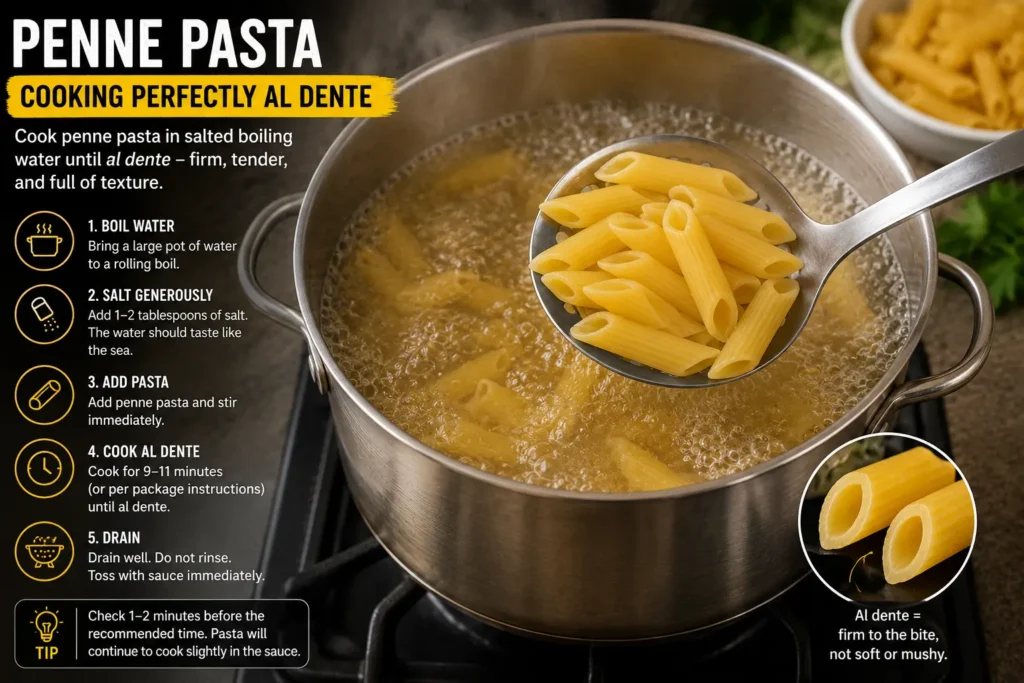
Boil your pasta in well-salted water according to the package directions, aiming for al dente since it will finish cooking slightly in the sauce. Before draining, reserve about a cup of the starchy pasta water; you’ll use it later to loosen the sauce and help it cling to the noodles.
Step 2: Season and Sear the Protein
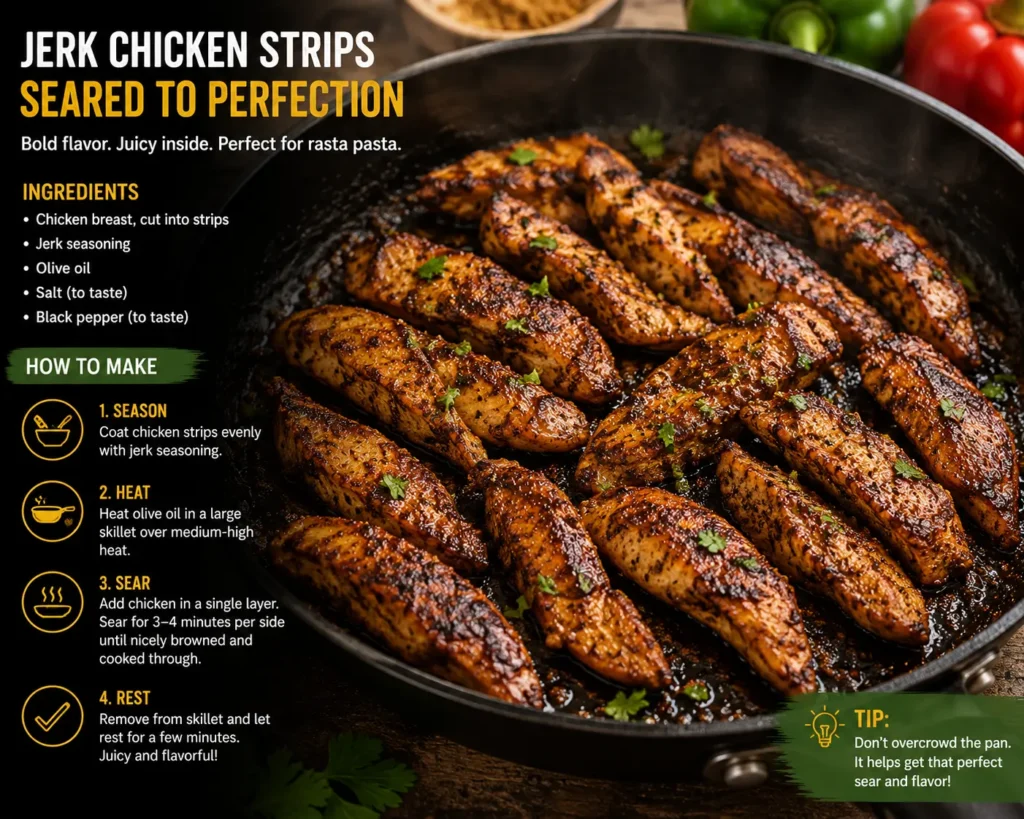
While the pasta boils, toss your chicken (or shrimp, or salmon) with jerk seasoning. Sear it in a hot skillet with a little oil until cooked through and nicely browned – a few minutes per side for chicken, less for shrimp. Remove it from the pan and set it aside; it goes back in later.
Tip: Don’t overcrowd the pan. If the pieces are touching, they’ll steam instead of sear, and you’ll lose the flavorful browning.
Step 3: Saute the Peppers and Aromatics
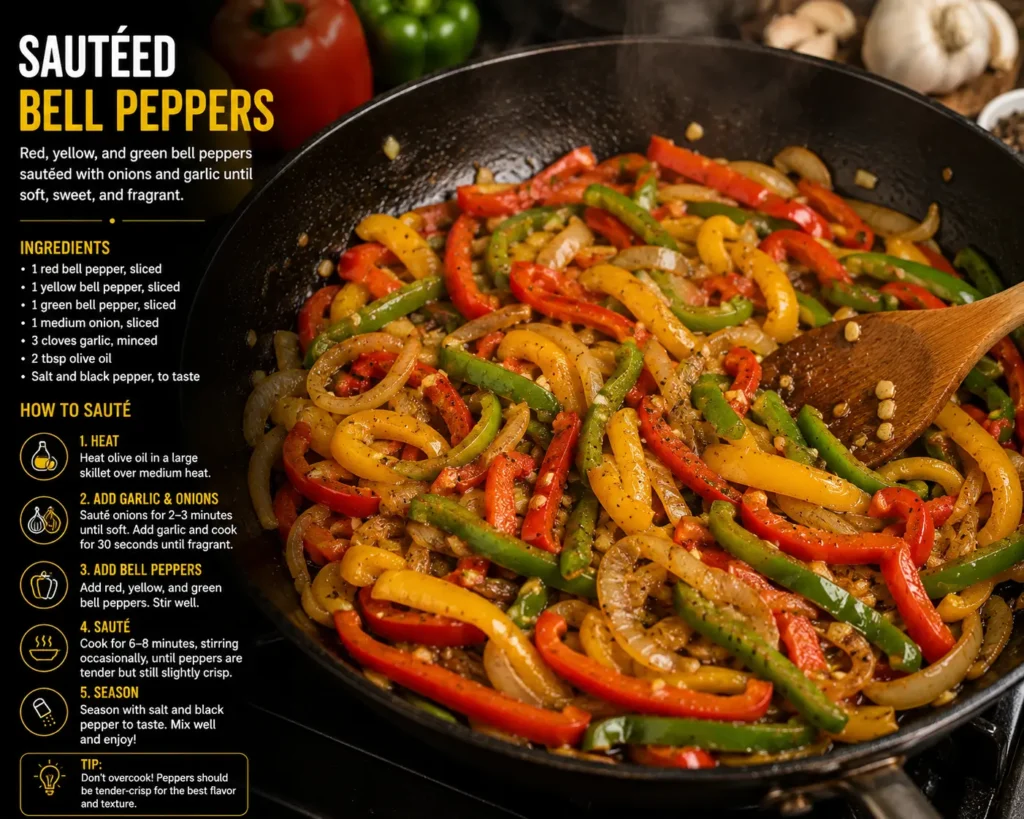
In the same skillet – don’t wipe it out; those browned bits are flavor – add a little more oil if needed, then sauté the sliced bell peppers and onion until just softened, about 4-5 minutes. You want tender with a little bite left, not mushy. Add minced garlic in the last minute so it doesn’t burn.
Step 4: Build the Creamy Sauce
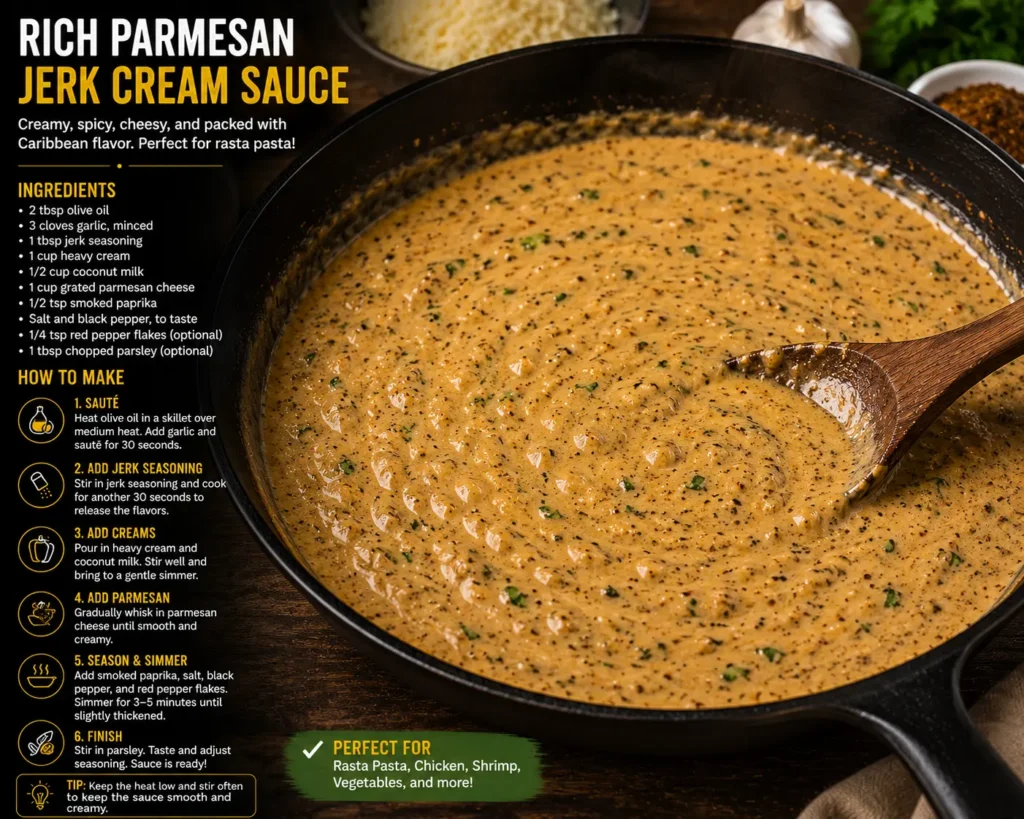
Deglaze the pan with a splash of reserved pasta water or stock, scraping up the browned bits from the bottom – that’s where a lot of flavor is hiding. Pour in the cream (or coconut milk) and stock, add a spoonful more jerk seasoning if needed, and simmer gently for a few minutes until it starts to thicken.
Stir in the parmesan cheese until it melts smoothly into the sauce.
Step 5: Combine and Serve
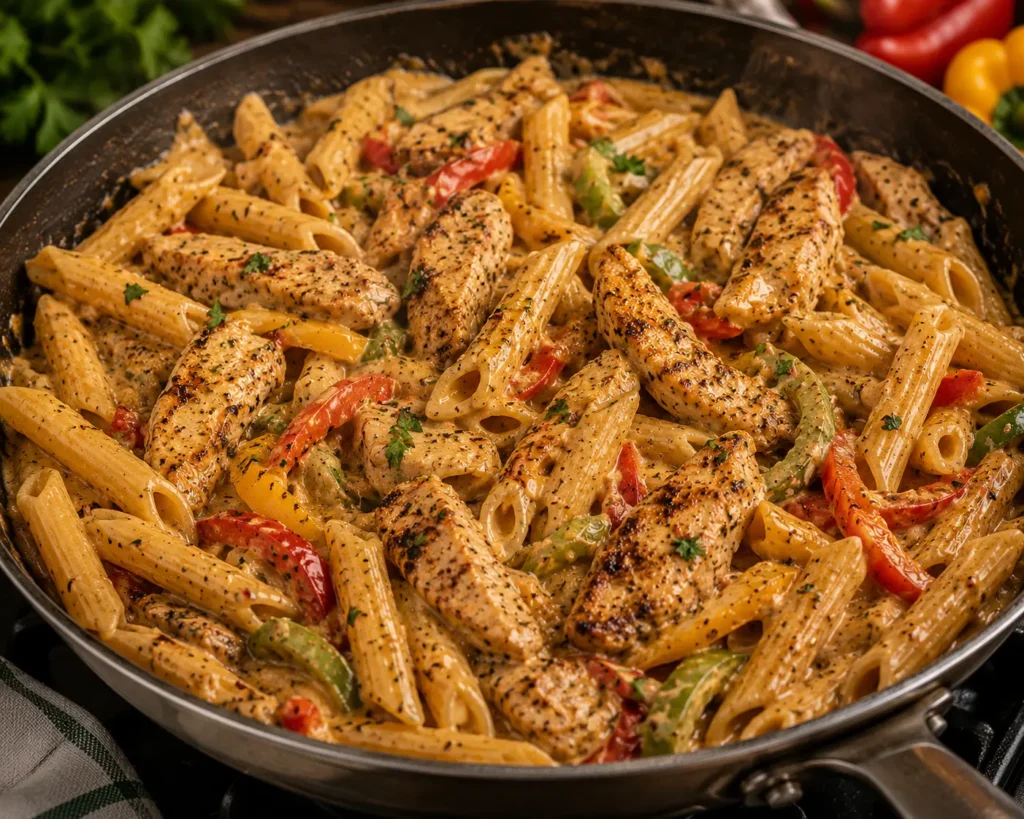
Return the cooked protein to the pan, add the drained pasta, and toss over low heat. If the sauce looks too thick, add a splash of reserved pasta water until it loosely coats the noodles. Finish with fresh herbs and a crack of black pepper, and serve immediately.
Protein Variations
Chicken Rasta Pasta
The most classic version. Boneless, skinless chicken breast or thigh both work – thighs stay juicier if you tend to overcook chicken breast.
Shrimp Rasta Pasta
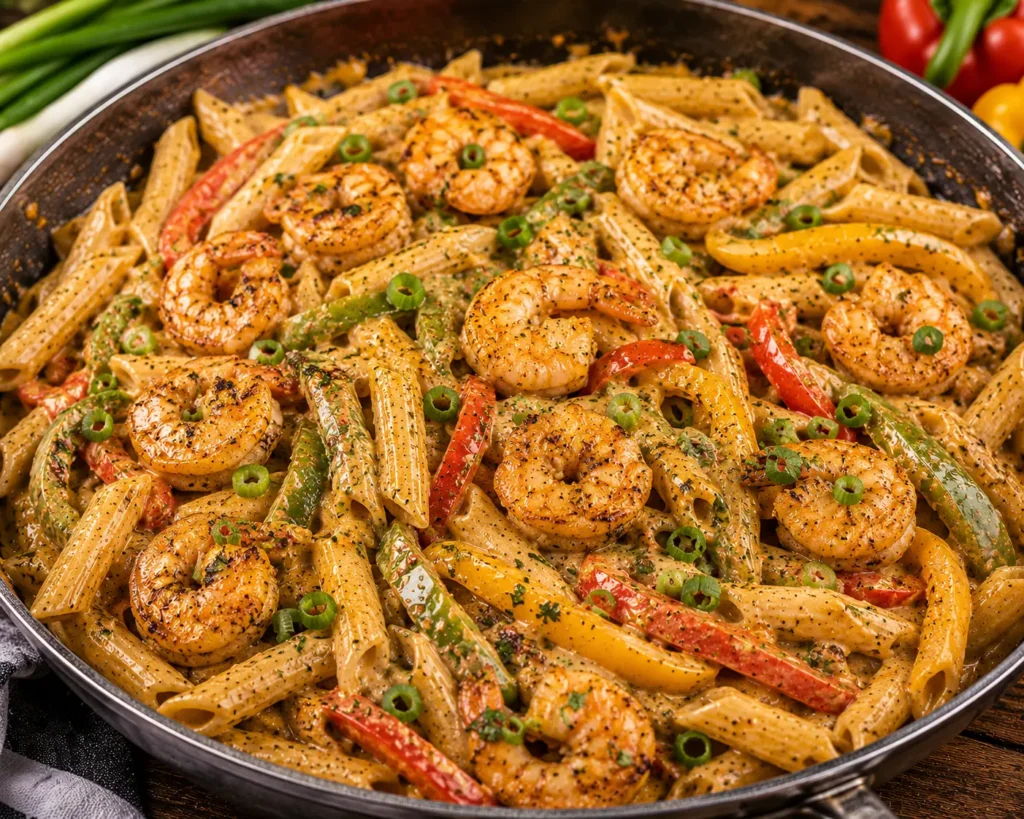
Cooks much faster than chicken, about 2–3 minutes per side over medium heat. Watch closely; overcooked shrimp turns rubbery fast.
Salmon Rasta Pasta
A heartier, richer take. Sear salmon fillets skin-side down first, then flake into large pieces before folding into the finished pasta so it doesn’t break apart too much.
Vegan or Vegetarian Rasta Pasta
Skip the meat and lean on:
- Chickpeas for protein and texture
- Jackfruit for a shreddable, meat-like bite
- Zucchini or mushrooms for added vegetables
- Coconut milk instead of cream, plus a plant-based parmesan alternative or nutritional yeast for the cheesy note
The technique stays the same – you’re only swapping what goes into the pan at the protein step.
Tips for the Best Rasta Pasta
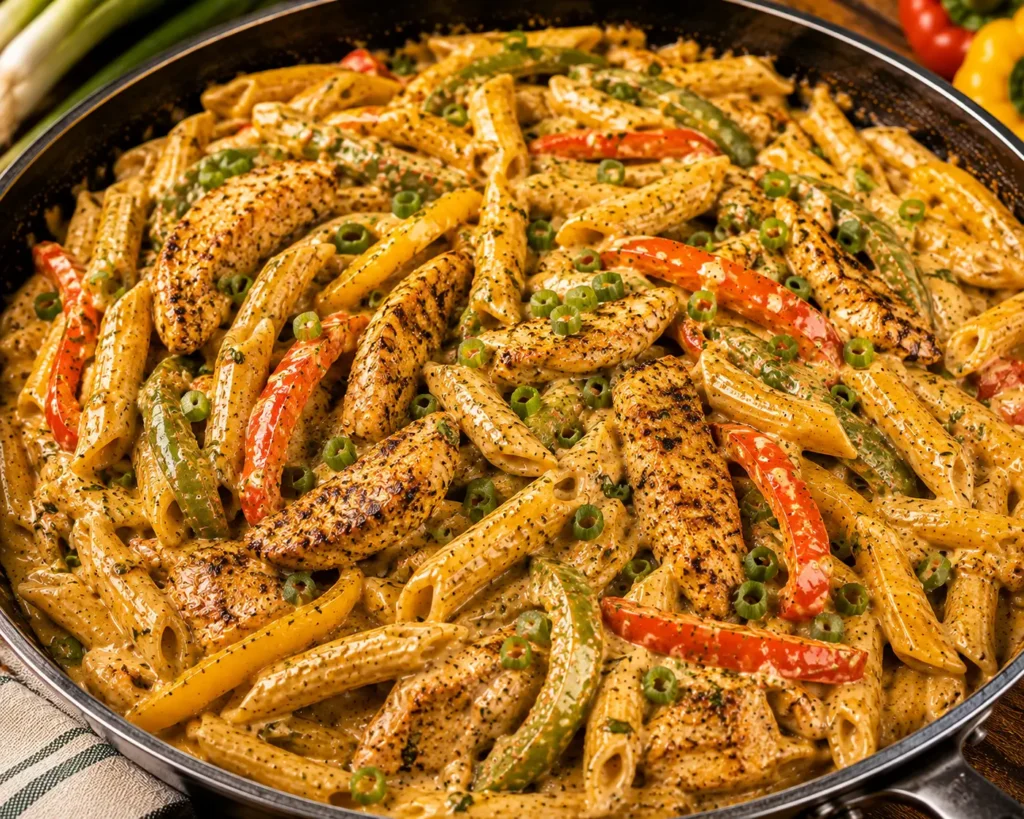
Controlling the Spice Level
- Start with less jerk seasoning than you think you need. You can always add more, but you can’t take it back out.
- If a homemade jerk blend calls for fresh scotch bonnet pepper, remove the seeds and membrane to cut the heat significantly, or use a smaller amount.
- Cream and coconut milk both mellow heat, so a jerk blend that tastes fairly spicy on its own will read as more balanced once it’s in the sauce.
- If you overshoot the heat, a little extra cream or a squeeze of lime helps pull it back.
Mistakes to Avoid
- Using low-quality jerk seasoning – the biggest flavor risk in the whole recipe, and worth spending a little more to avoid.
- Overcooking the peppers – mushy peppers lose their color and crunch. Aim for tender-crisp.
- Adding cold cream to a very hot pan too fast – this can cause the sauce to separate. Lower the heat slightly first, and stir as you pour.
- Skipping the pasta water – a small step that makes a real difference in how the sauce clings to the noodles.
- Overcrowding the protein in the pan – sear in batches if needed.
What to Serve with Rasta Pasta
Rasta pasta is rich, so lighter sides help balance the plate:
- A simple green salad with a citrus vinaigrette
- Garlic bread, if you’re leaning into comfort-food territory
- Steamed or roasted vegetables like broccoli or green beans
- A cold drink with a bit of sweetness – fruit punch or ginger beer – plays well against the jerk spice
Storage and Reheating
Store leftovers in an airtight container in the refrigerator for up to 3-4 days.
Cream sauces are prone to breaking or separating under high heat, so reheat gently:
- Warm it on the stovetop over low heat
- Add a splash of milk, cream, or stock to loosen the sauce as it warms
- Stir frequently and avoid letting it boil
Can You Freeze Rasta Pasta?
Cream-based sauces don’t always freeze and thaw cleanly – they can separate or turn slightly grainy once reheated. If you do freeze a batch, it will still be edible, but expect some texture change in the sauce. Stirring in a little extra cream or stock while reheating helps bring it back together.
Rasta Pasta Recipe Card
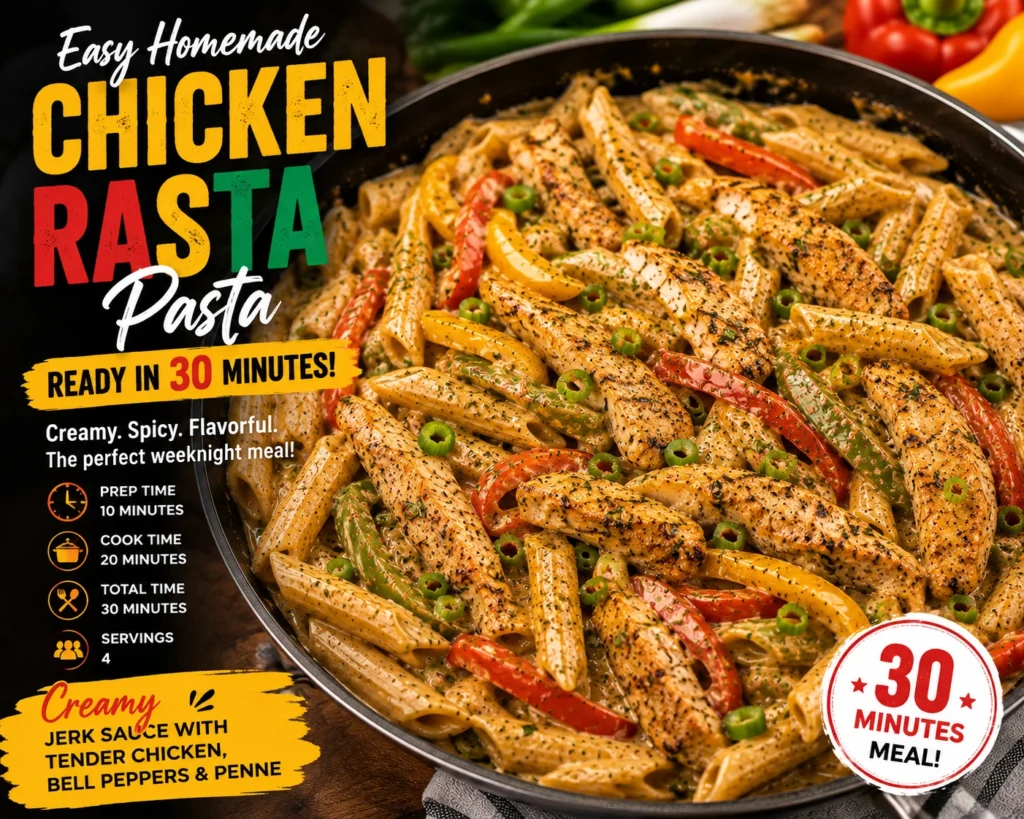
Prep time: 10 minutes Cook time: 20 minutes Total time: 30 minutes Servings: 4–6
Ingredients
- 12 oz short pasta (penne, rigatoni, or fusilli)
- 1.5 lbs boneless, skinless chicken breast or thighs, cut into strips
- 2 tablespoons jerk seasoning, divided
- 2 tablespoons oil, divided
- 1 red bell pepper, sliced
- 1 yellow bell pepper, sliced
- 1 green bell pepper, sliced
- 1/2 small onion, sliced
- 3 cloves garlic, minced
- 1 cup heavy cream (or coconut milk)
- 1/2 cup chicken or vegetable stock
- 1/2 cup grated parmesan cheese
- 2 green onions, sliced, for garnish
- Salt and pepper, to taste
Instructions
- Bring a large pot of salted water to a boil. Cook pasta until al dente. Reserve 1 cup of pasta water, then drain the rest.
- Toss chicken with 1 tablespoon jerk seasoning. Heat 1 tablespoon oil in a large skillet over medium-high heat and sear chicken until cooked through, about 4-5 minutes per side. Remove and set aside.
- In the same skillet, add remaining oil. Sauté bell peppers and onion until just softened, about 4-5 minutes. Add garlic and cook 1 minute more.
- Deglaze with a splash of reserved pasta water, scraping up any browned bits.
- Lower the heat slightly and pour in cream (or coconut milk) and stock. Stir in the remaining tablespoon of jerk seasoning. Simmer 3–4 minutes until slightly thickened.
- Stir in parmesan cheese until melted and smooth.
- Return chicken to the pan, add drained pasta, and toss to coat. Add reserved pasta water a little at a time if the sauce is too thick.
- Season with salt and pepper to taste. Garnish with green onions and serve immediately.
Notes
- Substitute shrimp or salmon for chicken; adjust cook time accordingly (shrimp: 2-3 minutes per side; salmon: sear skin-side down first, then flake).
- For a vegan version, use coconut milk, a plant-based parmesan alternative, and swap chicken for chickpeas or jackfruit.
- Nutrition information will vary based on exact ingredients and brands used. Calculate this from your specific ingredient list before publishing rather than relying on generic estimates.
Conclusion
Rasta pasta earns its popularity honestly. It’s rich and comforting, but it doesn’t demand much of you; one skillet, a handful of pantry staples, and 30 minutes is all it takes to get a plate that tastes as if it came from a Caribbean kitchen, not a weeknight scramble.
Make the classic chicken version first if this is new to you, get a feel for how much jerk seasoning suits your taste, and then start adjusting from there. Swap in shrimp, try coconut milk instead of cream, or build a vegan version around chickpeas. The base recipe is flexible enough to handle almost anything you bring to it, so pick your protein, grab your peppers, and get cooking tonight.
Read This Article: Gluten Free Dessert Recipes: 35 Easy, Delicious Treats Anyone Can Make
Frequently Asked Questions
What does rasta pasta taste like? It’s creamy and rich, with a smoky, warm heat from the jerk seasoning think allspice, thyme, and a peppery kick balanced by the natural sweetness of sautéed bell peppers.
Is rasta pasta spicy? It can be, but the heat level is up to you. Jerk seasoning ranges from mild to quite hot depending on the brand or recipe, and the cream in the sauce mellows the spice significantly. Start with less seasoning and add more to taste.
Can I make rasta pasta ahead of time? Yes. Cook the protein and sauce ahead and store them separately from freshly cooked pasta, then combine and reheat gently when ready to serve. This prevents the pasta from turning mushy.
What’s the best pasta shape for rasta pasta? Short, ridged shapes like penne, rigatoni, or fusilli work best. They hold the sauce well and are easier to eat with sliced peppers and chicken than long noodles are.
Can I use milk instead of heavy cream? Yes, but the sauce will be noticeably thinner and less rich. If you use milk, consider adding extra parmesan or a small cornstarch slurry to help it thicken.
Is rasta pasta gluten-free? It can be, if you swap in a gluten-free pasta. The remaining ingredients chicken, peppers, cream, jerk seasoning- are typically naturally gluten-free, but always check your specific jerk seasoning brand for hidden gluten in fillers.
What protein works best in rasta pasta? Chicken is the most common choice, but shrimp, salmon, and plant-based options like chickpeas or jackfruit all work well. It comes down to personal preference.
Why did my sauce break or curdle? This usually happens when dairy is added to a pan that’s too hot, or when the sauce boils too aggressively. Lower the heat before adding cream, and keep the sauce at a gentle simmer rather than a rolling boil.
Can I make rasta pasta without cheese? Yes. Parmesan adds richness and a salty note, but you can skip it or substitute a plant-based alternative if you’re dairy-free. The sauce will be slightly thinner, so let it simmer a bit longer to compensate.
How long does rasta pasta last in the fridge? Stored in an airtight container, it typically keeps for 3-4 days. Reheat gently over low heat with a splash of cream or stock to bring the sauce back together.
1 thought on “Rasta Pasta Recipe – Creamy Jamaican Jerk Pasta in 30 Minutes”