
Have you ever checked your bank balance a week after getting paid and wondered, “Where did all my money go?” I’ve been there.
A while ago, I realized that I wasn’t spending money on expensive vacations or luxury gadgets. Instead, my paycheck was disappearing through dozens of small purchases—coffee on the way to work, food deliveries after a long day, online shopping deals I didn’t actually need, and subscriptions I had forgotten about. None of them seemed like a big expense on their own, but together they quietly drained my budget.
That experience taught me an important lesson: earning more isn’t always the answer. Learning how to manage what you already have is just as valuable.
The good news is that saving money every month doesn’t require a high salary or a complicated financial plan. It starts with a few simple habits that anyone can build over time. Even small changes can make a noticeable difference when you stick with them consistently.
This beginner’s guide will walk you through practical, realistic steps to help you save money every month without making your life feel restrictive. Whether you’re saving for an emergency fund, a family vacation, a new laptop, or simply looking for more financial peace of mind, these strategies can help you get there.
Why It’s Hard to Save Money Every Month

If saving money were easy, almost everyone would have a healthy savings account. The reality is that most people face challenges—not because they’re careless, but because modern life makes spending incredibly convenient.
Small Purchases Add Up Faster Than You Think
One of the biggest surprises for beginners is how quickly small expenses accumulate.
Buying a snack here, ordering lunch there, subscribing to another streaming service, or making an impulse purchase during an online sale doesn’t feel expensive at the time. But when you review your monthly transactions, those little purchases often add up to hundreds of dollars.
The problem isn’t always one big expense. It’s usually dozens of tiny ones.
Spending Is Easier Than Ever
Shopping has never been more convenient.
With saved payment methods, one-click purchases, food delivery apps, and online marketplaces, it’s possible to spend money within seconds. The easier spending becomes, the harder it can be to pause and ask yourself whether you really need something.
Creating a short waiting period before buying non-essential items can often prevent unnecessary purchases.
Many People Never Learn Personal Finance
Schools teach many useful subjects, but basic money management isn’t always one of them.
As a result, many adults begin earning an income without knowing how to:
- Create a budget
- Build savings
- Manage monthly expenses
- Plan for emergencies
- Set financial goals
Learning these skills later in life is completely normal. The important thing is to start.
Lifestyle Inflation Can Sneak Up on You
Have you noticed that as your income increases, your spending often increases too?
This is known as lifestyle inflation.
Instead of saving the extra income, many people upgrade their phones, buy more expensive clothes, eat out more often, or move into larger homes. While enjoying your earnings is perfectly reasonable, allowing every raise to increase your spending can make saving difficult.
A balanced approach lets you enjoy life while still building your future.
Benefits of Saving Money Every Month

Saving money isn’t about depriving yourself of things you enjoy. It’s about creating options and reducing financial stress.
Here are some of the biggest benefits.
1. Greater Financial Security
Unexpected expenses happen to everyone.
Your car might need repairs. Your laptop could stop working. Medical bills can appear without warning.
Having savings means these situations become inconveniences instead of financial emergencies.
2. Less Money-Related Stress
Financial uncertainty affects many areas of life.
Knowing you have money set aside provides confidence and peace of mind. Instead of worrying about every unexpected expense, you’ll have a financial cushion to rely on.
3. Freedom to Reach Bigger Goals
Monthly savings gradually turn long-term dreams into achievable goals.
You might be saving for:
- A home deposit
- Higher education
- Starting a business
- A family holiday
- A new vehicle
- Retirement
Even modest monthly contributions become meaningful over time through consistent saving.
4. Better Spending Habits
Saving regularly changes the way you think about money.
Instead of asking, “Can I afford this today?” you begin asking, “Is this purchase worth delaying my financial goals?”
That simple mindset shift often leads to smarter financial decisions.
5. More Confidence With Money
Each successful month builds momentum.
As your savings grow even slowly, you gain confidence that you can manage your finances effectively. This confidence often encourages even better habits.
Step 1: Know Exactly Where Your Money Goes
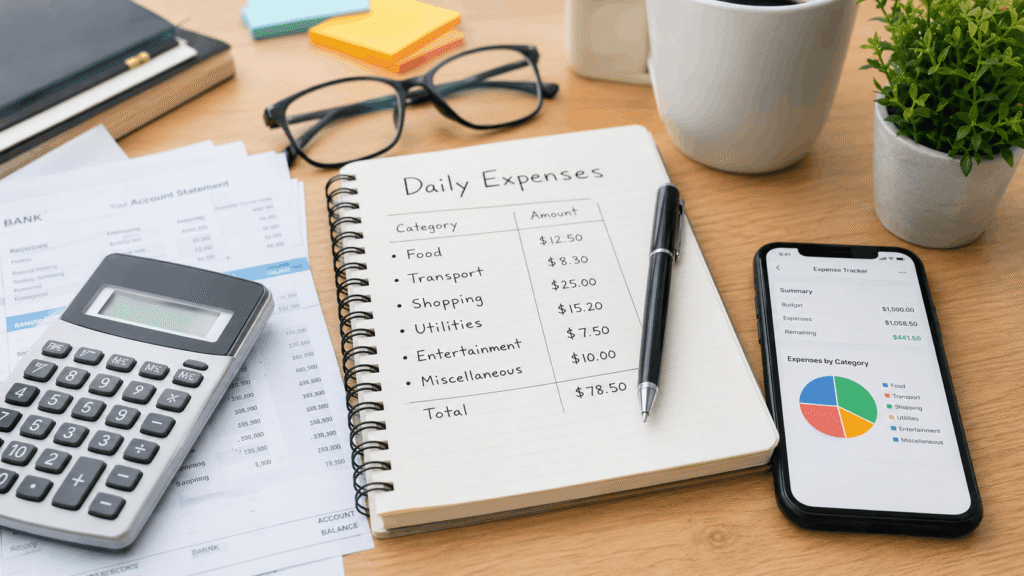
Before trying to save more money, you need to understand how you’re currently spending it.
Many people estimate their expenses, but estimates are often inaccurate.
Tracking your spending gives you a clear picture of your financial habits.
Track Every Expense for One Month
For the next 30 days, record everything you spend.
Include even the smallest purchases.
Examples include:
- Coffee
- Snacks
- Bus fares
- Grocery shopping
- Fuel
- Streaming subscriptions
- Online purchases
- Utility bills
Don’t judge your spending while tracking it. Your goal is simply to collect accurate information.
Categorize Your Spending
At the end of the month, group your expenses into categories.
For example:
| Essential Expenses | Non-Essential Expenses |
| Rent or mortgage | Takeaway meals |
| Utilities | Entertainment |
| Groceries | Shopping |
| Insurance | Subscription services |
| Transportation | Impulse purchases |
This simple exercise often reveals spending patterns you didn’t notice before.
Look for Easy Wins
You don’t need to eliminate everything you enjoy.
Instead, identify areas where small adjustments would have little impact on your happiness but a noticeable impact on your finances.
For example:
- Cooking at home one extra night each week.
- Canceling subscriptions you no longer use.
- Bringing a reusable water bottle instead of buying drinks.
- Comparing prices before making online purchases.
These small improvements can free up money without making you feel deprived.
Action Tip: Spend just 15 minutes each week reviewing your expenses. Regular check-ins make it easier to stay on track than waiting until the end of the month.
Step 2: Set a Realistic Goal to Save Money Every Month
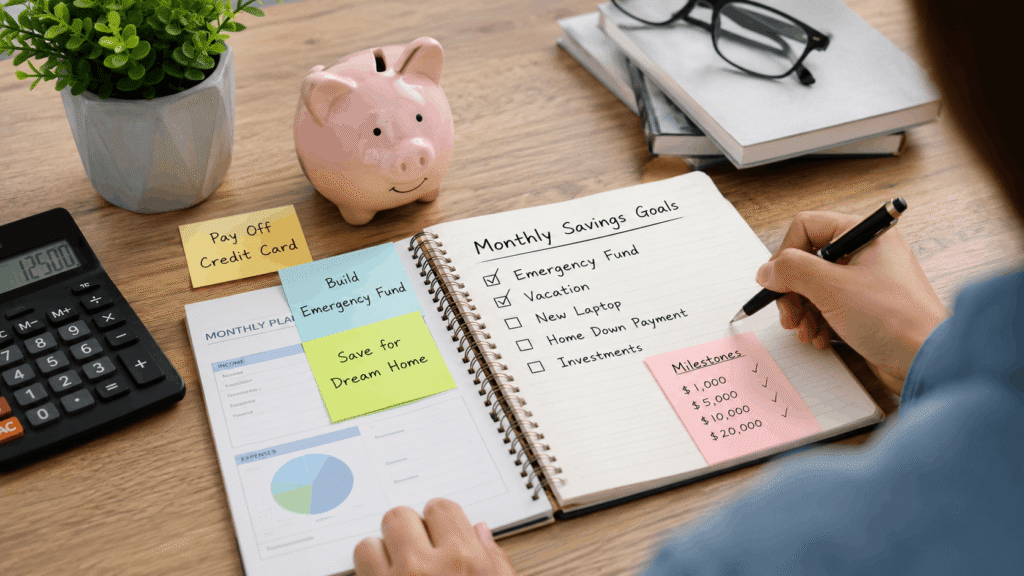
Many beginners make the mistake of aiming too high.
Saving half your income might sound impressive, but if it isn’t sustainable, you’ll probably give up after a few weeks.
A better approach is to start with a goal you can consistently achieve.
Start Small
If you’re completely new to saving, even a modest monthly amount is a success.
The habit matters more than the number.
As your income grows or your spending becomes more efficient, you can gradually increase your savings.
Make Your Goal Specific
Instead of saying:
“I want to save more money.”
Try something like:
- Save for an emergency fund.
- Save for a holiday next summer.
- Save for a new laptop.
- Save for a professional course.
Specific goals make it easier to stay motivated because you always know what you’re working toward.
Review Your Progress Monthly
Life changes.
Your income may increase, unexpected expenses may arise, or your priorities may shift.
Review your savings plan every month and make adjustments if needed rather than abandoning it altogether.
Action Tip: Treat your monthly savings like a regular bill. Set the money aside soon after you’re paid instead of waiting to see what’s left at the end of the month.
Step 3: Create a Beginner-Friendly Budget
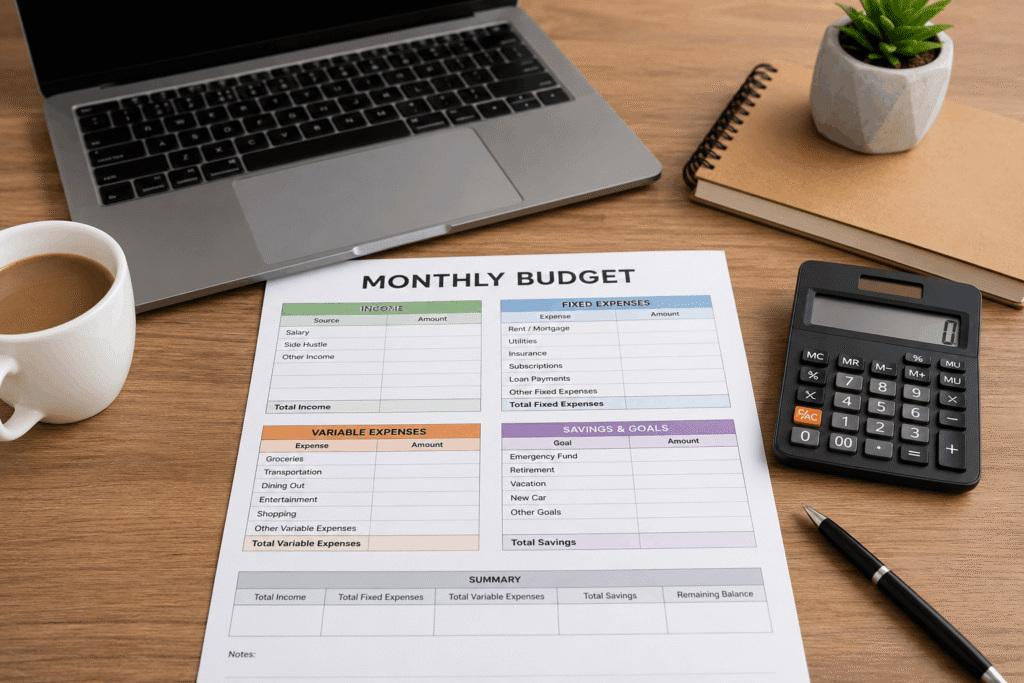
A budget isn’t designed to limit your freedom.
It’s a plan that helps you decide where your money should go before you spend it.
Without a budget, it’s easy for money to disappear without helping you achieve your goals.
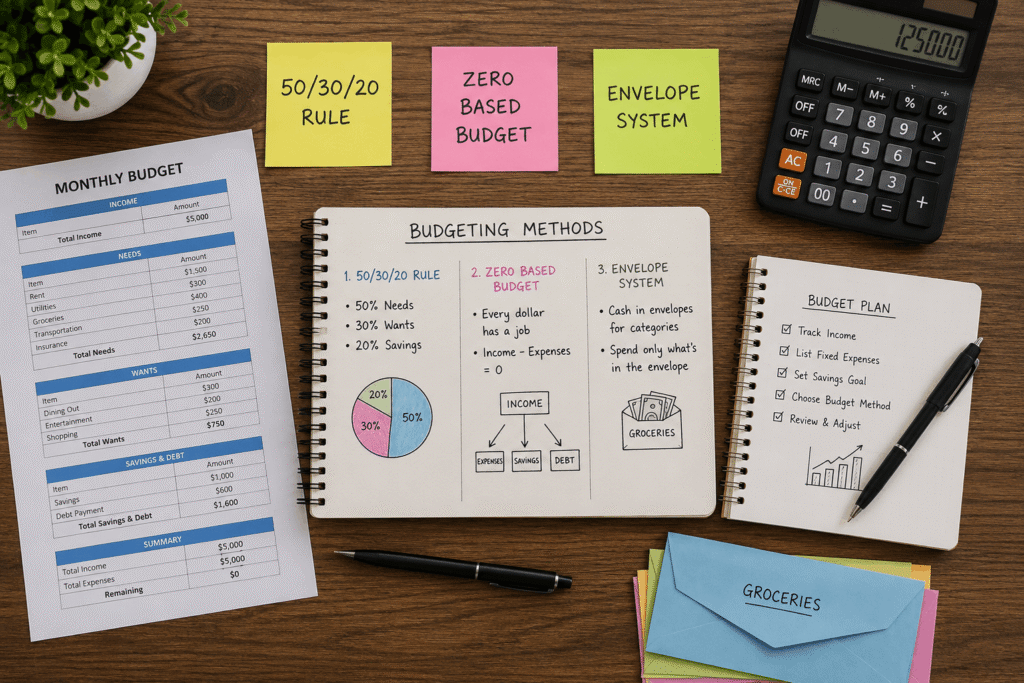
Choose a Budgeting Method That Fits Your Lifestyle
There isn’t a single “perfect” budgeting system. The best one is the one you’ll actually use.
Some popular beginner-friendly approaches include:
- 50/30/20 Budget: Divide your income into needs, wants, and savings or debt repayment.
- Zero-Based Budget: Give every unit of your income a purpose so nothing is left unplanned.
- Envelope Budgeting: Set spending limits for categories and stop spending once the limit is reached.
Choose one method and stick with it for at least a month before deciding whether it works for you.
Budget for Enjoyment Too
A common mistake is creating a budget that’s too strict.
If you remove every enjoyable expense, you’re more likely to abandon your plan.
Instead, include reasonable amounts for entertainment, hobbies, or dining out. A sustainable budget should support both your financial goals and your everyday life.
Review and Adjust Regularly
Your first budget won’t be perfect—and that’s okay.
Think of budgeting as a skill that improves with practice. Review your plan each month, identify what worked well, and adjust categories as your circumstances change.
Action Tip: Schedule a 20-minute “money check-in” at the end of each month. Review your spending, celebrate progress, and make small improvements for the month ahead instead of trying to overhaul your finances overnight.
Step 4: Cut Expenses to Save Money Every Month Without Feeling Deprived

One of the biggest myths about saving money is that you have to give up everything you enjoy.
In reality, successful savers don’t stop spending—they spend more intentionally.
Instead of asking, “How can I spend nothing?” ask yourself, “How can I get the same value while spending less?”
That small shift in thinking makes saving feel much more sustainable.
Review Your Monthly Subscriptions
Subscription services are easy to forget because payments happen automatically.
Take 15 minutes to check your bank statement or payment history and ask yourself:
- Do I still use this?
- Is it worth the monthly cost?
- Can I switch to a cheaper plan?
Even canceling one or two unused subscriptions can free up money every month.
Plan Meals Before Grocery Shopping
Food is often one of the largest monthly expenses, but it’s also one of the easiest areas to improve.
Simple habits include:
- Planning meals for the week.
- Creating a shopping list.
- Avoiding grocery shopping when hungry.
- Buying store brands when quality is similar.
- Cooking extra portions for leftovers.
These changes reduce food waste and make it less tempting to order expensive takeout.
Reduce Utility Bills
Small daily habits can lower household costs over time.
For example:
- Turn off lights when leaving a room.
- Unplug chargers that aren’t in use.
- Use energy-efficient bulbs.
- Wash clothes with full loads when practical.
- Adjust heating or cooling sensibly.
While savings vary depending on your home and energy prices, reducing unnecessary energy use is generally a good financial habit.
Delay Impulse Purchases
Impulse buying is one of the biggest enemies of monthly savings.
A useful strategy is the 24-hour rule.
If you want something that isn’t essential, wait at least one day before buying it.
For larger purchases, consider waiting several days.
More often than not, you’ll realize you don’t actually need the item.
Action Tip: Before every non-essential purchase, ask yourself: Will I still be happy I bought this a month from now?
Step 5: Automate Your Savings
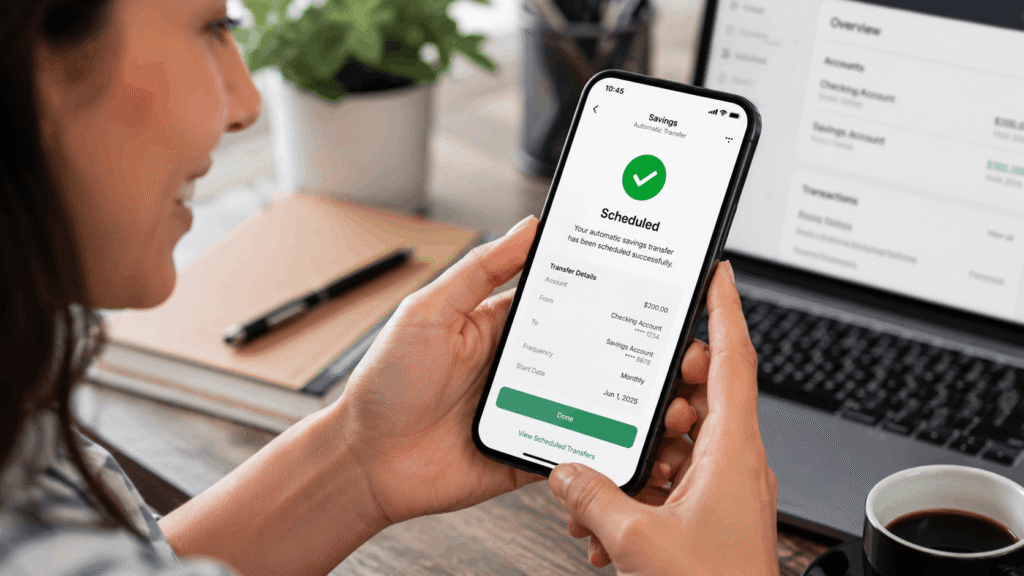
Saving works best when it doesn’t depend on willpower.
Automation removes the temptation to spend first and save whatever happens to be left.
Pay Yourself First
Many people save whatever remains at the end of the month.
Unfortunately, there’s often very little left.
Instead, treat savings like one of your regular monthly bills.
When your income arrives:
- Set aside your savings first.
- Pay essential expenses.
- Spend what’s left according to your budget.
This simple habit can completely change the way you manage money.
Use Automatic Transfers
Most banks allow customers to schedule recurring transfers between accounts.
Automatically moving money into a separate savings account each payday helps build consistency.
Because the money leaves your spending account immediately, you’re less likely to spend it impulsively.
Keep Savings Separate
If possible, avoid mixing savings with your everyday spending account.
A separate account creates a small psychological barrier, making unnecessary withdrawals less tempting.
Action Tip: Even if you can only automate a small amount each month, consistency matters more than size.
Step 6: Build Better Spending Habits
Saving money isn’t just about numbers.
It’s also about changing daily habits.
Good financial decisions become easier when they become routine.
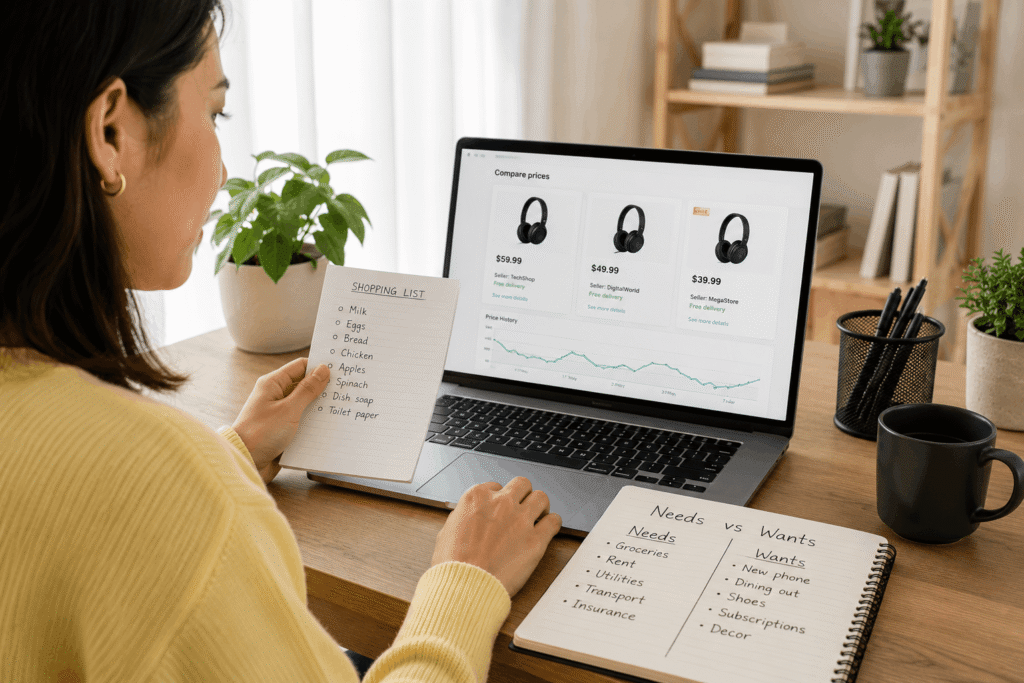
Learn the Difference Between Needs and Wants
Every purchase falls into one of two categories.
Needs
- Housing
- Food
- Utilities
- Transportation
- Healthcare
Wants
- Entertainment
- New gadgets
- Fashion upgrades
- Premium subscriptions
- Luxury purchases
There’s nothing wrong with spending money on things you enjoy.
The key is making sure your wants don’t consistently prevent you from reaching your financial goals.
Avoid Emotional Spending
Many purchases happen because of emotions rather than necessity.
People often spend when they’re:
- Stressed
- Bored
- Lonely
- Celebrating
- Feeling pressured by advertising
Recognizing these patterns is the first step toward changing them.
Instead of shopping, consider alternatives like exercising, reading, calling a friend, or taking a walk.
Compare Before Buying
Before making a purchase:
- Compare prices.
- Read reviews.
- Check warranty information.
- Wait for sales if the purchase isn’t urgent.
A few extra minutes of research can often lead to better value.
Action Tip: Make shopping lists before visiting stores or browsing online. Sticking to a list reduces impulse purchases.
Step 7: Increase Your Monthly Savings

Cutting expenses helps, but increasing your income can accelerate your progress even more.
You don’t necessarily need a second full-time job.
Small additional income streams can make a noticeable difference.
Sell Items You No Longer Use
Look around your home.
Many people have items they no longer need, such as:
- Old electronics
- Books
- Furniture
- Clothing
- Sports equipment
Selling unused belongings not only creates extra cash but also reduces clutter.
Learn a New Skill
Improving your skills can create future earning opportunities.
Examples include:
- Graphic design
- Writing
- Coding
- Digital marketing
- Video editing
- Photography
Investing in yourself often provides long-term financial benefits.
Save Unexpected Income
Whenever you receive:
- A bonus
- A tax refund
- A cash gift
- Freelance income
Consider saving at least part of it rather than spending it all immediately.
This strategy helps your savings grow faster without affecting your regular monthly budget.
Action Tip: Whenever your income increases, try increasing your monthly savings before increasing your lifestyle expenses.
Common Money-Saving Mistakes Beginners Make
Everyone makes mistakes while learning to manage money.
The important thing is recognizing them early.
Setting Unrealistic Goals
Trying to save an extremely large percentage of your income may sound motivating, but unrealistic goals often lead to frustration.
Start small.
Consistency beats perfection.
Not Tracking Spending
Without tracking expenses, it’s difficult to know where improvements are needed.
A budget without spending records is mostly guesswork.
Forgetting Irregular Expenses
Many people budget for monthly bills but forget about expenses like:
- Car maintenance
- School supplies
- Gifts
- Insurance renewals
- Annual subscriptions
Planning for these costs helps avoid surprises.
Giving Up After One Bad Month
Unexpected expenses happen.
Missing your savings target once doesn’t mean you’ve failed.
Focus on building good habits over months and years rather than expecting perfection every single month.
Comparing Yourself to Others
Everyone’s financial situation is different.
Your savings journey should reflect your own income, responsibilities, and goals—not someone else’s lifestyle shared on social media.
Helpful Budgeting Tools and Apps
Technology can make managing money much easier.
Here are a few types of tools worth exploring:
| Tool Type | How It Helps |
| Budgeting apps | Track income, expenses, and spending categories. |
| Expense trackers | Show exactly where your money goes. |
| Banking apps | Monitor balances and schedule automatic transfers. |
| Spreadsheet templates | Create a personalized monthly budget. |
| Digital note-taking apps | Record savings goals and spending plans. |
Some budgeting apps also allow users to set savings goals, receive spending alerts, and categorize purchases automatically. Features vary by provider, so compare options before choosing one.
The best tool is the one you’ll use consistently.
30-Day Beginner Money Saving Challenge
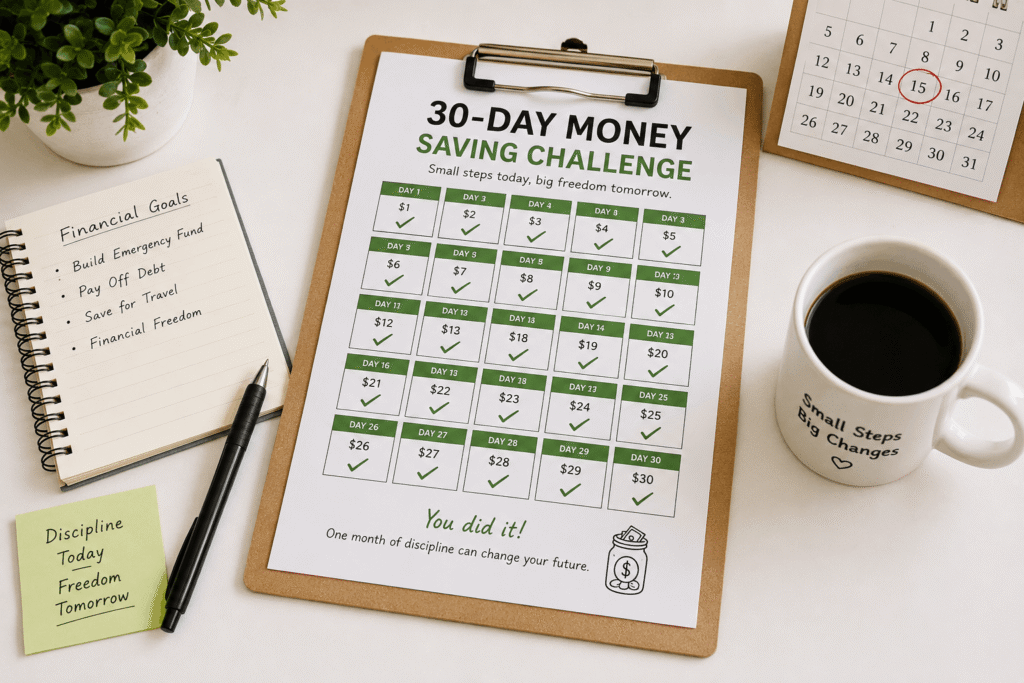
If you’ve been waiting for the “perfect time” to start saving, this is it.
You don’t need to change everything overnight.
Instead, focus on one small improvement each day.
Week 1: Build Awareness
- Track every expense.
- Review your bank statements.
- Identify unnecessary spending.
- Set one realistic savings goal.
Week 2: Improve Your Budget
- Create your first monthly budget.
- Cancel unused subscriptions.
- Plan meals before shopping.
- Reduce impulse purchases.
Week 3: Strengthen Your Habits
- Automate your savings.
- Compare prices before buying.
- Bring lunch or coffee from home when possible.
- Review your weekly spending.
Week 4: Prepare for Long-Term Success
- Adjust your budget if needed.
- Celebrate your progress.
- Increase your savings if possible.
- Set next month’s financial goal.
By the end of 30 days, you’ll likely have a much clearer understanding of your spending habits and a stronger foundation for saving consistently.
Remember, successful money management isn’t about being perfect.
It’s about making slightly better decisions, month after month, until those decisions become habits.
Frequently Asked Questions
1. How much money should I save every month?
There’s no single amount that works for everyone. The right savings goal depends on your income, essential expenses, debts, and financial priorities.
If you’re just getting started, focus on building the habit rather than aiming for a large number. Saving a small amount consistently is usually more effective than setting an ambitious target you can’t maintain.
As your income grows or your expenses decrease, you can gradually increase your monthly savings.
2. Can I save money if I have a low income?
Yes. While a higher income can make saving easier, your habits play an equally important role.
Start by:
- Tracking every expense.
- Creating a realistic budget.
- Reducing unnecessary spending.
- Saving a small amount each payday.
Even modest savings can grow over time when you’re consistent.
3. What is the easiest budgeting method for beginners?
Many beginners find the 50/30/20 budget easy to understand because it divides income into three broad categories:
- Needs
- Wants
- Savings or debt repayment
However, no budgeting method is perfect for everyone. If another approach—such as zero-based budgeting or envelope budgeting—fits your lifestyle better, it’s perfectly reasonable to use that instead.
4. Should I save money or pay off debt first?
The answer depends on the type of debt and your overall financial situation.
Many financial experts recommend building a small emergency fund first so unexpected expenses don’t force you to borrow more money. After that, prioritizing high-interest debt while continuing to save regularly is often a balanced approach.
If you’re unsure which strategy is best for your circumstances, consider seeking guidance from a qualified financial professional.
5. How long does it take to build good saving habits?
There’s no fixed timeline.
Some people feel comfortable within a few weeks, while others need several months to develop consistent routines.
The important thing is not how quickly you improve—it’s whether you keep going after setbacks.
6. What’s the biggest mistake beginners make?
One of the most common mistakes is trying to change everything at once.
Cutting every enjoyable expense, setting unrealistic savings goals, or following a budget that’s too strict often leads to frustration.
Small, sustainable improvements are usually easier to maintain over the long term.
7. Should I keep my savings in a separate account?
For many people, yes.
Keeping savings separate from your everyday spending account can reduce the temptation to spend money impulsively. It also makes it easier to track your progress toward specific financial goals.
The best type of savings account depends on your country, banking options, and financial needs, so compare available accounts before making a decision.
8. How often should I review my budget?
A monthly review works well for most people.
You can also spend a few minutes each week checking your recent transactions to make sure you’re staying on track.
Regular reviews help you identify problems early rather than at the end of the month.
9. Do I need a budgeting app?
Not necessarily.
Some people prefer budgeting apps because they automatically categorize expenses and track progress.
Others are perfectly comfortable using a notebook or a simple spreadsheet.
Choose whichever method you’ll actually use consistently.
10. What should I do if I miss my savings goal?
Don’t give up.
Unexpected expenses, emergencies, and life changes happen to everyone.
Instead of abandoning your plan, review what happened, make small adjustments, and start the following month again. Building long-term financial habits is far more important than having a perfect month.
Your 7-Step Monthly Saving Action Plan
If you’ve made it this far, you already have the knowledge you need to start improving your finances. Now it’s time to put that knowledge into practice.
Here’s a simple checklist you can follow every month:
✅ Track every expense for at least 30 days.
✅ Review your bank statements and identify unnecessary spending.
✅ Set a realistic monthly savings goal.
✅ Create a budget that fits your lifestyle.
✅ Cut unnecessary expenses without sacrificing everything you enjoy.
✅ Automate your savings whenever possible.
✅ Review your progress at the end of each month and make small improvements.
Remember, financial success doesn’t usually come from one big decision. It comes from hundreds of small, consistent choices made over time.
Final Thoughts

Learning how to save money every month isn’t about becoming the person who never spends anything. It’s about becoming someone who spends with purpose.
When you understand where your money goes, create a realistic budget, automate your savings, and build healthier spending habits, saving becomes much less stressful. Over time, those small improvements can help you handle unexpected expenses, work toward meaningful goals, and feel more confident about your finances.
There will probably be months when things don’t go exactly as planned. A surprise bill might appear, your income could change, or you may spend more than you intended. That’s completely normal. What matters most is getting back on track rather than giving up altogether.
Think of saving money as a lifelong habit instead of a short-term challenge. Every thoughtful financial decision, no matter how small, helps build a stronger foundation for your future.
Start today. Track your spending, create your first budget, and save whatever amount you can comfortably manage. A year from now, you’ll likely be grateful that you took the first step.