
Have you ever watched someone turn a laptop and an internet connection into a full-time income and wondered, “How did they do that?” I used to think they had some secret advantage. The truth is much simpler: they learned a valuable skill and kept improving it.
Today, companies, startups, and small businesses hire people from around the world to solve problems online. Whether it’s writing content, designing graphics, managing social media, or building websites, the demand for digital skills continues to grow.
The good news is that you don’t need a computer science degree or years of experience to get started. Many successful freelancers and remote workers began with free online tutorials, practiced consistently, and built their portfolios one project at a time.
In this guide, you’ll discover the best online skills to learn for earning money, what each skill involves, who it’s best suited for, and why it’s worth considering. The goal isn’t to convince you to learn everything—it’s to help you choose the one skill that matches your interests and long-term goals.
Why Learning Online Skills Matters

The way people work has changed dramatically over the past decade. Businesses are increasingly hiring remote talent, outsourcing specialized tasks, and relying on digital tools to reach customers. As a result, people with practical online skills often have more opportunities than ever before.
Learning an online skill can help you:
- Earn freelance income
- Qualify for remote jobs
- Start an online business
- Build multiple income streams
- Increase your career options
- Stay competitive as technology evolves
Perhaps the biggest advantage is flexibility. Many online skills allow you to work from home, choose your clients, or even create digital products that generate income over time.
That doesn’t mean success happens overnight. Like any valuable skill, it requires patience, practice, and continuous learning. The people who succeed are usually the ones who focus on getting better every week instead of chasing shortcuts.
How to Choose the Best Online Skills to Learn for Earning Money
One mistake many beginners make is trying to learn five different skills at once. Instead, choose one area, practice consistently, and become confident before expanding into something new.
Here are a few factors to consider.

Choose Something You Enjoy
If you enjoy writing, content writing or copywriting may feel natural. If you’re creative, graphic design or video editing could be a better fit. When you enjoy the work, staying motivated becomes much easier.
Look at Market Demand
Learning a skill that businesses actively need increases your chances of finding work. Browse freelance platforms or remote job boards to see which services are consistently in demand.
Consider the Learning Curve
Some skills, like virtual assistance or social media management, can be learned relatively quickly. Others, such as web development or data analysis, require more time but may open the door to higher-paying opportunities.
Think About Your Long-Term Goals
Ask yourself:
- Do I want freelance clients?
- Do I want a remote job?
- Do I want to build my own business?
- Do I want a skill that complements my current career?
Your answers can help narrow your options and keep you focused.
1. Digital Marketing
Digital marketing is one of the most versatile online skills because almost every business needs customers. It involves promoting products or services using online channels such as search engines, social media, email, and websites.
Why it’s valuable
Companies invest heavily in digital marketing because it directly impacts sales and brand awareness. Businesses often hire freelancers or agencies to manage campaigns, making this skill suitable for both employment and freelancing.
What you’ll learn
- Marketing strategy
- Online advertising
- Email campaigns
- Content marketing
- Analytics
- Customer acquisition
Best for
- Creative thinkers
- Business-minded individuals
- Freelancers
- Entrepreneurs
2. Search Engine Optimization (SEO)

SEO focuses on helping websites appear higher in search engine results. When done correctly, it can bring consistent organic traffic without paying for every visitor.
SEO combines technical knowledge, content optimization, and user experience.
Why it’s valuable
Businesses constantly want more website traffic. Skilled SEO professionals help companies improve visibility, attract customers, and increase revenue.
Key skills
- Keyword research
- On-page SEO
- Technical SEO basics
- Link building
- Content optimization
- SEO reporting
Beginner tip
Practice by optimizing your own blog or website. Real-world experience often teaches more than theory alone.
3. Content Writing
If you enjoy explaining ideas clearly, content writing can be an excellent starting point.
Businesses need articles, blog posts, guides, product descriptions, newsletters, and website copy every day.
Why it’s valuable
Quality content helps companies educate customers, improve SEO, and build trust.
What you’ll write
- Blog articles
- Website pages
- Tutorials
- Buying guides
- Product reviews
- Educational content
Beginner advice
Focus on writing clearly instead of trying to sound overly professional. Readers appreciate useful, straightforward content.
4. Copywriting
While content writing informs readers, copywriting persuades them to take action.
Copywriters create sales pages, advertisements, landing pages, email campaigns, and product descriptions that encourage people to buy or sign up.

Why it’s valuable
Businesses often measure copywriting by results, making experienced copywriters highly sought after.
Skills you’ll develop
- Consumer psychology
- Headlines
- Calls to action
- Sales funnels
- Email marketing
- Conversion optimization
If you enjoy marketing and understanding customer behavior, copywriting is worth exploring.
5. Graphic Design
Visual communication plays a major role in modern business. Every company needs logos, social media graphics, presentations, advertisements, and marketing materials.
Graphic designers combine creativity with problem-solving to communicate ideas visually.
Common projects
- Social media posts
- Business logos
- Marketing banners
- Brand identity
- Presentation designs
- Infographics
Why it’s valuable
Businesses of every size need visual content, creating opportunities across many industries.
6. Video Editing
Video has become one of the most popular forms of online content. Businesses, educators, creators, and brands all need editors who can transform raw footage into engaging videos.

Why it’s valuable
As short-form and long-form video continue to grow, skilled editors are needed across multiple platforms.
Typical projects
- YouTube videos
- Educational courses
- Podcasts
- Promotional videos
- Social media reels
- Product demonstrations
Helpful advice
Start by editing your own videos or volunteer projects to build a portfolio before seeking paid work.
7. Web Development
Every modern business needs a website, making web development one of the most practical online skills you can learn.
Developers build websites, web applications, and online platforms that businesses rely on every day.
Areas to learn
- HTML
- CSS
- JavaScript
- Responsive design
- Website performance
- Basic backend concepts
Why it’s valuable
Businesses frequently hire developers for new websites, redesigns, maintenance, and custom features.
Although the learning curve is steeper than for some other skills, the long-term opportunities can be substantial.
8. Mobile App Development
With millions of people using smartphones daily, mobile apps continue to play an important role in business and entertainment.
Developers create applications for Android, iOS, or cross-platform environments.

Projects may include
- Business apps
- Educational apps
- Productivity tools
- Health tracking
- E-commerce applications
- Entertainment apps
If you enjoy problem-solving and programming, app development offers strong long-term career potential.
9. UI/UX Design
Great products aren’t just functional; they’re easy and enjoyable to use.
UI (User Interface) focuses on visual design, while UX (User Experience) focuses on improving how people interact with digital products.
Responsibilities
- Wireframing
- User research
- Interface design
- User testing
- Prototyping
- Improving usability
Why businesses hire UI/UX designers
Better user experiences often lead to happier customers, improved engagement, and higher conversion rates.
This field combines creativity with analytical thinking, making it appealing for people who enjoy solving design problems.
10. Social Media Management

Many businesses understand the importance of social media but don’t have time to manage multiple platforms consistently.
That’s where social media managers come in.
Typical responsibilities
- Creating content calendars
- Writing captions
- Scheduling posts
- Responding to comments
- Monitoring performance
- Growing online communities
Why it’s valuable
Nearly every business wants an active online presence. Skilled social media managers help brands stay visible, connect with customers, and build trust over time.
Beginner tip
Practice by managing your own social media page or helping a local business. Real examples of your work can be more convincing than certifications alone.
11. Virtual Assistance
Virtual assistants (VAs) help businesses handle day-to-day administrative tasks remotely. It’s one of the easiest online skills to start with because many roles don’t require advanced technical knowledge.
Typical responsibilities
- Managing emails
- Scheduling appointments
- Data entry
- Customer support
- Internet research
- Calendar management
Why it’s valuable
Small businesses, entrepreneurs, and busy professionals often outsource repetitive tasks so they can focus on growing their business.
Best for: Organized individuals with good communication skills.
12. Data Analysis
Businesses collect huge amounts of data, but data alone isn’t useful unless someone can interpret it. Data analysts turn numbers into insights that help companies make better decisions.
Skills you’ll learn
- Spreadsheet analysis
- Data visualization
- Basic statistics
- Reporting dashboards
- Business insights
Why it’s valuable
Organizations rely on data to improve marketing, sales, customer service, and operations.
Best for: Analytical thinkers who enjoy solving problems.
13. AI Prompt Engineering
Artificial intelligence has become part of many workplaces. Knowing how to communicate effectively with AI tools can improve productivity across writing, coding, marketing, research, and design.
Prompt engineering isn’t about replacing human expertise. It’s about learning how to guide AI to produce useful, accurate, and efficient results.
Skills you’ll develop
- Writing effective prompts
- Refining AI outputs
- Automating repetitive tasks
- Responsible AI usage
- Workflow optimization
Why it’s valuable
Businesses increasingly expect employees and freelancers to understand how AI tools fit into modern workflows.
14. No-Code & Low-Code Automation
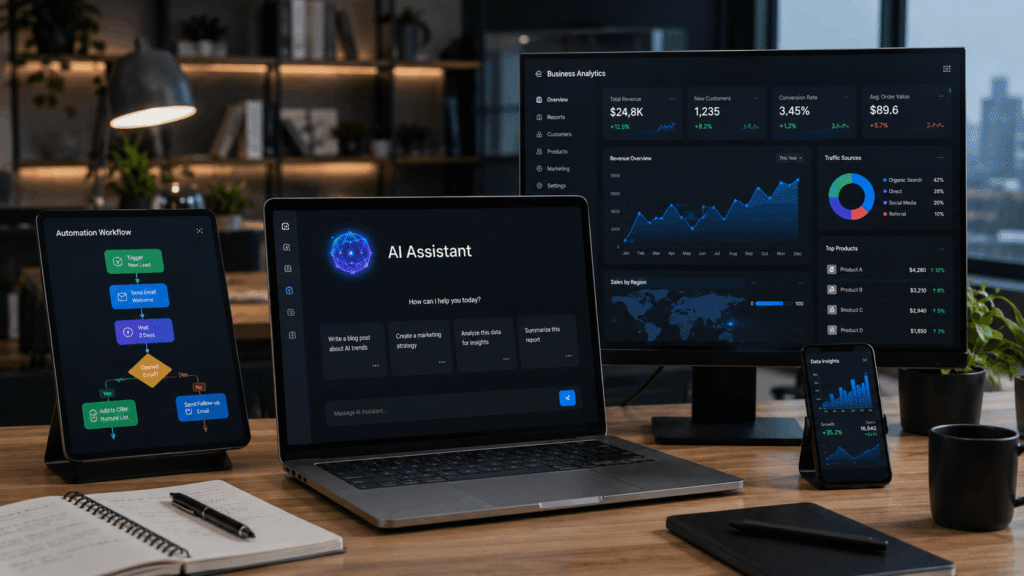
Not every business problem requires custom software. No-code and low-code platforms allow users to automate repetitive work without extensive programming knowledge.
Examples of automation
- Automatically saving form responses
- Sending email notifications
- Connecting different business apps
- Creating approval workflows
- Scheduling recurring tasks
Why it’s valuable
Automation saves businesses time, reduces errors, and improves efficiency.
15. Email Marketing
Despite the popularity of social media, email remains one of the most effective ways for businesses to communicate with customers.
Email marketers build subscriber lists, create campaigns, and analyze performance.
Responsibilities
- Newsletter creation
- Promotional campaigns
- Audience segmentation
- Automation sequences
- Performance reporting
Why it’s valuable
Businesses use email to nurture relationships and encourage repeat customers.
16. Affiliate Marketing
Affiliate marketing involves recommending products or services and earning a commission when someone purchases through your referral link.
Common platforms
- Blogs
- YouTube channels
- Email newsletters
- Social media
- Niche websites
Important reminder
Success usually comes from building trust with an audience. Avoid promoting products you haven’t researched or don’t believe provide value.
17. E-commerce Management
Online stores require ongoing management beyond simply listing products.
E-commerce managers help businesses with inventory, customer service, product listings, promotions, and store optimization.
Responsibilities
- Product management
- Store optimization
- Customer communication
- Sales reporting
- Marketing coordination
Why it’s valuable
As online shopping continues to expand, businesses need skilled professionals to keep stores running smoothly.
18. Cybersecurity Fundamentals
Every connected business needs to protect its systems and customer information.
Cybersecurity professionals help reduce risks by identifying vulnerabilities and promoting safe digital practices.
Beginner topics
- Password security
- Multi-factor authentication
- Network basics
- Threat awareness
- Safe browsing
- Security best practices
Why it’s valuable
Cybersecurity awareness is becoming important in nearly every industry.
19. Cloud Computing Basics
Many companies store data and run applications using cloud services rather than local servers.
Learning cloud fundamentals can open doors to technical careers and complement other digital skills.
Topics to explore
- Cloud storage
- Virtual machines
- Databases
- Networking basics
- Cloud security
- Deployment concepts
Why it’s valuable
Cloud technology supports businesses of every size and continues to be widely adopted.
20. Online Teaching & Course Creation
If you enjoy explaining concepts, teaching online can become both rewarding and profitable.
You can teach:
- Languages
- Academic subjects
- Software skills
- Business topics
- Creative hobbies
- Professional development
Ways to earn
- Live tutoring
- Recorded courses
- Membership communities
- Coaching
- Digital learning materials
Teaching not only creates income opportunities but also strengthens your own expertise.
Best Online Skills to Learn for Earning Money: Comparison Table
| Skill | Beginner Friendly | Learning Time | Demand | Income Potential* | Freelancing |
| Digital Marketing | ⭐⭐⭐⭐ | Medium | High | High | Yes |
| SEO | ⭐⭐⭐ | Medium | High | High | Yes |
| Content Writing | ⭐⭐⭐⭐⭐ | Short | High | Medium–High | Yes |
| Copywriting | ⭐⭐⭐ | Medium | High | High | Yes |
| Graphic Design | ⭐⭐⭐⭐ | Medium | High | High | Yes |
| Video Editing | ⭐⭐⭐ | Medium | High | High | Yes |
| Web Development | ⭐⭐ | Long | Very High | High | Yes |
| Mobile App Development | ⭐⭐ | Long | High | High | Yes |
| UI/UX Design | ⭐⭐⭐ | Medium | High | High | Yes |
| Social Media Management | ⭐⭐⭐⭐⭐ | Short | High | Medium | Yes |
| Virtual Assistance | ⭐⭐⭐⭐⭐ | Short | High | Medium | Yes |
| Data Analysis | ⭐⭐⭐ | Medium | High | High | Yes |
| AI Prompt Engineering | ⭐⭐⭐⭐ | Short | Growing | Medium–High | Yes |
| Automation | ⭐⭐⭐ | Medium | Growing | High | Yes |
| Email Marketing | ⭐⭐⭐⭐ | Medium | High | High | Yes |
| Affiliate Marketing | ⭐⭐⭐⭐ | Medium | Medium | Varies | Yes |
| E-commerce Management | ⭐⭐⭐ | Medium | High | High | Yes |
| Cybersecurity | ⭐⭐ | Long | High | High | Limited |
| Cloud Computing | ⭐⭐ | Long | High | High | Limited |
| Online Teaching | ⭐⭐⭐⭐⭐ | Short | High | Varies | Yes |
*Income varies depending on experience, location, specialization, and the type of clients or employer.
Best Online Skills to Learn for Earning Money for Beginners
If you’re starting from scratch, these skills offer a gentle learning curve while still providing opportunities to earn:
- Content Writing
- Social Media Management
- Virtual Assistance
- Graphic Design
- AI Prompt Engineering
- Email Marketing
The key is to choose one skill and build practical experience before moving to another.
Highest-Paying Online Skills
While earnings vary widely, these skills are often associated with strong long-term income potential:
- Web Development
- Mobile App Development
- Data Analysis
- Cybersecurity
- Cloud Computing
- Digital Marketing
- UI/UX Design
- Automation
- SEO
- Copywriting
Rather than chasing the highest-paying skill, focus on becoming highly skilled in an area you enjoy. Expertise usually leads to better opportunities than constantly switching between trends.
Best Platforms to Learn Online Skills
Many excellent learning resources are available, including both free and paid options.
Free Resources
- YouTube
- Free online tutorials
- Official software documentation
- Community forums
- Open educational resources
Paid Learning Options
- Structured online courses
- Professional certification programs
- Specialized bootcamps
- Industry workshops
Before purchasing a course, review the curriculum, instructor experience, and recent student feedback.
How to Start Earning After Learning a Skill
Learning is only the beginning. Employers and clients want proof that you can apply your knowledge.
1. Build a Portfolio
Create sample projects that demonstrate your abilities. Even personal or practice projects can showcase your skills.
2. Create a Professional Online Presence
A complete LinkedIn profile or personal website helps potential clients understand your experience and expertise.
3. Join Freelance Platforms
Freelance marketplaces can help beginners find their first clients while building reviews and experience.
4. Keep Improving
Technology changes quickly. Continue learning through books, tutorials, webinars, and hands-on practice.
5. Network with Others
Join online communities, attend virtual events, and connect with professionals in your field. Opportunities often come through relationships as much as technical ability.
Common Mistakes Beginners Make
Avoid these common pitfalls:
- Trying to learn too many skills at once.
- Expecting fast results without consistent practice.
- Spending more time watching tutorials than building projects.
- Ignoring communication and soft skills.
- Failing to create a portfolio.
- Underpricing your work without understanding the market.
- Giving up after a few rejected proposals.
- Neglecting continuous learning as technology evolves.
Progress usually comes from steady improvement, not overnight success.
Frequently Asked Questions
1. Which online skill pays the most?
There isn’t one universal answer. Earnings depend on your expertise, specialization, experience, and the value you provide to clients or employers.
2. Can I learn online skills for free?
Yes. Many beginners start with free tutorials, official documentation, and practice projects before investing in paid courses.
3. Which online skill is easiest to learn?
Content writing, virtual assistance, and social media management are often considered beginner-friendly.
4. How long does it take to start earning?
Some people begin finding small projects within a few months, while others need more time to build confidence and a portfolio. Results vary based on effort and market demand.
5. Do I need a university degree?
For many online careers, practical skills and a strong portfolio matter more than formal education.
6. Can I learn multiple skills together?
It’s usually better to master one skill first, then add complementary skills as you grow.
7. Is AI replacing online jobs?
AI is changing how work is done, but many professionals now use AI as a productivity tool rather than a replacement. Learning to work alongside AI can strengthen your career.
8. How do I choose my first skill?
Consider your interests, strengths, learning style, and long-term goals. You’re more likely to stay motivated if you enjoy the work.
9. Do I need expensive software?
Not always. Many tools offer free plans or trial versions that are sufficient for learning and building a portfolio.
10. Should I get certified?
Certifications can strengthen your resume in some fields, but employers and clients often place greater value on demonstrated skills and real-world projects.
Final Thoughts
Learning an online skill is one of the most practical investments you can make in yourself. It won’t make you rich overnight, but it can create opportunities that weren’t available just a few years ago.
Instead of trying to master every trending skill, choose one that genuinely interests you. Commit to learning it consistently, build real projects, ask for feedback, and keep improving. Little, steady progress often leads to meaningful long-term results.
Remember that success online isn’t about finding the “perfect” skill. It’s about becoming reliable, solving real problems, and continuing to learn as technology evolves.
Whether your goal is freelancing, remote work, or starting an online business, the best time to begin is now. Pick one skill, create a learning plan, and take the first step today. Your future opportunities will be shaped by the skills you choose to develop.