
Have you ever watched an English movie and understood most of the dialogue, only to struggle when someone asked you a simple question in English? If so, you’re not alone.
Many English learners can read books, understand YouTube videos, or follow online courses without much difficulty. But when it’s time to speak, the words seem to disappear. You hesitate, translate every sentence in your head, and worry about making mistakes. By the time you’ve figured out what to say, the conversation has already moved on.
The good news is that speaking English is a skill, not a talent you’re born with. Like riding a bicycle or learning to drive, it improves with consistent practice. You don’t need a perfect accent, a huge vocabulary, or years of expensive classes to become a confident speaker. What you do need is the right approach and the willingness to practice a little every day.
This guide focuses on practical methods that you can start using immediately. Instead of memorizing endless grammar rules or word lists, you’ll learn how to build habits that make speaking feel natural over time. Whether you’re preparing for a job interview, planning to study abroad, traveling, or want to communicate with people around the world, these strategies can help you become a more confident English speaker.
Let’s begin by understanding why speaking feels much harder than reading or listening.
Why Do Many People Understand English but Can’t Speak It?

If you feel stuck, don’t assume you’re bad at languages. In most cases, the problem isn’t your ability; it’s the way you’ve been learning.
Fear of Making Mistakes
One of the biggest obstacles is the fear of saying something wrong.
Many learners stay silent because they worry about incorrect grammar, pronunciation, or vocabulary. Ironically, this fear slows progress. Speaking is a skill that improves through practice, and mistakes are part of that learning process.
Think about how children learn their first language. They don’t wait until every sentence is perfect. They speak, make mistakes, receive feedback, and gradually improve. Adults can benefit from the same mindset.
Instead of aiming for perfection, focus on communicating your message clearly. Confidence grows with every conversation.
Too Much Passive Learning
Watching English videos, reading articles, and completing grammar exercises are all helpful, but they mainly develop passive skills.
Speaking is an active skill.
Imagine wanting to learn swimming by watching videos without ever getting into the water. No matter how much theory you learn, you’ll only become comfortable by practicing.
The same principle applies to spoken English. Every day you spend only reading or listening without speaking delays your progress.
Translating Every Sentence
Many learners first think in their native language and then translate every sentence into English.
This process takes time and often makes conversations feel stressful.
Instead, train yourself to think directly in English. Start with simple thoughts:
- “I’m making breakfast.”
- “The weather is nice today.”
- “I need to finish my work.”
At first, this may feel difficult, but with regular practice, your brain begins forming English sentences more naturally.
Limited Speaking Opportunities
Some people don’t have friends or coworkers who speak English regularly. Others feel embarrassed to practice in public.
Fortunately, you don’t need a conversation partner every day to improve.
You can:
- Describe your daily routine aloud.
- Read books aloud.
- Record your voice.
- Practice with AI conversation tools.
- Join online language exchange communities.
- Participate in English-speaking clubs or discussion groups.
Even ten to fifteen minutes of speaking practice each day is more effective than several hours of passive study once a week.
Lack of Confidence
Confidence doesn’t come before practice; it comes because of practice.
Every successful English speaker was once a beginner who struggled to form sentences. The difference is that they kept speaking despite making mistakes.
The more often you use English in real situations, the more comfortable it becomes.
Benefits of Improving English Speaking Skills

Learning to speak English confidently can open doors in many areas of life. While everyone’s goals are different, stronger communication skills often make everyday situations easier and create new opportunities.
Better Career Opportunities
Many companies value employees who can communicate effectively in English, especially in international business, customer service, technology, freelancing, tourism, and remote work.
Being able to explain your ideas clearly during meetings or interviews can make a positive impression and expand your professional opportunities.
Requirements vary by industry and country, so always research the language expectations for your chosen career.
More Confidence in Everyday Life
Speaking confidently changes how you approach conversations.
Instead of worrying about every sentence, you’ll focus on sharing your ideas. This confidence can help during interviews, presentations, networking events, and casual conversations.
The goal isn’t to sound like a native speaker; it’s to communicate comfortably and clearly.
Easier Travel
English is widely used in airports, hotels, tourist attractions, and many international destinations.
Knowing how to ask for directions, order food, or solve travel problems can make your trips more enjoyable and less stressful.
Better Academic Performance
Many educational resources, online courses, and research materials are available in English.
Improving your speaking skills also strengthens your listening, vocabulary, and communication skills, making classroom discussions and presentations easier.
Access to Global Communities
English allows you to connect with people from different cultures.
You can:
- Join international online communities.
- Attend webinars.
- Participate in professional forums.
- Build friendships worldwide.
- Collaborate on projects.
Communication becomes less about translating words and more about exchanging ideas.
Step 1: Build a Daily Speaking Habit

Consistency matters more than long study sessions.
Practicing for 15 minutes every day usually produces better results than studying for three hours once a week and then stopping.
Speak for 10-15 Minutes Daily
Choose a regular time each day.
For example:
- During your morning walk
- While preparing breakfast
- After work
- Before going to bed
Treat speaking practice like brushing your teeth—something you do every day without skipping.
Describe Your Daily Activities
Narrate what you’re doing as if you’re explaining it to someone.
Examples:
- “I’m making coffee.”
- “Now I’m checking my emails.”
- “I need to buy groceries today.”
- “The weather looks cloudy.”
This simple exercise helps your brain think faster in English.
Talk About Your Day
Spend five minutes summarizing your day aloud.
You might answer questions like:
- What did I do today?
- What was interesting?
- What did I learn?
- What will I do tomorrow?
This builds fluency because you’re creating original sentences instead of repeating memorized ones.
Record Yourself
Use your phone to record one or two minutes of speaking.
When you listen back, you’ll notice:
- pronunciation issues
- repeated words
- long pauses
- grammar patterns that need improvement
Tracking recordings over several weeks also helps you hear your own progress, which can be very motivating.
Step 2: Think in English Instead of Translating

Many learners lose confidence because they mentally translate every sentence before speaking.
Breaking this habit takes time, but it’s one of the most effective ways to improve fluency.
Start with Simple Thoughts
Don’t begin with complicated conversations.
Think about ordinary situations.
For example:
- “I’m thirsty.”
- “I should clean my room.”
- “I have an online meeting later.”
- “This food smells delicious.”
As these thoughts become automatic, longer sentences will feel much easier.
Name Objects Around You
Look around your room and name everything you see.
For example:
- chair
- laptop
- window
- notebook
- backpack
Then make short sentences.
- “The laptop is on the desk.”
- “The window is open.”
- “I need my notebook.”
This exercise strengthens vocabulary while improving sentence formation.
Imagine Conversations
Pretend someone asks you common questions.
Examples:
- Where do you live?
- What are your hobbies?
- Why are you learning English?
- What did you do last weekend?
Answer naturally without memorizing scripts.
This prepares you for real conversations.
Step 3: Improve Your Listening Skills
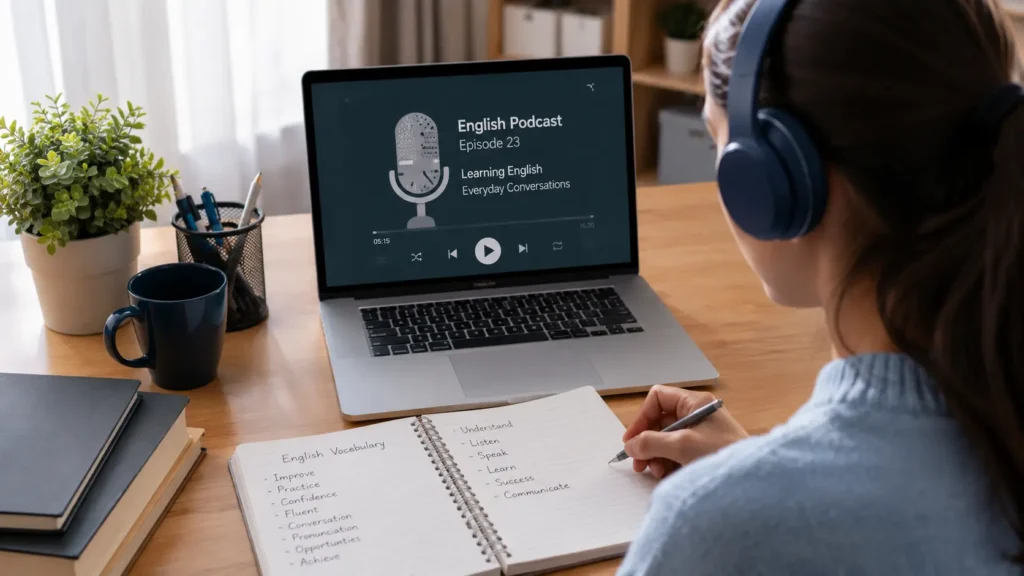
Strong speaking begins with strong listening.
The more English you hear, the more naturally your brain recognizes pronunciation, sentence patterns, and everyday expressions.
Listen Every Day
Aim to include English in your daily routine.
Good options include:
- Podcasts
- News reports
- Interviews
- Audiobooks
- Educational YouTube videos
Choose content that matches your current level. If it’s too difficult, you’ll spend more time translating than learning.
Watch with Purpose
Instead of watching passively:
- Listen to one sentence.
- Pause the video.
- Repeat it aloud.
- Compare your pronunciation.
This technique helps connect listening with speaking rather than treating them as separate skills.
Repeat What You Hear
When you hear a useful sentence, repeat it immediately.
Examples:
- “That’s a great idea.”
- “Could you help me?”
- “I’ll think about it.”
Learning complete phrases makes conversations smoother than memorizing isolated vocabulary words.
Step 4: Build Vocabulary You Can Actually Use
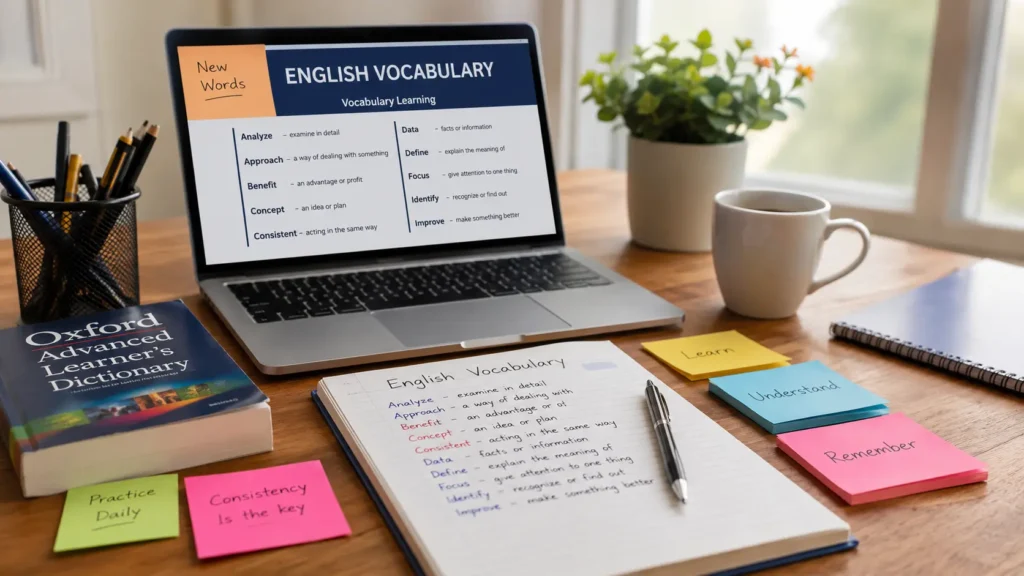
A large vocabulary isn’t helpful if you can’t remember the words during a conversation.
Instead of trying to learn hundreds of random words every week, focus on vocabulary you’ll use often.
Learn Phrases Instead of Single Words
Native and fluent speakers commonly use word combinations rather than isolated vocabulary.
Instead of learning:
- decision
Learn:
- make a decision
Instead of:
- advice
Learn:
- give advice
- ask for advice
These natural combinations help your speech sound more fluent.
Keep a Vocabulary Notebook
Whenever you discover a useful word or phrase, write down:
- the word
- its meaning
- One example sentence
- a personal sentence using it
Review your notebook regularly instead of only adding new entries.
Use New Words Immediately
The fastest way to remember vocabulary is to use it.
Challenge yourself to include new words in conversations, journal entries, or daily speaking practice within 24 hours of learning them.
Even if you make mistakes, active use helps move vocabulary from short-term memory into long-term recall.
By combining a daily speaking habit, thinking in English, improving your listening skills, and learning practical vocabulary, you’ll build a strong foundation for fluent communication. In the next part of this guide, you’ll learn how to improve pronunciation, practice real conversations, read aloud effectively, master everyday conversation patterns, create a 30-day speaking challenge, and develop routines that keep your progress moving forward.
Step 5: Improve Your Pronunciation

Many learners believe they need a native accent to speak English well. In reality, clear pronunciation matters much more than sounding like someone from a particular country.
Your goal should be easy-to-understand speech, not accent perfection.
Practice the Shadowing Technique
Shadowing is one of the most effective ways to improve pronunciation and speaking rhythm.
Here’s how to do it:
- Choose a short audio clip (30–60 seconds).
- Listen carefully once.
- Play it again and repeat the speaker immediately, trying to match their speed, stress, and intonation.
- Repeat the exercise several times.
Good sources include podcasts, interviews, TED-style talks, and educational YouTube videos.
Start with short clips and gradually increase the length as your confidence grows.
Record and Compare Your Voice
Your phone can become one of your best learning tools.
Record yourself reading a paragraph or answering a simple question such as:
- What are your hobbies?
- Describe your hometown.
- What are your goals this year?
Listen to your recording and compare it with a native or highly proficient speaker saying something similar.
Pay attention to:
- Word stress
- Sentence rhythm
- Difficult sounds
- Speaking speed
- Clear pronunciation
Don’t expect perfection immediately. Compare recordings every few weeks to hear your improvement over time.
Focus on Commonly Mispronounced Words
Some English words are frequently pronounced incorrectly because their spelling doesn’t match their pronunciation.
Whenever you learn a new word:
- Listen to its pronunciation from a reliable dictionary or language-learning resource.
- Repeat it several times.
- Use it in your own sentences.
Learning the correct pronunciation from the beginning is much easier than correcting habits later.
Step 6: Practice Speaking Every Day

Learning about speaking is different from actually speaking.
Even if you know thousands of English words, you’ll only become fluent by using them regularly.
Find a Speaking Partner
If possible, practice with someone else.
This could be:
- A friend
- A classmate
- A coworker
- An online language exchange partner
- A tutor
Regular conversations expose you to different speaking styles and improve your ability to respond naturally.
Practice with AI Conversation Tools
If you don’t have a speaking partner, AI-powered conversation tools can provide valuable practice.
You can ask an AI assistant to:
- Act as a job interviewer.
- Simulate ordering food in a restaurant.
- Play the role of a customer or shopkeeper.
- Help you prepare for presentations.
- Correct awkward sentences.
- Suggest more natural expressions.
While AI can be useful for practice, it’s still important to have occasional conversations with real people whenever possible.
Join Speaking Communities
Many free online communities organize English conversation sessions.
Speaking with learners from different countries helps you:
- Build confidence
- Improve listening
- Learn everyday expressions
- Get comfortable speaking with different accents
Don’t wait until you feel “ready.” Real conversations are part of the learning process.
Step 7: Read Aloud Every Day
Reading silently improves comprehension.
Reading aloud improves speaking.
It trains your mouth, tongue, and brain to work together while producing English sentences.
Choose Interesting Material
Read content you genuinely enjoy, such as:
- News articles
- Blog posts
- Children’s books
- Short stories
- Magazine articles
Interesting topics make it easier to stay consistent.
Read Slowly First
Focus on:
- Clear pronunciation
- Natural pauses
- Correct sentence stress
Speed will improve naturally with practice.
Repeat the Same Passage
Instead of reading something new every day, reread the same short passage several times.
You’ll notice:
- Better fluency
- Fewer pronunciation mistakes
- More confidence
Repeated practice strengthens speaking habits much faster than constantly switching materials.
Step 8: Learn Common Conversation Patterns
Fluent speakers don’t create every sentence from scratch.
They rely on familiar patterns they have used many times.
Learning these patterns makes conversations smoother and faster.
Greetings
Examples include:
- Good morning.
- Nice to meet you.
- How have you been?
- It’s great to see you again.
Asking Questions
Practice common structures such as:
- Could you tell me…?
- What do you think about…?
- How often do you…?
- Would you mind explaining…?
Giving Opinions
Useful expressions include:
- In my opinion…
- I believe…
- From my experience…
- I think the best option is…
Keeping Conversations Going
Instead of answering with one word, add extra information.
Instead of:
“Yes.”
Try:
“Yes, I really enjoyed it because the story was interesting.”
Longer answers help improve fluency and create more engaging conversations.
Step 9: Don’t Wait for Perfect Grammar
Many learners stop speaking because they’re trying to build the perfect sentence.
Unfortunately, real conversations don’t give us unlimited thinking time.
Communication Comes First
If someone understands your message, you’ve succeeded.
For example:
Instead of staying silent because you’re unsure about grammar, say what you can.
Most listeners care much more about understanding you than hearing perfect grammar.
Improve Grammar Gradually
Grammar is important, but it should support communication-not prevent it.
A practical approach is to:
- Learn one grammar topic.
- Use it while speaking.
- Review your mistakes.
- Practice again.
This method helps grammar become a natural part of your speech.
Step 10: Follow a 30-Day Speaking Challenge
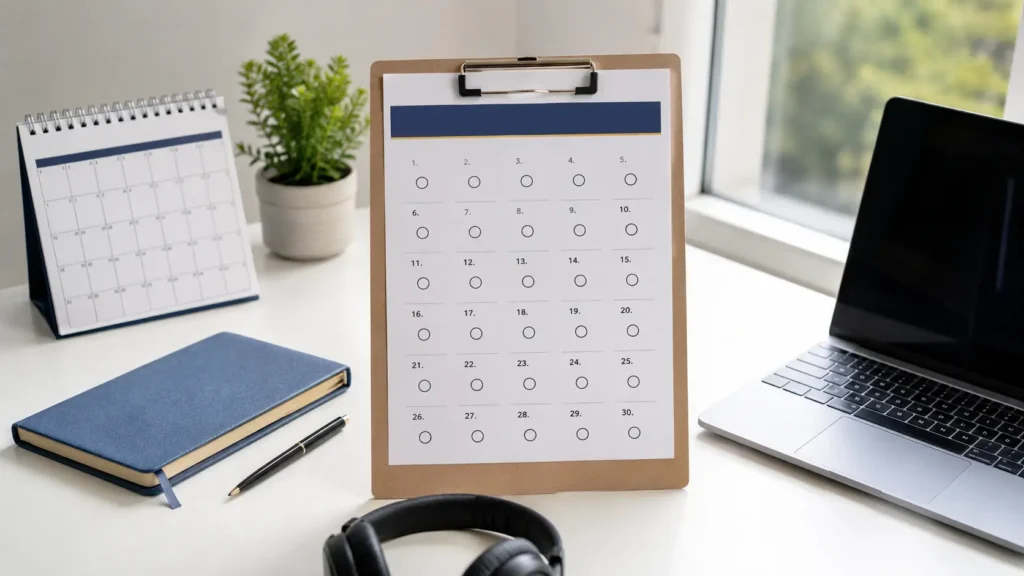
Small daily improvements add up surprisingly quickly.
Here’s a simple four-week plan.
Week 1: Build the Habit
Daily goals:
- Speak for 10 minutes.
- Read aloud for 10 minutes.
- Learn five useful phrases.
- Record yourself once.
Week 2: Increase Speaking Time
Continue Week 1 and add:
- Describe your day.
- Watch one English video.
- Repeat useful expressions aloud.
- Practice thinking in English.
Week 3: Have Real Conversations
This week, try to:
- Join an online speaking session.
- Practice with AI.
- Answer common interview questions.
- Tell short stories about your experiences.
Week 4: Challenge Yourself
By now, you should be ready to:
- Speak for 20-30 minutes daily.
- Discuss unfamiliar topics.
- Watch videos without subtitles occasionally.
- Review your recordings from Week 1.
You’ll likely notice improvements in confidence, vocabulary, and fluency.
Best Free Resources to Improve English Speaking
You don’t need expensive courses to improve. Many excellent free resources are available online.
| Resource Type | How It Helps | Best For |
| Podcasts | Improves listening and pronunciation | Intermediate learners |
| YouTube lessons | Visual explanations and speaking practice | All levels |
| Online dictionaries with audio | Correct pronunciation | Beginners |
| AI conversation tools | Interactive speaking practice | Daily practice |
| Language exchange communities | Real conversations | Intermediate and advanced learners |
| News websites with audio | Vocabulary and natural speech | Intermediate learners |
Choose one or two resources and use them consistently rather than jumping between many different platforms.
Common Mistakes That Slow Progress
Avoiding these mistakes can save months of frustration.
Studying Grammar Without Speaking
Grammar knowledge alone doesn’t create fluent speakers.
Every grammar lesson should be followed by speaking practice.
Memorizing Long Word Lists
Learning hundreds of unrelated words often leads to forgetting them quickly.
Instead, learn useful phrases you can use immediately.
Practicing Only Once a Week
Consistency beats intensity.
Fifteen minutes every day is usually more effective than several hours on one weekend.
Being Afraid of Mistakes
Mistakes are feedback, not failure.
Every conversation teaches you something new.
Comparing Yourself to Others
Everyone learns at a different pace.
Measure your progress against your past self—not someone else’s journey.
Sample Daily English Speaking Routine
You don’t need hours of study each day. Even a short, focused routine can make a difference if you stick with it.
15-Minute Routine
Ideal for busy learners.
- 5 minutes listening
- 5 minutes reading aloud
- 5 minutes speaking about your day
30-Minute Routine
A balanced option.
- 10 minutes listening
- 10 minutes speaking
- 10-minute vocabulary review
60-Minute Routine
For faster progress.
- 15 minutes listening
- 15 minutes shadowing
- 15-minute conversation practice
- 15 minutes reading aloud and recording yourself
Choose the routine that fits your schedule. The best plan is the one you can maintain consistently for months, not just a few days.
By this stage, you’ve learned how to build strong speaking habits, improve pronunciation, practice conversations, avoid common mistakes, and create a realistic study routine. In the final section, we’ll answer the most common questions learners have, provide a practical action plan, and finish with key takeaways you can start using today.
Frequently Asked Questions
1. Can I become fluent in English without living in an English-speaking country?
Yes. Many people become confident English speakers without ever moving abroad. The key is to create an English-rich environment wherever you live.
You can:
- Speak English every day.
- Watch English videos and podcasts.
- Read books and articles.
- Practice with AI conversation tools.
- Join online language exchange communities.
Regular practice matters far more than your location.
2. How long does it take to improve English speaking skills?
There isn’t a single timeline that fits everyone.
Your progress depends on factors such as:
- Your current English level
- How often do you practice
- The quality of your practice
- Your learning methods
Someone who speaks English for 20–30 minutes every day will generally improve faster than someone who studies only once a week. Instead of focusing on becoming fluent quickly, aim to become a little better every day.
3. Is it okay to make mistakes while speaking?
Every fluent English speaker has made thousands of mistakes while learning.
Mistakes help you:
- Discover weak areas
- Learn correct expressions
- Build confidence
- Improve naturally over time
If you wait until you’re perfect, you’ll never gain the speaking experience needed to improve.
4. How can I practice English if I don’t have a speaking partner?
You have more options than you might think.
Try these activities:
- Talk to yourself about your daily routine.
- Read articles aloud.
- Record your voice and listen back.
- Practice role-playing with AI.
- Describe pictures or objects around you.
- Answer common interview or conversation questions aloud.
These exercises strengthen your speaking skills even when you’re learning alone.
5. Should I focus on grammar or speaking?
Both are important, but speaking should come first if your goal is communication.
Grammar helps you become more accurate, while speaking helps you become more fluent.
A balanced approach is to:
- Learn a grammar concept.
- Use it in real conversations.
- Review your mistakes.
- Practice again.
This method makes grammar more useful because you’re applying it instead of only memorizing rules.
6. How many new words should I learn each day?
Quality is more important than quantity.
Rather than trying to memorize dozens of words, focus on learning a small number of useful words or phrases that you can use immediately.
For example:
- Learn 5-10 new words or expressions.
- Write your own example sentences.
- Use them in conversation the same day.
- Review them regularly.
Using vocabulary in real situations helps you remember it much longer.
7. Do I need a perfect accent?
No.
Your goal should be clear and confident communication.
People from around the world speak English with different accents. As long as your pronunciation is understandable, a perfect accent isn’t necessary for effective communication.
Spend your time improving clarity, vocabulary, and confidence instead of chasing accent perfection.
8. What’s the best way to improve pronunciation?
The most effective approach combines several habits:
- Listen carefully to fluent speakers.
- Practice the shadowing technique.
- Read aloud every day.
- Record yourself regularly.
- Compare your pronunciation with reliable audio examples.
- Ask for feedback when possible.
Small improvements made consistently lead to noticeable progress.
9. Which resources should beginners use?
Choose resources that match your current level.
A simple beginner routine could include:
- Easy English podcasts
- Short YouTube lessons
- Online dictionaries with pronunciation audio
- Children’s or graded readers
- AI conversation practice
- Daily reading and speaking exercises
It’s better to use a few trusted resources consistently than to constantly switch between different courses and apps.
10. How can I stay motivated when learning English?
Motivation comes and goes, but habits keep you moving forward.
Instead of waiting to feel motivated:
- Set small weekly goals.
- Track your daily practice.
- Celebrate small improvements.
- Record your speaking once a month.
- Compare your progress over time.
When you notice that you’re speaking more naturally than you did a few weeks ago, your confidence grows—and so does your motivation.
Your 7-Day Action Plan
If you’re wondering where to begin, start with this simple plan.
Day 1
- Speak English for 10 minutes.
- Introduce yourself aloud.
- Record your voice.
Day 2
- Learn five useful phrases.
- Use each phrase in a sentence.
- Read one short article aloud.
Day 3
- Watch a short English video.
- Pause and repeat key sentences.
Day 4
- Describe your daily routine in English.
- Think in English for a few minutes during everyday tasks.
Day 5
- Practice a conversation with an AI assistant or language partner.
- Focus on speaking without translating.
Day 6
- Review the vocabulary you’ve learned this week.
- Use it while talking about your hobbies or interests.
Day 7
- Record another one-minute speech.
- Compare it with your recording from Day 1.
- Note what has improved and identify one area to work on next week.
Repeat this cycle with new topics, vocabulary, and conversation practice. Over time, these small daily efforts become lasting habits.
Final Thoughts
Improving your English speaking skills doesn’t require perfect grammar, a large vocabulary, or an expensive course. What matters most is consistent practice and a willingness to use the English you already know.
Don’t wait until you feel completely ready. Speak with the vocabulary you have today. Every conversation, every recording, and every small mistake helps you become a stronger communicator.
Remember these key principles:
- Practice speaking every day, even for just 10–15 minutes.
- Think in English instead of translating every sentence.
- Listen actively and repeat what you hear.
- Learn useful phrases, not just individual words.
- Read aloud to improve pronunciation and confidence.
- Record yourself regularly to track progress.
- Accept mistakes as a natural part of learning.
- Stay consistent rather than trying to improve overnight.
Fluency isn’t built in a single week or even a single month. It’s the result of small, steady improvements that add up over time.
Start today. Speak one sentence. Tomorrow, speak two. A few months from now, you’ll look back and realize that the conversations that once felt impossible have become part of your everyday life.
Quick Checklist Before You Finish Reading
✔ Speak English for at least 10-15 minutes every day.
✔ Learn and use 5-10 new words or phrases each day.
✔ Read something aloud to improve pronunciation.
✔ Listen to English through podcasts, videos, or audiobooks.
✔ Practice thinking in English instead of translating.
✔ Record yourself once a week to measure progress.
✔ Focus on clear communication rather than perfect grammar.
✔ Stay patient and consistent-steady practice leads to lasting improvement.
By following these habits consistently, you’ll build stronger speaking skills, greater confidence, and the ability to communicate naturally in English-one conversation at a time.