
Bringing a dog into your home is exciting, but it also comes with important responsibilities. One of the biggest questions new pet owners ask is, “What is the best Dog Feeding Schedule by Age?” The answer isn’t the same for every dog. A puppy’s nutritional needs are very different from those of an adult or senior dog, and factors like breed size, activity level, and overall health all influence the ideal feeding routine.
A consistent Dog Feeding Schedule by Age does more than satisfy hunger. It supports healthy growth, helps maintain a healthy weight, improves digestion, and creates a predictable routine that dogs quickly learn to trust. Feeding at regular times can also make house training easier for puppies and help owners notice changes in appetite that may signal a health concern.
While choosing a high-quality dog food is essential, when you feed your dog matters just as much. Even the best food cannot provide maximum benefits if meals are inconsistent or portions are inappropriate for your dog’s life stage.
In this complete guide, you’ll learn the ideal Dog Feeding Schedule by Age, including how often to feed puppies, adult dogs, and senior dogs, along with practical tips for creating a healthy routine that supports lifelong well-being. Keep in mind that every dog is unique. If your dog has a medical condition, is pregnant or nursing, or has special dietary requirements, consult your veterinarian for personalized feeding recommendations.
Why Feeding Schedules Matter
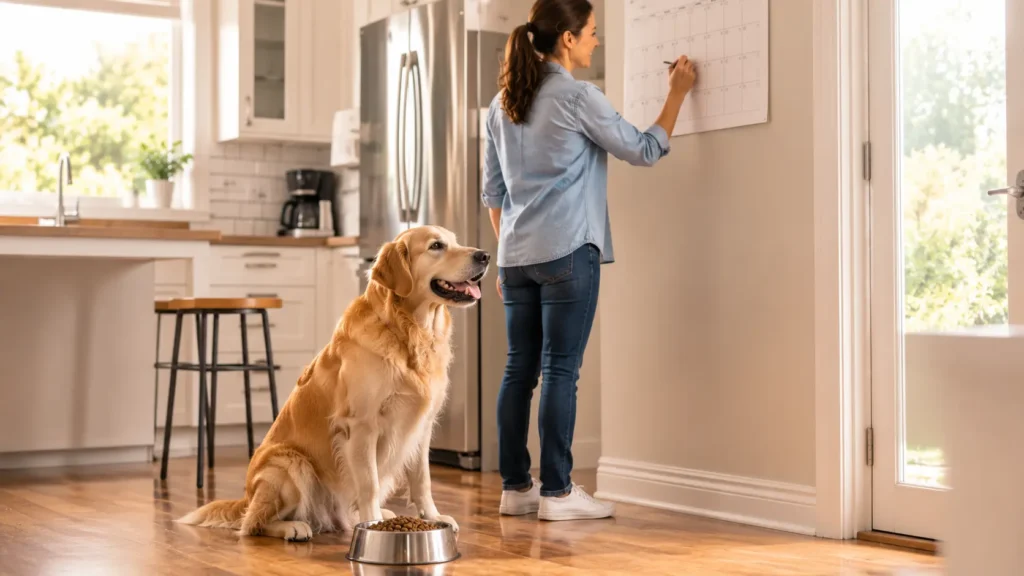
Many owners focus on what goes into the food bowl but overlook the importance of meal timing. Dogs thrive on routine. Feeding meals at consistent times each day supports both their physical and mental well-being.
Supports Healthy Digestion
Dogs produce digestive enzymes in anticipation of regular meals. A predictable feeding schedule allows the digestive system to work more efficiently and may reduce stomach upset caused by irregular eating patterns.
Large gaps between meals can leave some dogs overly hungry, causing them to eat too quickly. Fast eating may increase the risk of digestive discomfort or vomiting in some dogs.
Helps Maintain a Healthy Weight
One of the most effective ways to prevent overfeeding is to establish scheduled meals rather than constantly leaving food available throughout the day.
Scheduled feeding helps owners:
- Measure portions accurately
- Monitor calorie intake
- Avoid unnecessary snacking
- Track appetite changes
Maintaining a healthy body weight reduces the risk of many health problems, including joint stress and obesity-related diseases.
Encourages Better Behavior
Dogs quickly associate routines with positive experiences. Knowing when meals are coming often reduces begging and helps establish daily structure.
A predictable routine also helps with:
- Training sessions
- Exercise schedules
- Bathroom breaks
- Sleep routines
Makes House Training Easier
For young puppies, regular meals usually lead to more predictable bathroom schedules.
Because puppies often need to relieve themselves shortly after eating, feeding at consistent times helps owners anticipate potty breaks and establish successful house-training habits.
Helps Detect Health Problems Earlier
Dogs rarely hide changes in their appetite for long. When meals are scheduled, owners can quickly notice if their dog:
- Eats less than usual
- Refuses food
- Drinks significantly more water
- Leaves meals unfinished
Any sudden or persistent changes should be discussed with a veterinarian.
Factors That Affect Feeding Frequency
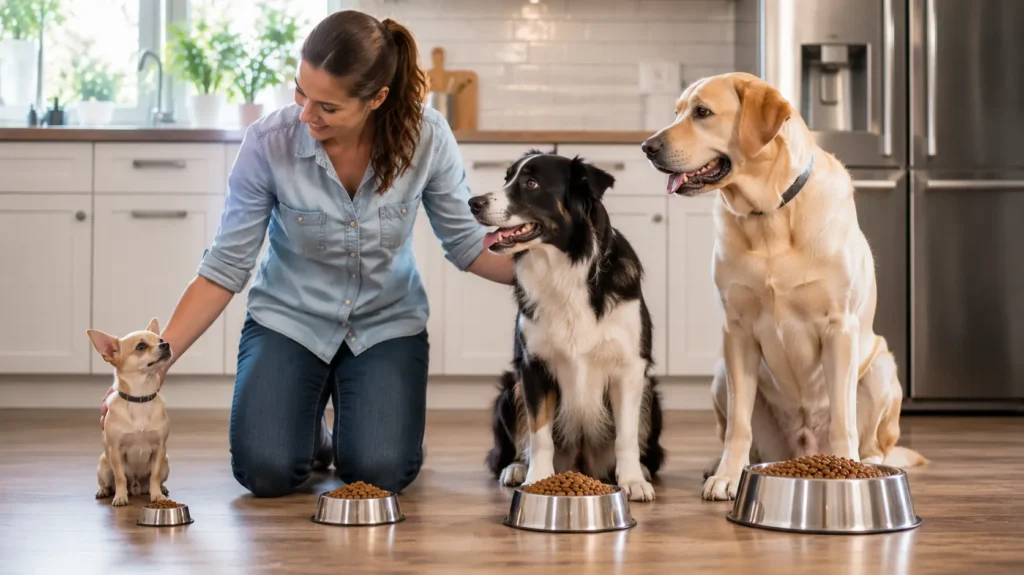
Age is one of the biggest factors when creating a feeding schedule, but it is not the only one. Understanding these variables helps you adjust your dog’s routine as needed.
Age
Puppies grow rapidly and require several small meals throughout the day.
Adult dogs generally do well with one or two meals daily, although many veterinarians and nutrition professionals prefer twice-daily feeding for most healthy adults.
Senior dogs often continue eating twice daily, but meal size or calorie intake may change depending on their health and activity level.
Breed Size
Breed size influences growth rate and nutritional requirements.
Small breeds:
- Faster metabolism
- May benefit from more frequent meals during puppyhood
- Reach adulthood earlier
Large and giant breeds:
- Grow more slowly
- Need carefully balanced nutrition
- Often remain on puppy food longer than small breeds
Feeding recommendations may differ depending on your veterinarian’s advice and the food manufacturer’s life-stage guidelines.
Activity Level
An active working dog burns more calories than a dog that spends most of the day indoors.
Examples include:
- Sporting dogs
- Herding breeds
- Agility competitors
- Search-and-rescue dogs
These dogs may require larger portions or adjusted meal timing to support their energy needs.
Health Conditions
Certain medical conditions may require special feeding schedules.
Examples include:
- Diabetes
- Digestive disorders
- Food allergies
- Kidney disease
- Liver disease
Dogs with medical conditions should always follow feeding plans developed with their veterinarian.
Pregnancy and Nursing
Pregnant and nursing dogs have much higher energy demands than typical adult dogs.
Their feeding schedule and calorie intake often need adjustment during pregnancy and while caring for puppies. Because requirements vary, veterinary guidance is especially important during this stage.
Type of Food
Feeding frequency can also depend on the diet you choose.
Common options include:
- Dry kibble
- Wet food
- Mixed feeding
- Fresh or lightly cooked diets
Each type has different calorie density, moisture content, and serving recommendations. Always follow the feeding guide on the product label as a starting point, then adjust based on your dog’s body condition and your veterinarian’s advice.
Puppy Feeding Schedule (8 Weeks-12 Months)

Puppies experience incredible growth during their first year of life. Their small stomachs cannot hold enough food for just one or two large meals, so they need several smaller meals spread throughout the day.
Although individual needs vary, the following schedule provides a practical starting point for most healthy puppies.
8-12 Weeks
This is one of the fastest periods of growth.
Most puppies should eat four meals per day.
A simple schedule might look like:
| Time | Meal |
| 7:00 AM | Breakfast |
| 11:00 AM | Midday meal |
| 3:00 PM | Afternoon meal |
| 7:00 PM | Dinner |
Spacing meals evenly helps provide steady energy while supporting healthy digestion.
Fresh drinking water should always be available unless your veterinarian recommends otherwise.
3-4 Months
By this age, many puppies continue eating four meals daily, although some can begin transitioning to three meals depending on:
- Breed
- Size
- Appetite
- Veterinary guidance
Monitor your puppy’s body condition rather than relying solely on age.
4-6 Months
Most puppies can transition to three meals per day.
A typical routine might include:
- Morning breakfast
- Midday lunch
- Evening dinner
This schedule continues to provide steady nutrition while preparing puppies for adult feeding routines.
Large and giant breeds may have different nutritional needs during this stage because their bones and joints are still developing. Follow your veterinarian’s recommendations and the feeding instructions for a large-breed puppy formula when appropriate.
6-12 Months
Many dogs can begin transitioning toward two meals per day between six and twelve months of age.
However, the exact timing depends on breed size.
Generally:
- Small breeds often reach adulthood sooner.
- Medium breeds transition gradually.
- Large and giant breeds may remain on puppy food for a longer period before switching to an adult diet.
Because growth rates vary, consult your veterinarian if you’re unsure when to make this transition.
Sample Puppy Feeding Timetable
| Puppy Age | Meals Per Day | Example Feeding Times |
| 8-12 weeks | 4 | 7 AM, 11 AM, 3 PM, 7 PM |
| 3-4 months | 3–4 | Morning, midday, afternoon, evening |
| 4-6 months | 3 | Morning, afternoon, evening |
| 6-12 months | 2–3 | Morning and evening (or add midday if needed) |

These schedules are examples rather than strict rules. Portion sizes depend on your puppy’s breed, expected adult size, activity level, and the calorie content of the food being fed.
Tips for Feeding Puppies Successfully
Building good habits early can make feeding your dog easier throughout their life.
Follow these practical tips:
- Feed meals at the same times every day.
- Measure portions using a standard measuring cup or kitchen scale.
- Choose a food formulated for your puppy’s life stage.
- Avoid changing foods suddenly unless advised by your veterinarian.
- Introduce new foods gradually over several days.
- Remove uneaten food after about 15–20 minutes to encourage regular eating habits.
- Limit treats so they don’t replace balanced meals. If your dog regularly refuses meals or becomes difficult to feed, these tips for choosing the best food for picky dogs may also help.
- Monitor your puppy’s weight and body condition regularly.
- Schedule routine veterinary checkups to ensure healthy growth.
Most importantly, remember that every puppy develops at a different pace. A feeding schedule should support healthy growth—not simply follow the calendar. Regular monitoring and veterinary guidance are the best ways to ensure your puppy receives the nutrition needed for a healthy start in life.
Adult Dog Feeding Schedule

Once your dog reaches adulthood, their rapid growth slows, and their nutritional needs become more stable. While puppies require multiple meals to support development, most healthy adult dogs thrive on a simpler feeding routine.
The exact age at which a dog becomes an adult varies by breed. Small breeds often mature earlier than large or giant breeds, so follow your veterinarian’s advice and your dog food manufacturer’s life-stage recommendations when transitioning from puppy food to adult food.
How Many Times Should an Adult Dog Eat?
For most healthy adult dogs, two meals per day, one in the morning and one in the evening, are a practical and widely recommended routine.
Benefits of feeding twice daily include:
- Helps maintain consistent energy levels
- May reduce excessive hunger between meals
- Makes portion control easier
- Fits well with most family schedules
- Provides regular opportunities to monitor appetite
Some healthy adult dogs may do well with one meal a day, but this isn’t ideal for every dog. Dogs that eat very quickly, have sensitive stomachs, or are prone to digestive issues often benefit from splitting their daily food into two smaller meals.
If your dog also experiences recurring digestive problems, choosing an appropriate diet matters too. Learn more in our guide to dog food for sensitive stomach.
If you’re unsure which schedule is best, consult your veterinarian.
Sample Adult Feeding Schedule
| Time | Meal |
| 7:00 AM | Breakfast |
| 6:30 PM | Dinner |
Try to keep feeding times consistent, even on weekends. Sudden changes in routine can confuse some dogs and may contribute to digestive upset.
Feeding Active and Working Dogs
Highly active dogs burn considerably more calories than dogs with a mostly indoor lifestyle.
Examples include:
- Herding dogs
- Sporting breeds
- Search-and-rescue dogs
- Hunting dogs
- Agility competitors
Rather than increasing meal frequency, many active dogs simply require larger portions or foods with higher calorie density. Some owners also schedule meals around exercise, allowing enough time before and after intense activity to reduce digestive discomfort.
Because calorie needs vary significantly based on workload, consult your veterinarian if your dog participates in strenuous activities.
Small VS Large Adult Dogs
Breed size continues to influence feeding routines throughout adulthood.
Small Breeds
Small dogs often have faster metabolisms.
They may:
- Need slightly more calories per pound of body weight
- Prefer smaller meal portions
- Benefit from consistent feeding times
Large Breeds
Large and giant breeds generally require:
- Larger portions
- Careful weight management
- Joint-friendly nutrition
- Regular body condition monitoring
Avoid overfeeding large dogs, as excess weight places additional stress on their joints.
Senior Dog Feeding Schedule (7+ Years)

As dogs age, their nutritional requirements change again. Many dogs become less active, while others develop health conditions that influence feeding routines.
Although dogs are commonly considered “senior” around seven years of age, this varies by breed. Giant breeds often reach senior status earlier than smaller breeds.
Should Senior Dogs Eat Less Often?
Not necessarily. Most senior dogs continue doing well with two meals per day.
However, some veterinarians may recommend:
- Smaller, more frequent meals
- Reduced calorie intake
- Special therapeutic diets
- Increased protein intake for muscle maintenance (depending on individual health needs)
The right schedule depends on your dog’s overall health rather than age alone.
Changing Calorie Needs
Many senior dogs become less active.
As activity decreases:
- Calorie needs may decline.
- Weight gain becomes easier.
- Portion sizes may need adjustment.
On the other hand, some senior dogs lose weight because of illness or reduced appetite. Regular veterinary checkups become increasingly important during this life stage.
Digestive Considerations
Older dogs sometimes experience:
- Slower digestion
- Sensitive stomachs
- Dental problems
- Reduced appetite
Softened food or wet food may be easier for dogs with dental disease, but feeding changes should always be based on veterinary advice.
Sample Senior Feeding Schedule
| Time | Meal |
| 7:30 AM | Breakfast |
| 6:00 PM | Dinner |
Consistency remains important throughout your dog’s senior years.
Dog Feeding Schedule by Age Chart
The following chart provides a quick overview of common feeding frequencies.
| Age | Meals Per Day | Typical Schedule | Notes |
| 8-12 weeks | 4 | Morning, late morning, afternoon, evening | Rapid growth stage |
| 3-4 months | 3-4 | Evenly spaced meals | Transition gradually if appropriate |
| 4-6 months | 3 | Morning, afternoon, evening | Growing puppy |
| 6-12 months | 2-3 | Morning and evening | Depends on the breed size |
| Adult | 2 | Morning and evening | Suitable for most healthy dogs |
| Senior | 2 | Morning and evening | Adjust portions as needed |
This chart is a general guide. Always consider your dog’s breed, body condition, activity level, and veterinary recommendations.
Feeding Schedule by Breed Size
Breed size affects growth rate, metabolism, and feeding needs.
Small Dogs
Examples include:
- Chihuahua
- Yorkshire Terrier
- Pomeranian
- Maltese
Characteristics:
- Faster metabolism
- Smaller stomach capacity
- Earlier adulthood
Many small breeds transition to adult food sooner than larger breeds.
Medium Dogs
Examples include:
- Border Collie
- Cocker Spaniel
- Australian Shepherd
- Bulldog
These dogs generally follow standard feeding recommendations but still require portion adjustments based on activity level.
Large Dogs
Examples include:
- Labrador Retriever
- German Shepherd
- Golden Retriever
Large breeds:
- Grow more slowly
- Require controlled growth during puppyhood
- Need careful weight management throughout life
Giant Breeds
Examples include:
- Great Dane
- Saint Bernard
- Mastiff
These breeds often:
- Stay on puppy food longer
- Reach maturity later
- Benefit from carefully managed growth
If you own a giant breed puppy, follow your veterinarian’s guidance regarding diet transitions.
Feeding Dry Food vs Wet Food
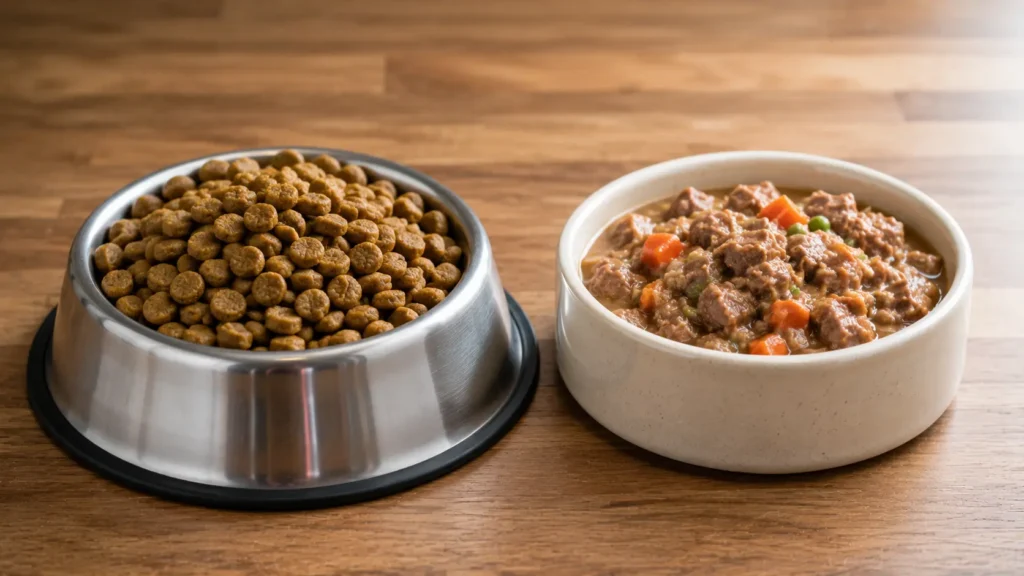
Different food types can fit into the same feeding schedule, but portion sizes vary because calorie density differs.
Dry Food (Kibble)
Advantages include:
- Convenient storage
- Easy portion measurement
- Often more economical
- Long shelf life
Always measure servings carefully to avoid accidental overfeeding.
Wet Food
Benefits may include:
- Higher moisture content
- Strong aroma that appeals to picky eaters
- Easier chewing for some senior dogs
Once opened, wet food should be stored according to the manufacturer’s instructions.
Mixed Feeding
Many owners combine wet and dry food.
If you do, remember to adjust total calories so your dog doesn’t receive more food than needed.
Fresh Diets
Fresh or lightly cooked diets have become increasingly popular. Because recipes vary widely, work with your veterinarian or a qualified veterinary nutrition professional to ensure the diet is complete and balanced.
Treats and Snacks

Treats are useful for training and strengthening your bond with your dog, but they shouldn’t replace balanced meals.
Healthy treat habits include:
- Reward desired behavior
- Use small treats during training
- Break large treats into smaller pieces
- Avoid frequent table scraps
A commonly cited guideline is that treats should provide no more than about 10% of a dog’s daily calorie intake. This recommendation should be verified with current veterinary nutrition guidance before publication.
Water Matters Too
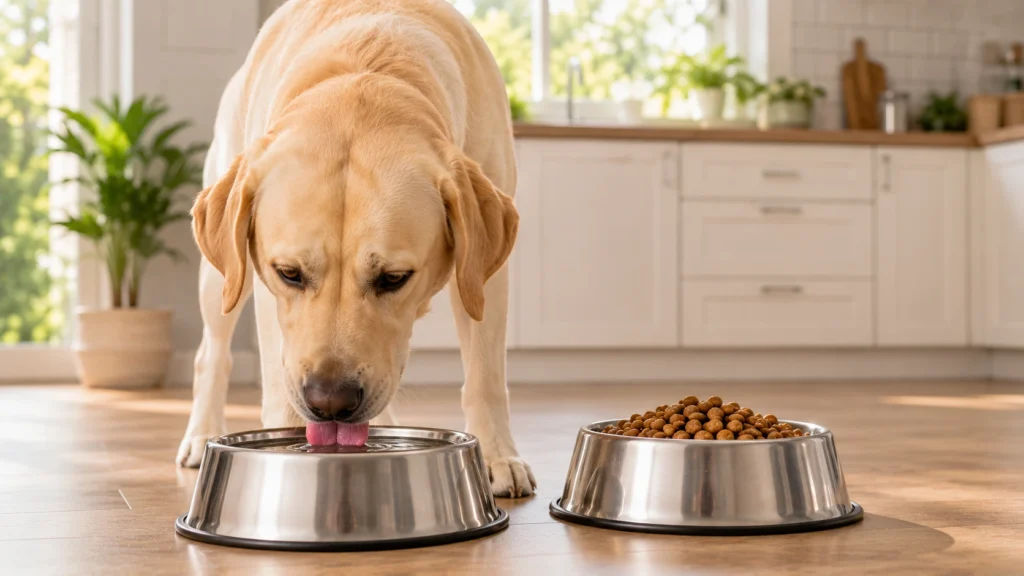
Food is only part of good nutrition.
Dogs should generally have access to fresh, clean water throughout the day.
Pay extra attention during:
- Hot weather
- Exercise
- Illness
- Travel
If your dog suddenly drinks much more or much less water than usual, contact your veterinarian.
Transitioning Between Feeding Stages
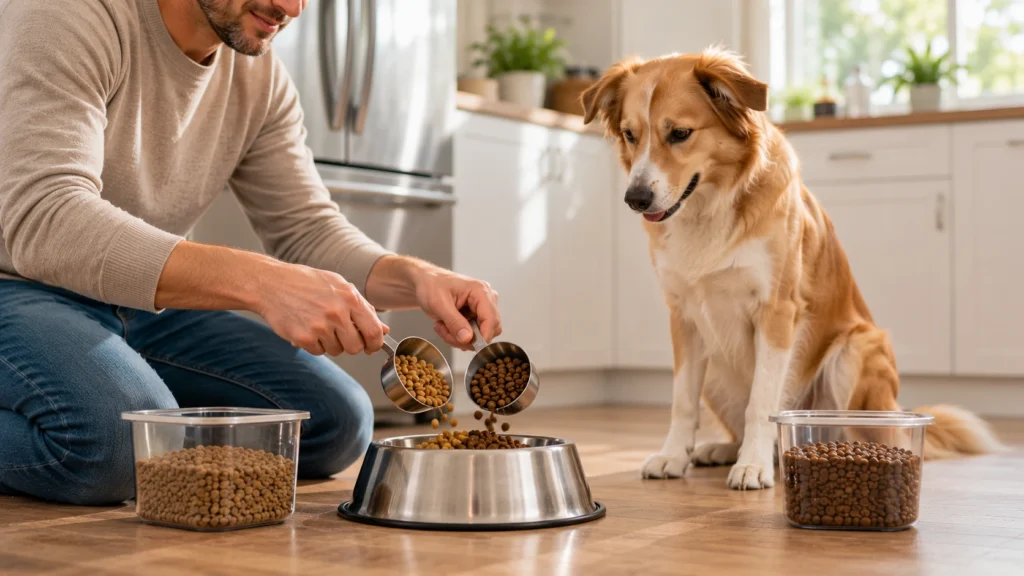
Dogs shouldn’t switch diets overnight.
Whether moving from:
- Puppy to adult food
- Adult to senior food
- One brand to another
Introduce the new food gradually over several days. This helps reduce the risk of digestive upset.
A slow transition also gives you time to monitor:
- Stool quality
- Appetite
- Energy levels
- Any signs of food intolerance
Common Feeding Mistakes

Even experienced owners can develop habits that negatively affect their dog’s health.
Avoid these common mistakes:
Free Feeding All Day
Leaving food available constantly can make portion control difficult and may contribute to overeating.
Guessing Portion Sizes
Use measuring cups or a kitchen scale rather than estimating.
Too Many Treats
Training rewards add calories quickly.
Feeding Table Scraps
Many human foods are too high in fat, salt, or calories, and some ingredients can be unsafe for dogs.
Inconsistent Meal Times
Regular schedules support digestion and make appetite changes easier to detect.
Ignoring Body Condition
Your dog’s appearance and body condition are better indicators than the food bowl alone.
Signs Your Feeding Schedule Needs Adjustment
Every dog is different. Watch for signs that your current routine may need modification.
Contact your veterinarian if you notice:
- Unexpected weight gain
- Weight loss without explanation
- Constant begging despite appropriate portions
- Regular vomiting after meals
- Frequent diarrhea
- Persistent constipation
- Low energy
- Loss of appetite
- Difficulty maintaining muscle mass
- Major changes in drinking habits
Early attention can help identify nutritional or medical issues before they become more serious.
Practical Dog Feeding Checklist
Use this checklist to build a healthy feeding routine for your dog.
✅ Feed meals at the same times every day.
✅ Choose food appropriate for your dog’s life stage.
✅ Measure every meal accurately.
✅ Provide fresh drinking water at all times.
✅ Transition to new foods gradually.
✅ Limit treats and account for their calories.
✅ Monitor your dog’s body weight regularly.
✅ Watch for changes in appetite or behavior.
✅ Schedule regular veterinary wellness exams.
✅ Adjust portions based on age, activity level, and body condition.
Keeping this checklist in mind can help prevent many common feeding mistakes and support your dog’s long-term health.
Key Takeaways
A dog’s feeding routine should evolve throughout life. Puppies require several small meals to fuel rapid growth, while most healthy adult and senior dogs do well with two meals a day. Consistency is just as important as choosing a nutritious diet. Feeding at regular times supports digestion, makes portion control easier, and helps you notice changes in appetite that could indicate a health concern.
There is no single feeding schedule that works for every dog. Breed size, activity level, health status, and the type of food you choose all influence how often and how much your dog should eat. Use feeding guides as a starting point, but adjust your dog’s routine based on their body condition and your veterinarian’s recommendations.
Conclusion

Creating a consistent dog feeding schedule by age is one of the simplest and most effective ways to support your dog’s health from puppyhood through the senior years. A well-planned routine provides the right nutrition at the right time, promotes healthy digestion, encourages good behavior, and helps maintain an ideal body weight.
Remember that feeding schedules are guidelines—not strict rules. Every dog has unique nutritional needs influenced by breed, size, activity level, and overall health. Regularly monitor your dog’s weight, energy levels, and appetite, and make gradual adjustments when necessary. If you’re ever unsure about the best feeding routine or portion sizes, your veterinarian is the most reliable source of personalized advice.
With a balanced diet, consistent meal times, plenty of fresh water, regular exercise, and routine veterinary care, you’ll be giving your dog an excellent foundation for a long, healthy, and happy life.
Frequently Asked Questions (FAQs)
1. How many times a day should I feed my dog?
The ideal feeding frequency depends on your dog’s age, breed, activity level, and overall health.
As a general guide:
- 8–12 weeks: Four meals per day
- 3–6 months: Three meals per day
- 6–12 months: Two to three meals per day
- Adult dogs: Usually two meals per day
- Senior dogs: Usually two meals per day, unless your veterinarian recommends otherwise
If your dog has a medical condition such as diabetes or digestive disease, follow your veterinarian’s feeding recommendations.
2. Is it better to feed my dog once or twice a day?
Many veterinarians and veterinary nutrition professionals recommend feeding healthy adult dogs twice a day.
Splitting daily food into morning and evening meals may:
- Help control hunger
- Improve portion management
- Support a consistent routine
- Make appetite changes easier to notice
Some healthy adult dogs do well on a single daily meal, but it isn’t the best choice for every dog.
3. Should I feed my dog before or after a walk?
For most dogs, avoid vigorous exercise immediately before or after a large meal.
A practical routine is:
- Feed after a morning potty break or light walk.
- Allow time for digestion before strenuous activity.
- After intense exercise, let your dog cool down before offering a full meal.
Dogs that are large or deep-chested may have special considerations regarding exercise and meal timing. If your dog is in a higher-risk breed, ask your veterinarian for personalized advice.
4. Can I leave food out all day?
Free feeding works for some dogs, but scheduled meals are generally easier to manage.
Scheduled feeding helps:
- Measure portions accurately
- Prevent overeating
- Build consistent routines
- Monitor appetite
- Support house training for puppies
If your dog doesn’t finish meals, remove uneaten food after about 15–20 minutes and offer the next meal at the usual time, unless your veterinarian advises differently.
5. When should I switch my puppy to adult dog food?
The right time depends largely on breed size.
In general:
- Small breeds often transition earlier.
- Medium breeds follow shortly afterward.
- Large and giant breeds usually remain on puppy food longer because they mature more slowly.
Always check your food manufacturer’s life-stage recommendations and consult your veterinarian if you’re unsure.
6. How do I know if I’m feeding the right amount?
Rather than relying only on package feeding guides, monitor your dog’s overall condition.
Signs your dog may be receiving an appropriate amount of food include:
- Healthy body weight
- Good muscle condition
- Consistent energy
- Normal stool quality
- Steady growth in puppies
If your dog gains or loses weight unexpectedly, review portion sizes with your veterinarian.
7. Are treats included in my dog’s daily calories?
Yes.
Treats contribute to your dog’s total daily calorie intake.
A commonly referenced recommendation is to keep treats at no more than about 10% of daily calories, though this guidance should be verified using current veterinary nutrition recommendations before publication.
Whenever possible:
- Choose nutritious treats.
- Use small training rewards.
- Reduce meal portions if treats become frequent.
8. What should I do if my dog skips a meal?
Missing a single meal isn’t always an emergency, especially if your dog is otherwise behaving normally.
However, monitor for:
- Vomiting
- Diarrhea
- Lethargy
- Refusal to drink water
- Continued loss of appetite
If your dog repeatedly refuses food or develops other symptoms, contact your veterinarian promptly.
9. Does breed size change feeding schedules?
Yes.
Breed size affects:
- Growth rate
- Adult size
- Energy needs
- Transition timing from puppy food
- Portion sizes
Small breeds often mature faster, while large and giant breeds usually require a longer growth period with specially formulated puppy diets.
10. Can I change feeding times on weekends?
Occasional small changes usually aren’t a problem.
However, dogs thrive on routine.
Whenever possible:
- Feed within roughly the same time window each day.
- Avoid frequent schedule changes.
- Introduce permanent changes gradually.
Consistency supports digestion and helps your dog know what to expect.
Reference
- American Animal Hospital Association (AAHA)
- World Small Animal Veterinary Association (WSAVA)
- American Veterinary Medical Association (AVMA)
- Association of American Feed Control Officials (AAFCO)
- Cornell University College of Veterinary Medicine
- Tufts Cummings School of Veterinary Medicine
- VCA Animal Hospitals
- MSPCA-Angell
1 thought on “Best Dog Feeding Schedule by Age: Complete Puppy, Adult & Senior Feeding Guide”