
Dog Food for Sensitive Stomach is an important topic for any dog owner whose pet regularly experiences vomiting, diarrhea, gas, or loose stools after meals. Digestive problems are one of the most common reasons dog owners seek nutritional advice. While occasional stomach upset is normal, recurring digestive issues may signal that your dog’s current diet isn’t the right fit.
Choosing the right dog food for a sensitive stomach can improve your dog’s comfort, digestion, energy levels, and overall well-being. The key is understanding that there isn’t a single food that works for every dog. Age, breed, activity level, medical history, and ingredient sensitivities all play a role.
This guide explains what causes sensitive stomachs, which ingredients support healthy digestion, what to avoid, how to transition safely to a new food, and when it’s time to consult a veterinarian so you can make an informed decision for your dog’s long-term health.
What Is Dog Food for Sensitive Stomach?

A “sensitive stomach” isn’t a medical diagnosis. Instead, it’s a general term used to describe dogs that frequently experience digestive discomfort after eating.
Common symptoms include:
- Loose stools or diarrhea
- Vomiting
- Excessive gas
- Stomach rumbling
- Reduced appetite
- Constipation in some cases
- Discomfort after meals
These symptoms may occur occasionally or become a recurring problem. If they happen frequently, your dog should be examined by a veterinarian to rule out an underlying medical condition.
Food Intolerance vs Food Allergy
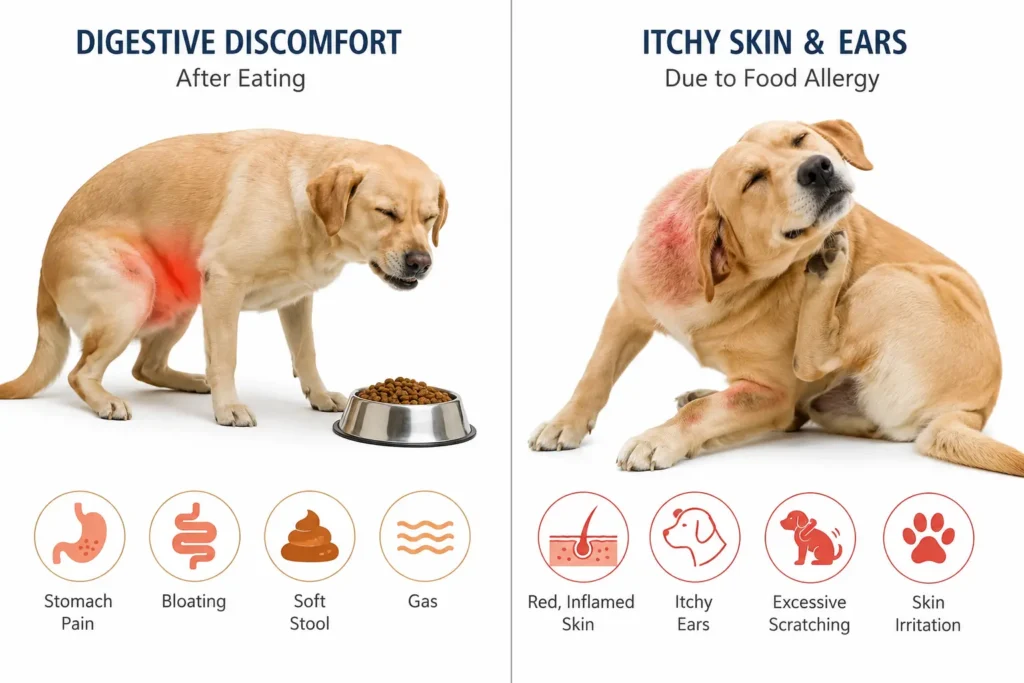
These terms are often used interchangeably, but they describe different conditions.
Food Intolerance
A food intolerance affects digestion without involving the immune system. Certain ingredients simply don’t agree with your dog’s digestive tract.
Typical signs include:
- Diarrhea
- Gas
- Vomiting
- Bloating
Food Allergy
A food allergy involves the immune system and may affect both the digestive system and the skin.
Symptoms can include:
- Itchy skin
- Ear infections
- Paw chewing
- Skin redness
- Hair loss
- Digestive upset
Only a veterinarian can accurately diagnose a food allergy, often using a carefully supervised elimination diet.
Signs Your Dog May Benefit From a Sensitive Stomach Diet
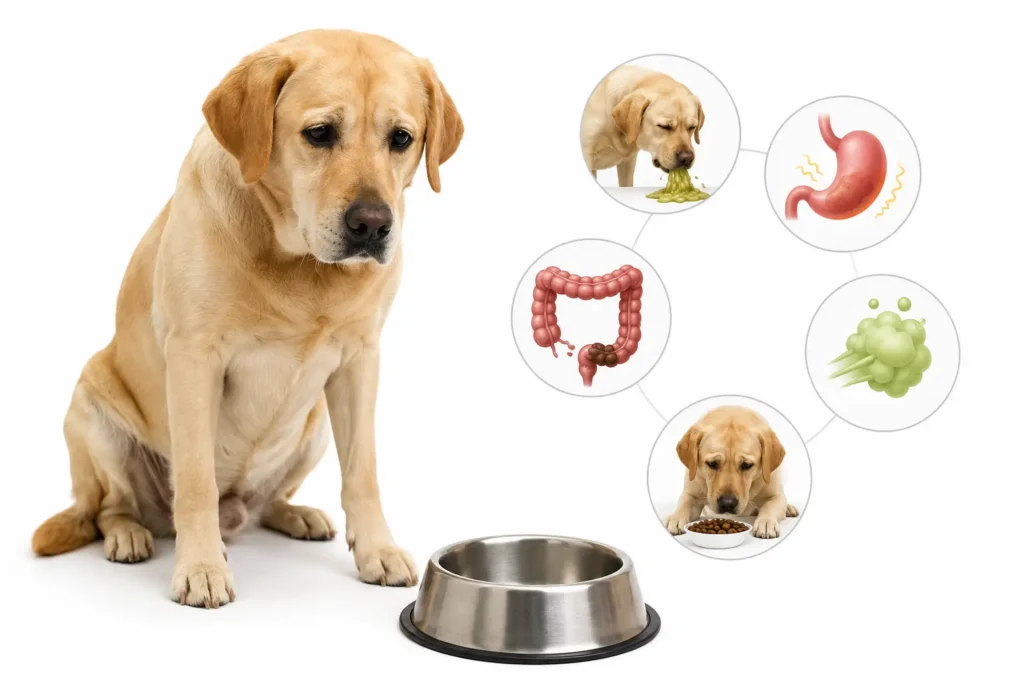
Many dogs occasionally develop digestive upset after eating something unusual. However, recurring symptoms deserve closer attention.
Signs include:
- Vomiting after meals
- Frequent diarrhea
- Loose stools
- Excessive gas
- Poor appetite
- Weight loss
- Stomach noises
- Inconsistent stool quality
If your dog develops severe vomiting, bloody diarrhea, dehydration, lethargy, or sudden weight loss, seek veterinary care immediately rather than simply changing foods.
Common Causes of Sensitive Stomachs
Understanding the possible cause makes choosing an appropriate diet much easier.
Sudden Diet Changes
Switching foods overnight is one of the most common reasons dogs experience temporary digestive upset.
Food Intolerances
Some dogs digest certain proteins or ingredients better than others.
Lower-Quality Ingredients
Some dogs may not tolerate foods containing poorly digestible ingredients or unnecessary artificial additives.
Eating Too Quickly
Fast eaters swallow extra air, increasing the likelihood of gas and stomach discomfort.
Stress
Travel, moving house, boarding, or major routine changes can temporarily affect digestion.
Medical Conditions
Digestive symptoms may also result from conditions such as:
- Parasites
- Inflammatory bowel disease
- Pancreatitis
- Gastrointestinal infections
- Liver disease
- Kidney disease
These conditions require veterinary diagnosis and treatment.
What to Look for in Dog Food for Sensitive Stomachs

Instead of focusing on marketing claims, pay attention to ingredient quality and nutritional balance.
Highly Digestible Protein
Many dogs digest these protein sources well:
- Salmon
- Turkey
- Lamb
- Whitefish
- Duck
The best protein depends on your dog’s individual needs and any known food sensitivities.
Easily Digestible Carbohydrates
Gentle carbohydrate sources include:
- Brown rice
- White rice
- Oatmeal
- Sweet potatoes
- Barley
These ingredients provide energy while being well tolerated by many dogs.
Beneficial Fiber
Moderate amounts of fiber help support healthy digestion.
Common sources include:
- Pumpkin
- Beet pulp
- Oats
- Sweet potatoes
Too much fiber may worsen digestive issues, so balance is important.
Prebiotics and Probiotics
Many digestive-support diets include prebiotics and probiotics to help maintain a healthy gut microbiome.
Research suggests some probiotic strains may benefit certain digestive conditions. Because results vary, consult your veterinarian before adding supplements to your dog’s diet.
Omega-3 Fatty Acids
Fish oil and similar ingredients may support:
- Skin health
- Coat quality
- Normal inflammatory responses
- Overall wellness
Ingredients That May Not Suit Every Dog
Not every dog reacts the same way to food. However, many owners prefer diets with fewer unnecessary additives.
Depending on your dog’s needs, you may wish to limit:
- Artificial colors
- Artificial flavors
- Excess preservatives
- Multiple protein sources during elimination diets
- Ingredients previously identified as triggers
Always follow your veterinarian’s advice if your dog has been diagnosed with food allergies.
Dry vs Wet Dog Food

Both dry and wet foods can be suitable for dogs with sensitive stomachs.
| Feature | Dry Food | Wet Food |
| Cost | Usually more affordable | Usually more expensive |
| Moisture | Lower | Higher |
| Storage | Easy | Refrigerate after opening |
| Taste | Good | Often more appealing |
| Convenience | High | Moderate |
Neither option is universally better. Your dog’s health, preferences, and veterinary recommendations should guide the decision.
Understanding Limited Ingredient Diets
Limited ingredient diets contain fewer protein and carbohydrate sources than standard formulas.
They may be helpful for:
- Suspected food sensitivities
- Veterinary-guided elimination diets
- Dogs with recurring digestive issues
Remember that “limited ingredient” doesn’t automatically mean healthier. The food should still provide complete and balanced nutrition.
Prescription vs Over-the-Counter Diets
Many dogs improve with high-quality over-the-counter digestive-support foods.
Prescription diets may be recommended for dogs diagnosed with:
- Chronic gastrointestinal disease
- Food allergies
- Inflammatory bowel disease
- Pancreatitis
These diets are formulated for specific medical conditions and should only be used under veterinary supervision.
How to Transition to a New Dog Food

Changing food gradually helps reduce digestive upset.
A commonly recommended transition schedule is:
| Day | Current Food | New Food |
| Days 1–2 | 75% | 25% |
| Days 3–4 | 50% | 50% |
| Days 5–6 | 25% | 75% |
| Day 7 onward | 0% | 100% |
Some dogs with chronic digestive disorders may require a slower transition. If symptoms worsen, contact your veterinarian before continuing.
Additional Ways to Support Your Dog’s Digestion
Nutrition is only one part of digestive health.
You can also help by:
- Feeding meals on a consistent schedule.
- A consistent routine can be especially helpful when managing digestion. For age-specific meal frequency and timing, see our dog feeding schedule by age guide.
- Providing fresh drinking water at all times.
- Avoiding rich table scraps.
- Feeding appropriate portion sizes.
- Using slow-feed bowls for dogs that eat too quickly.
- Introducing new treats gradually.
- Keep regular exercise appropriate for your dog’s age and health.
Small, consistent habits often make a meaningful difference.
Common Mistakes to Avoid
Many digestive problems become worse because of avoidable mistakes.
Avoid:
- Switching foods too quickly.
- Constantly changing brands.
- Overfeeding treats.
- Assuming grain-free is always better.
- Ignoring recurring digestive symptoms.
- Choosing food based only on advertising.
- Improper food storage.
How to Read a Dog Food Label

A few minutes spent reading the label can help you make a better buying decision.
Look for:
- A clearly identified animal protein among the first ingredients.
- A statement showing the food is complete and balanced for your dog’s life stage.
- Feeding guidelines appropriate for your dog’s weight.
- Transparent ingredient information and manufacturer details.
Remember that attractive marketing terms such as “premium” or “natural” don’t necessarily indicate higher nutritional quality.
When Should You See a Veterinarian?
Diet changes aren’t appropriate for every digestive problem.
Contact your veterinarian if your dog has:
- Blood in vomit or stool
- Severe or persistent diarrhea
- Repeated vomiting
- Refusal to eat
- Signs of dehydration
- Ongoing weight loss
- Abdominal pain
- Digestive symptoms lasting more than a few days despite dietary changes
Prompt medical attention can prevent more serious complications.
Final Thoughts

Choosing the right dog food for a sensitive stomach isn’t about finding the most expensive brand or following the latest trend. It’s about understanding your dog’s individual needs and selecting a complete, balanced diet that supports healthy digestion.
Start with gradual food transitions, feed consistent portions, avoid unnecessary treats, and monitor your dog’s response over time. Keep a simple journal of symptoms, stool quality, and dietary changes—it can be a valuable resource if veterinary care becomes necessary.
Most importantly, remember that persistent digestive problems should never be ignored. While nutrition plays a major role in digestive health, ongoing vomiting, diarrhea, weight loss, or loss of appetite may point to an underlying medical condition that requires professional evaluation.
With patience, careful observation, and guidance from your veterinarian when needed, you can find a diet that helps your dog enjoy comfortable digestion, better nutrition, and a healthier, happier life.
Frequently Asked Questions
1. What is the best dog food for a sensitive stomach?
The best food depends on your dog’s age, health, ingredient sensitivities, and your veterinarian’s recommendations.
2. Is grain-free dog food better?
Not necessarily. Many dogs digest grains without problems. Grain-free diets should only be chosen when appropriate for your dog’s individual needs.
3. Can probiotics help?
Some dogs benefit from probiotics, but effectiveness depends on the probiotic strain and the underlying digestive issue.
4. How long does it take for a new food to work?
Many dogs begin adjusting within one to two weeks after a gradual transition. Chronic conditions may take longer.
5. Are limited-ingredient diets healthier?
Not always. They are primarily designed to help identify food sensitivities or reduce exposure to certain ingredients.
6. Can puppies have sensitive stomachs?
Yes. Puppies can experience digestive upset, but they should only eat foods formulated for growth unless a veterinarian recommends otherwise.
7. Should I feed homemade food?
Homemade diets should only be prepared using recipes developed with veterinary nutritional guidance to ensure they meet all nutritional requirements.
8. Can stress upset a dog’s stomach?
Yes. Changes in routine, travel, and anxiety can temporarily affect digestion.
9. What treats are best for dogs with sensitive stomachs?
Choose treats with simple ingredients that match your dog’s regular diet and introduce them gradually.
10. When should I stop trying different foods?
If symptoms continue despite careful diet changes or become more severe, consult your veterinarian instead of repeatedly switching foods.
1 thought on “Dog Food for Sensitive Stomach: How to Choose the Best Diet for Better Digestion”